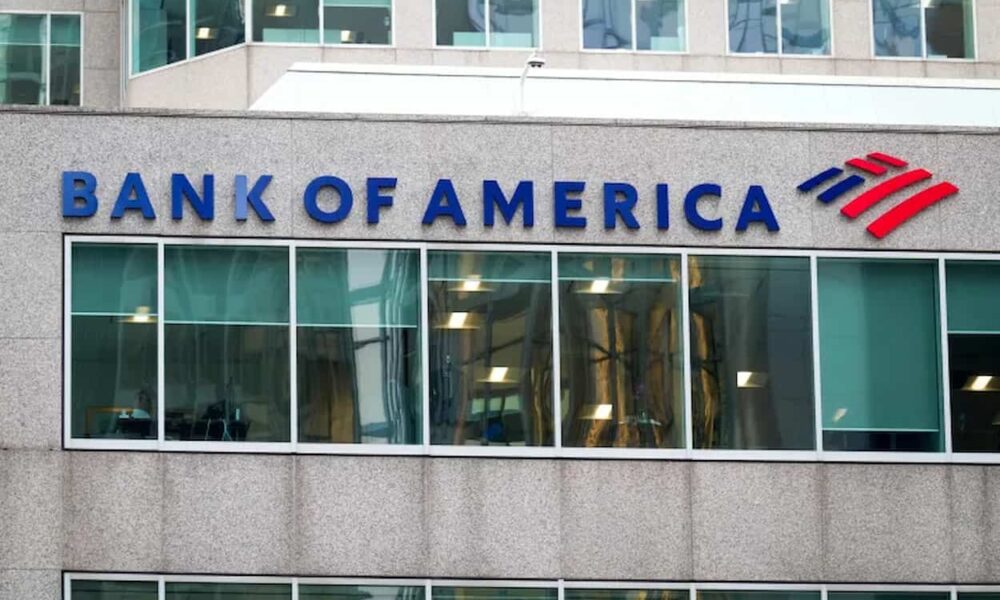
Bank of America, the second-largest bank in the United States, saw its shares slump sharply after the U.S. Treasury Department announced financial sanctions exceeding $1.2 billion against it, due to alleged lapses in anti-money laundering rules and sanctions regimes. The bank would notably have failed to properly report suspicious transactions totaling more than $5 billion.
According to Bloomberg, Bank of America’s stock fell 8.2% during trading on Wednesday, bringing its year-to-date decline to 9.9%.
The agency also indicated that Bank of America’s stock had fallen by 17 cents after the Treasury Department’s sanction announcement.
Reacting to this decision, the bank’s chief executive, Brian Moynihan, said the institution would implement the changes demanded by regulators.
“We have invested billions of dollars in technology and allocated thousands of staff to the fight against financial crime. The team has made significant progress in this area and remains determined to carry out the work required by the regulators,” he said.
The U.S. Treasury noted that certain Bank of America transactions had raised national security concerns, notably operations potentially linked to Chinese money-laundering networks as well as illicit financing activities near the U.S. southwest border.
In a separate proceeding, the Office of Foreign Assets Control (OFAC), within the Treasury Department, announced a settlement of $11.6 million with the bank over possible violations of several sanction programs, including those related to Iran, Russia, drugs, and international terrorism.
In this context, U.S. Treasury Secretary Scott Bessent said in a statement that “the measures taken today send a clear message: even the largest financial institutions are not above the law.”
“When a bank of this size fails to meet its obligations in anti-money-laundering and sanctions compliance, the consequences extend far beyond the institution itself and expose the entire U.S. financial system to significant risks related to illicit financing,” he added.
Third-quarter 2026 results also show a decline in the bank’s revenue across several of its main activities, while other major U.S. institutions, such as Goldman Sachs and Citibank, posted solid performances.
Investment banking revenues fell 11% in the third quarter to $1.82 billion, although this performance surpassed analysts’ expectations.
Fees from advisory services in mergers and acquisitions declined by 19%. By contrast, revenues from equity issuances rose 9.1%, while those from debt issuances fell by about 14%.
In the third quarter, the bank’s total revenues amounted to nearly $30 billion, below analysts’ expectations.
Outstanding loan volume reached $1.23 trillion at the end of the third quarter, up 6.3% year over year, in line with analysts’ estimates. Lending activities remain closely watched by investors in a context of high interest rates in the United States.