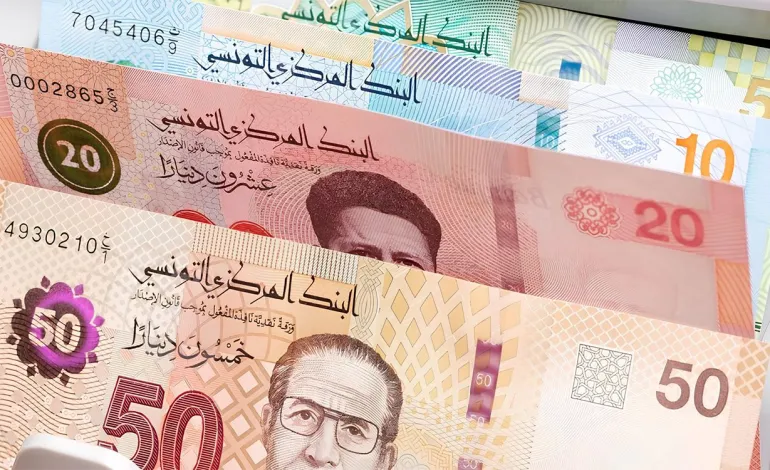
Between 2023 and 2025, Tunisian banks added 23 253 MD to their balance sheets, and nearly three-quarters of this growth fed the public sector.
The 2025 annual report of the Central Bank of Tunisia on banking supervision documents this shift without commenting on it. For a business leader, it reads as a change of priority client in the bank that finances them.
A balance sheet that has taken on a new face
The system’s total balance sheet rose from 144 179 MD in 2023 to 167 432 MD in 2025, a rise of 16.1%. Over the same period, banks’ claims on the public sector jumped from 34 721 MD to 51 569 MD, i.e., up 48.5%. Public exposure thus advanced three times faster than overall activity.
Inevitably, its weight is growing heavier. It accounted for 24.1% of assets in 2023, 27.4% in 2024, and 30.8% in 2025. In 2025, 82.1% of the balance sheet increase was absorbed by public financing, versus 64.6% in 2024. Nearly one dinar of every three assets is now backed by the State and its subdivisions.
The Treasury, the main engine of this transformation
The engine is first the sovereign instrument. Treasury bills and bonds held by banks rose from 19 249 MD to 33 328 MD in two years, a 73.1% increase. They account for 64.6% of the public exposure, against 55.4% in 2023, and alone explain 84.4% of the 2025 progression.
The inverse movement concerns syndicated loans to the administration, which fell from 2 751 MD to 1 643 MD, i.e., 40.3% less. The State is financing itself less and less through negotiated bank facilities and more through issuances that banks subscribe to. The bank thus becomes the natural subscriber to public debt, and its balance sheet bears the mark.
Public enterprises move ahead of the private sector