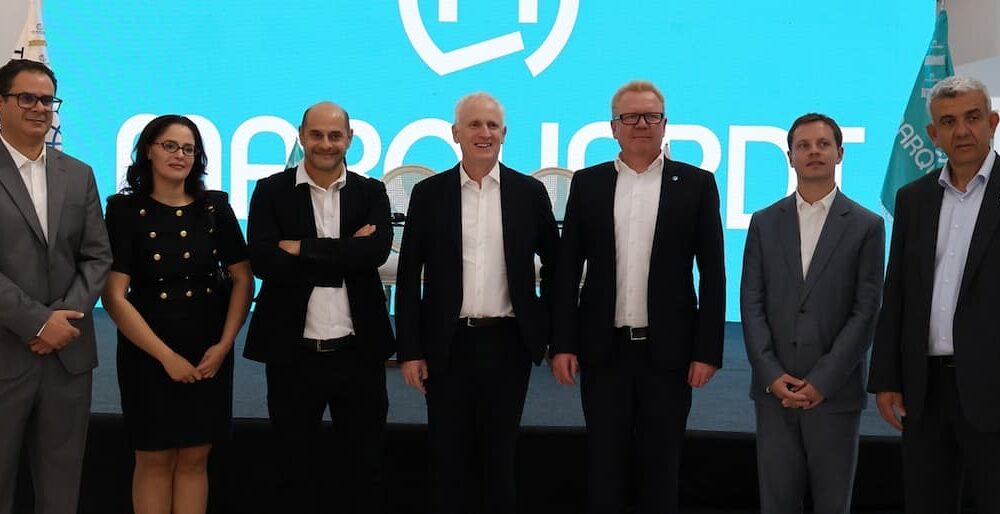
The World Bank Group, through the International Finance Corporation (IFC), supports the development of Marquardt Group’s activities in Tunisia. This partnership, which envisages financing of up to 52 million euros, is expected to enable the creation of more than 400 jobs over the coming years, while strengthening the production of high value-added automotive components and Tunisia’s position in international value chains.
IFC provides financing of up to 52 million euros to Marquardt’s investment program, which concerns three production units located in Greater Tunis.
This envelope will notably increase the manufacturing capacity of advanced automotive mechatronic components and cover the working capital needs related to the expansion of the group’s activities.
Through this project, Marquardt aims to strengthen its industrial production in Tunisia and contribute to the country’s integration into the global value chain of the automotive industry.
A state-of-the-art automotive industry that employs nearly 90,000 people
Tunisia’s automobile components sector is an important pillar of the national industrial activity. It comprises nearly 300 companies, directly employing around 90,000 people.
In 2025, exports from this industry reached nearly 10 billion dinars, representing more than 5% of gross domestic product (GDP).
Developing higher value-added productions thus represents an opportunity to consolidate this industrial base, improve Tunisia’s positioning in international markets and foster the creation of new jobs.
Career prospects for women and more sustainable production. Beyond expanding industrial capacity, the project includes actions designed to promote the professional advancement of women within Marquardt.
These employees currently represent about 65% of the group’s workforce in Tunisia. Support will be provided to the company to strengthen their access to technical roles and management positions.
The financing will also help improve the environmental performance of the industrial facilities, notably through the deployment of photovoltaic systems and the implementation of energy efficiency measures.
The World Bank focuses on high value-added industry
Commenting on this operation, Alex Kremer, the World Bank Group’s country representative for Tunisia, highlighted the country’s strengths in terms of skills and industrial capacity.
“Tunisia has the talent and industrial capacities necessary to strengthen its position in global manufacturing value chains and create more high-quality jobs,” he said.
He also stressed the importance of private investments in high value-added manufacturing activities, stating that this project would contribute to production development, skills strengthening and the expansion of employment prospects, especially for women.
Job creation that is both more numerous and of higher quality is among the World Bank Group’s main strategic directions.
In this perspective, the institution identifies five sectors with high potential for job creation: high value-added manufacturing, infrastructure and energy, agro-industry, health and tourism.
This strategy relies, in particular, on the development of infrastructure and human capital, the improvement of the business environment, and the mobilization of large-scale private financing.
Founded in 1925 and based in Germany, Marquardt is an international supplier of mechatronic systems for the automotive, household appliance and industrial sectors.
Present in Tunisia since 1991, the group currently operates three industrial sites there, specializing in the manufacture of electrical switches and advanced mechatronic components. It also conducts research and development activities there.
For Raymond Engelbrecht, Marquardt’s chief financial officer, Tunisia occupies a strategic place in the company’s development prospects.
“Tunisia is and will remain a key site for us, and the region offers ideal conditions for our growth ambitions,” he stated.
The executive noted that the Tunisian facilities produce control elements for the cabins of tomorrow’s vehicles, while offering new professional opportunities to engineers, technicians, and production workers in the region.
A partnership aligned with the World Bank’s strategy for Tunisia
This financing fits within the World Bank Group’s Country Partnership Framework for Tunisia, covering the 2023-2027 period.
This framework places significant emphasis on private-sector-led growth, job creation, and strengthening Tunisia’s integration into international automotive value chains.
The operation also continues IFC’s engagement in Tunisia and supports Marquardt’s ongoing investments in the country.
Since launching its partnership with Tunisia in 1962, the International Finance Corporation has completed more than 50 projects with Tunisian and international partners.
In total, the institution states that it has invested and mobilized more than one billion dollars in projects in the country. It has also implemented more than 150 investment and advisory programs, covering small businesses, manufacturing, agro-industry, infrastructure, and the financial sector.