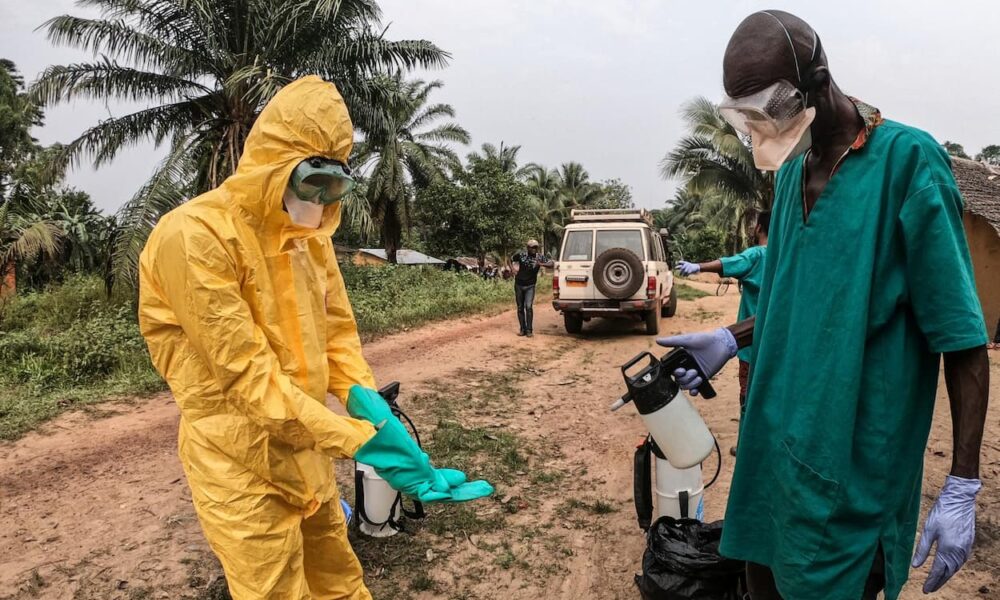
The Ebola outbreak caused by the Bundibugyo virus remains at a very high level in the Democratic Republic of the Congo. As of November 3, 2026, the World Health Organization recorded 10,668 confirmed cases and 5,198 deaths, a crude case fatality rate of 48.7%. Two new candidate vaccines will now join the Tumaini clinical trial.
The WHO Figures
• 10,668 confirmed cases.
• 5,198 deaths.
• Crude case fatality rate: 48.7%.
• 67 health zones affected across eight provinces.
• Transmission still active in 51 health zones.
Nearly 1,000 new cases since the previous update
Since the previous WHO update of October 23, the DRC has reported 964 new confirmed cases and 511 additional deaths.
In the last 21 days, 1,463 new confirmed cases have been reported, mainly in Ituri and North Kivu.
Community mortality remains a major problem
Among the 512 deaths recorded since October 21, 335 occurred in communities and 177 in treatment centers. The WHO notes that this high proportion of deaths outside healthcare facilities highlights the persistent challenges of early detection and rapid access to supportive treatments.
Two new vaccines target Bundibugyo specifically
Experts at the WHO have recommended the integration of two additional candidate vaccines into the Tumaini trial: ChAdOx1, developed by the University of Oxford with the Serum Institute of India, and mRNA-1469 from Moderna.
This is the first time vaccines specifically designed against Bundibugyo virus are being evaluated during an active outbreak. Their integration into the trial remains subject to national authorizations.
Ring vaccination as a trial method
Tumaini uses a ring vaccination strategy: the contacts of affected or deceased individuals are recruited around confirmed cases. Four vaccination rings were already active at the time of the WHO’s announcement, and several others were in preparation.
The Ervebo vaccine, approved against the Ebola Zaire virus, is also being evaluated in Tumaini to determine whether it provides protection against Bundibugyo. There is currently no vaccine specifically approved against this variant.
Experimental treatments are also progressing
The PARTNERS trial studies several therapeutic options, including the monoclonal antibody MBP134, remdesivir and their combination. Maftivimab should also join the trial, while a study on obeldesivir is being conducted in post-exposure prophylaxis.
No specific alert for Tunisia, but monitoring exists
The WHO continues to assess the risk as very high in the DRC, high for countries sharing a land border with the DRC, and low at the global level in its latest available assessment, under review.
The Organization discourages blanket travel or trade bans with affected countries and favors surveillance, traveler information and targeted measures. Control or screening measures have nonetheless been put in place in several countries, including Tunisia, according to the ECDC.
Sources: World Health Organization, ECDC, Africa CDC. Data as of November 3 and published on November 6, 2026.