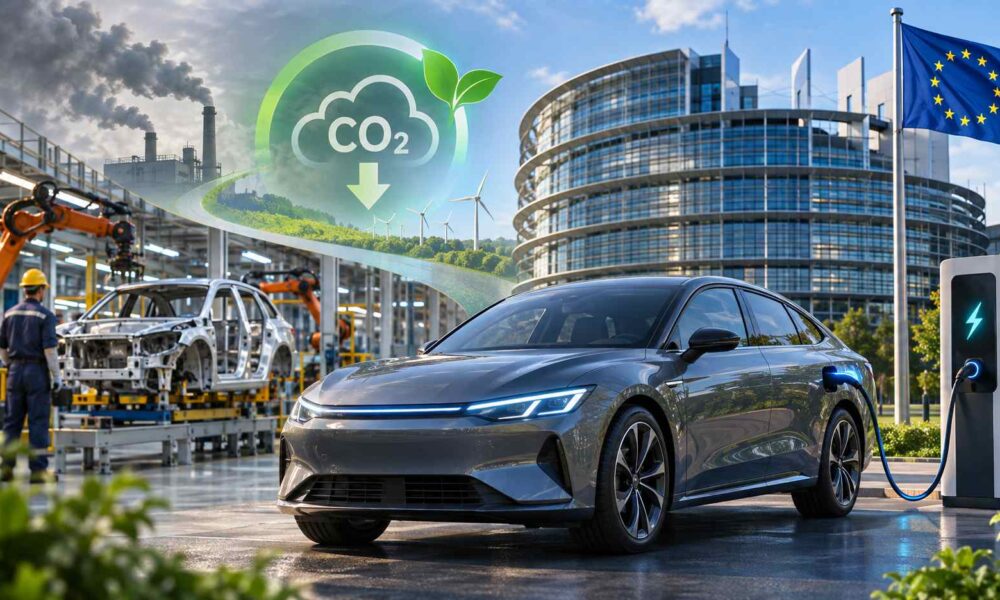
The European decarbonization timetable for the automotive sector could evolve. The Environment Committee of the European Parliament supported on November 4 a target to reduce CO2 emissions from new cars by 87.5% starting in 2035, complemented by a mechanism that could represent 7.5 points through the use of low-carbon steel produced in the European Union.
But this position is not yet law: the Parliament must vote in plenary in December before negotiations with the Member States.
What is agreed — and what is not
• The current European law remains directed toward a reduction of 100% of CO2 emissions from new cars by 2035.
• The European Commission had proposed to scale back the direct effort to 90%, with compensations.
• The Environment Committee of the Parliament now proposes 87.5% + 7.5 points linked to the use of low-carbon steel produced in the European Union.
• The European Parliament will vote in plenary in December, then must negotiate with the governments of the Twenty-Seven.
The European “2035” target has not yet been amended
The November 4 vote constitutes a parliamentary step and not an immediate modification of European law. The Environment Committee adopted a position that will serve as the basis for the vote of the entire European Parliament.
If plenary confirms this direction in December, the Parliament will then have to negotiate with the Council of the European Union, which represents the member states. The final text can therefore still evolve.
Why Europe is considering easing its objective
The European automobile industry is asking for more flexibility in the face of a slowdown in demand for electric vehicles in certain markets, transition costs, and competition from Chinese and American manufacturers.
The European Commission had already proposed at the end of 2025 to replace the direct reduction target of 100% with a drop of 90%, with the remaining 10 points potentially offset by low-carbon steel and certain alternative fuels.
The parliamentary committee chose a different formula: 87.5% direct reduction, complemented by 7.5 points tied to the use of low-carbon steel produced in the European Union. Small electric vehicles or particularly efficient models could also benefit from regulatory “super credits.”
France and Germany still defend another option
Paris and Berlin have agreed on a 90% reduction in emissions from 2035, without an additional compensation mechanism. This position has been transmitted to the other member states.
European negotiations will therefore address not only the level of the objective but also how to calculate it.
Why Tunisia is following this debate closely
Tunisia is strongly integrated into the European automotive value chain. According to the Tunisian Automotive Association, the sector comprises nearly 300 companies and employs more than 120,000 people. It generates about 3.9 billion euros in annual exports.
Germany accounts for 37% of Tunisian automotive exports, France 21%, Romania 12%, and Italy 11%. The evolution of technologies and European rules directly influences orders, investments, and the skills required from suppliers located in Tunisia.
A shift in the calendar does not mean a halt to electrification
Even if the 2035 target is relaxed, the European industry will continue to invest heavily in electric vehicles, software, power electronics, and connected systems. Intermediate targets, CO2 standards, and manufacturers’ industrial strategies remain aimed at reducing emissions.
For Tunisian equipment makers, a relaxation could mainly alter the pace of transformation of order books. Components related to thermal or hybrid powertrains could maintain a market longer, while activities related to electric and software would continue to advance.
The Tunisian sector has already embarked on upgrading
The TAA emphasizes that the Tunisian ecosystem is no longer limited to traditional components. Engineering, software, research and development, and technologies associated with smart and connected cars are taking an increasingly important place.
This diversification is important because the automotive transition is not only about the engine. It also changes the electrical architecture, sensors, wiring, software, safety systems, and production methods.
120,000 jobs are not mechanically endangered or protected by the vote
It would therefore be excessive to conclude that the European vote automatically protects the 120,000 Tunisian jobs, or conversely that maintaining the current objective would threaten them all. Tunisian companies operate in different fields and their exposure varies according to products and customers.
The key challenge for Tunisia is visibility. The clearer the European 2035 framework becomes, the more equipment manufacturers can adjust their investments, training, and production capacities to the future needs of European manufacturers.