On the 252nd day of the war between the United States and Iran, and 143 days after the June 17 memorandum, the sequence enters a paradoxical phase: diplomatic contacts are intensifying, yet both sides continue to prepare for the possibility of a new escalation.
The U.S. Vice President JD Vance now plays a central role in the indirect discussions with Tehran, while the Guardians of the Revolution announce new underground capabilities, missile and drone systems with low radar signatures, and a readiness for potential strategic shifts.
The Essentials
• JD Vance has been personally involved for about two weeks in indirect discussions with Iran, with Qatar and Pakistan serving as mediators.
• Washington is allowing diplomacy to proceed for now, but its forces remain ready to promptly resume broader operations.
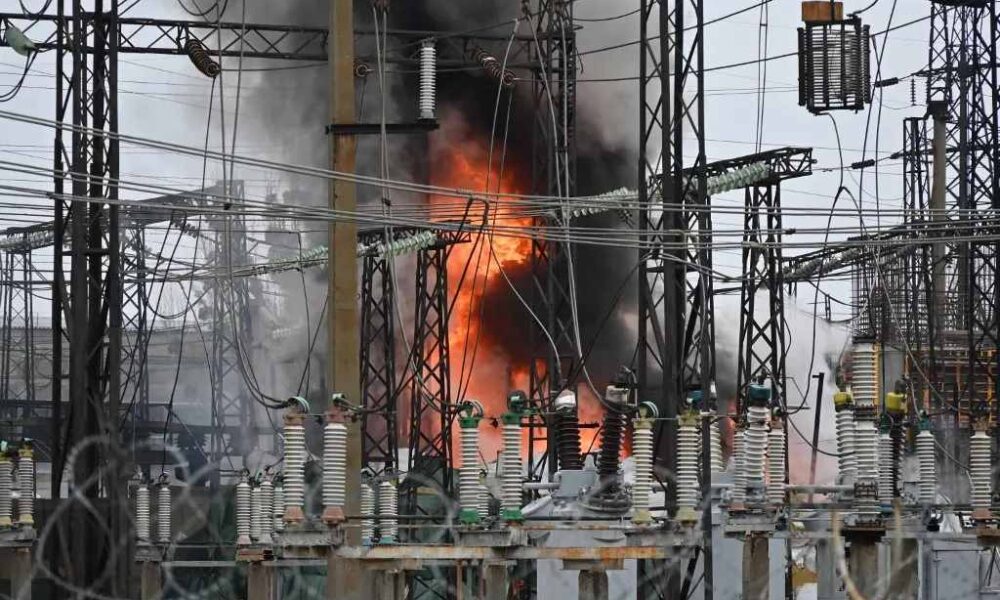
• On Friday, the United States confirmed a limited strike against an Iranian air defense system near Qeshm Island.
• The Guardians claim to have developed underground complexes enabling continued production and storage of weapons under bombardment, as well as missiles and drones with reduced radar signatures.
• Brent closed Friday at $98.32 per barrel, down by about 17% for the week. WTI finished at $90.83, down about 13% for the week.
• The American military cost of the war is estimated at more than $47 billion, while freight and maritime insurance remain markedly more expensive than before the conflict.
JD Vance Takes the Lead on Indirect Talks
According to Axios, JD Vance has been involved for about two weeks in high-level indirect discussions with Iran, aimed at obtaining a new ceasefire and reviving nuclear negotiations.
The vice president exchanges nearly daily with Qatari Prime Minister Mohammed bin Abdulrahman Al-Thani, Pakistan’s Army Chief Asim Munir, and other mediators. Steve Witkoff and Jared Kushner are also participating in these efforts.
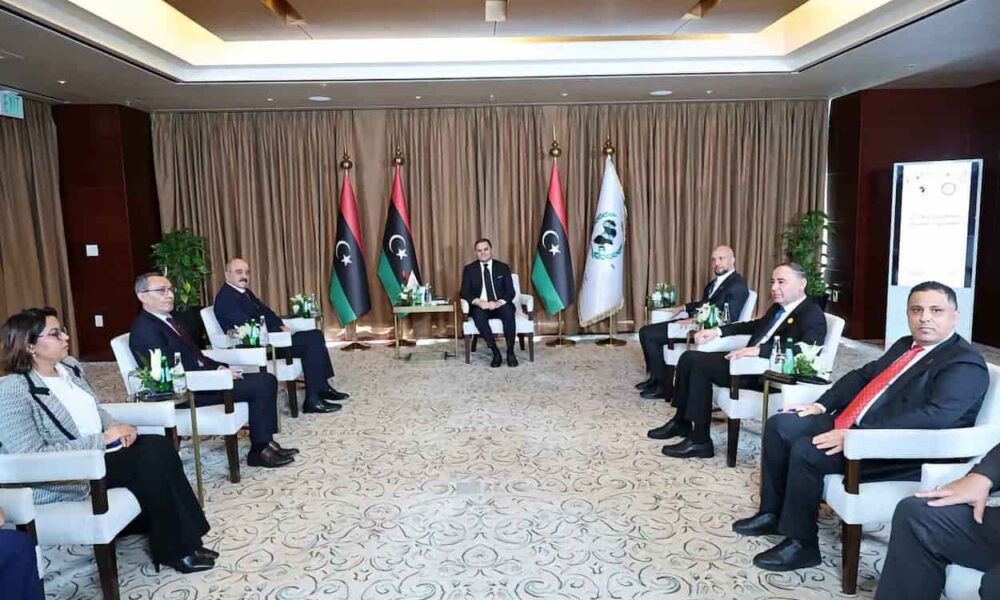
The mediators are specifically discussing the possibility of a technical meeting between American and Iranian representatives. This meeting had not yet been organized by Saturday morning.
Vance had already sent a letter at the end of October to Mohsen Rezaei, secretary of Iran’s Supreme National Security Council, proposing a resumption of direct talks while stressing the need to address the Iranian nuclear program.
Qatar Claims Progress Has Been Made
The Qatari Prime Minister stated on Saturday that mediation efforts were continuing to prevent another regional escalation. He says the American administration remains willing to pursue a solution after the midterm elections and that significant progress has been achieved.
Doha nevertheless believes that a perfect agreement is not realistic in the immediate term and calls the two sides to seek a workable compromise. The main objective remains to reopen the Strait of Hormuz on a durable basis, restore part of the economic flows, and return the two countries to more formal nuclear discussions.
The proposals currently under discussion include the lifting or easing of the American blockade, the unfreezing of part of Iran’s frozen assets, and the resumption of some oil exports in exchange for Iranian nuclear measures, including a return of international inspectors to certain sites.
Trump: “We Are Talking with Them”
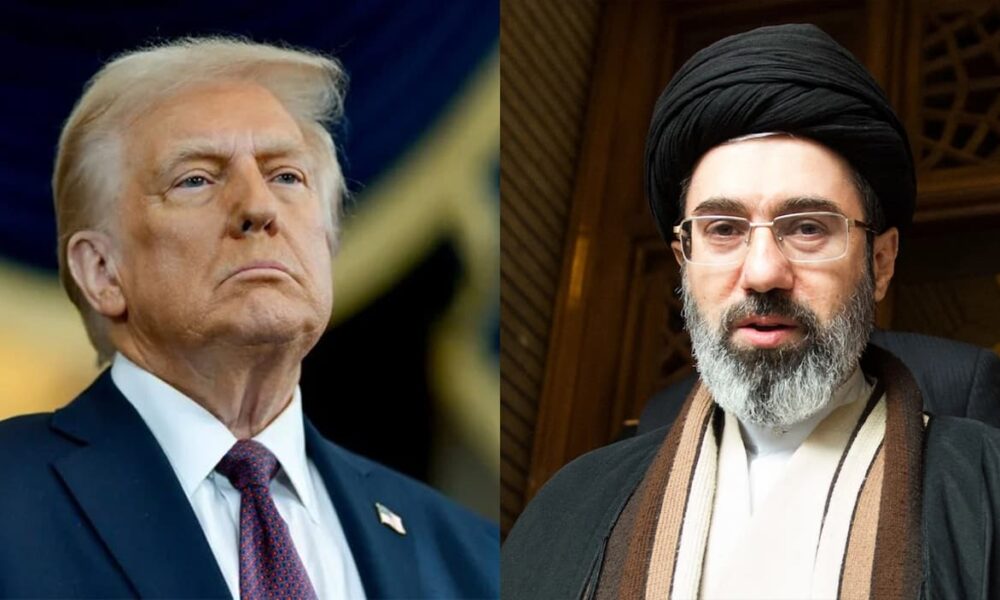
Donald Trump confirmed on Friday that the United States is currently in contact with the Iranians. He indicated that the coming days would determine the direction in which the situation would evolve.
The American president continues to insist that his top objective is to prevent Iran from obtaining a nuclear weapon. His public statements remain very hard toward Tehran, and he maintains the possibility of new military operations.
Several of his assessments regarding the Iranian economy, military losses, or the impact of the blockade are political statements and cannot be considered verified data without independent sources.
Qeshm: A New Limited Strike Confirmed by Washington
On Friday, American forces conducted a limited strike against an Iranian air defense system near Qeshm Island in the Strait of Hormuz. According to Axios and the Associated Press, Washington says the system had fired a missile at a U.S. fighter jet.
Iranian media, for their part, reported two projectiles hitting the Suza area, with no official information on possible human or material damage.
The Iranian army also claimed to have shot down an American drone over Qeshm. Iranian sources, however, disagree on the model, citing an MQ-1 or an MQ-9 according to reports. The United States has not confirmed this loss.
The Guardians Highlight Underground Complexes
On the occasion of the week dedicated to its aerospace force, the spokesman for the Revolutionary Guards, Hossein Mohebbi, presented several evolutions that Iran attributes to its national military industry.
According to him, Iran has developed underground complexes intended for the production and storage of weapons, designed to operate even during intensive bombing campaigns. He states that this infrastructure makes it harder for adversaries to assess Iran’s missile stocks.
The spokesman also affirmed that Iranian missiles and drones have benefited from reduced radar signatures and new capabilities enabling them to penetrate several layers of air defenses.
These capabilities cannot be independently assessed from Iranian statements alone. The numbers, locations, and exact performance of underground facilities remain classified.
Tehran Claims Heavy American and Israeli Air Losses
The spokesperson for the Revolutionary Guards also claimed the destruction or capture of a very large number of enemy aircraft during the war. Among his statements is a total exceeding 260 enemy aircraft shot down or destroyed and the intact recovery of seven reconnaissance drones in the last two weeks.
He also cited several types of combat aircraft, including F-35s, F-16s, and other aircraft, among the losses he attributes to adversary forces.
These figures are Iranian military claims and lack independent confirmation. They do not match publicly available American or Israeli tallies and should therefore be treated with caution.
Doctrine: No Iranian Decision to Change Nuclear Policy at This Stage
Hossein Mohebbi stated that the Revolutionary Guards would be prepared to adapt if Iranian authorities decided to alter the country’s nuclear doctrine. He also said that the expansion of missile range would continue.
However, this statement does not mean a doctrine change has been decided. Mohsen Rezaei had indicated a few days earlier that no official decision had been made by the government or the Supreme National Security Council on this matter.
An American Military Establishment Still Massive
Even as Washington currently gives diplomacy time, its military apparatus remains substantial. The United States has about 50,000 troops in the broad Middle East, according to several American officials cited by the American press.
Two carrier strike groups are already in the region and a third, centered on the USS Theodore Roosevelt, is en route. With additional amphibious groups, the reinforcement could add about 9,000 to 10,000 troops and several dozen aircraft.
This concentration of forces allows Donald Trump to maintain a rapid strike capability even as the talks continue.
Sanctions: Washington Targets Eight Canadian Companies
The U.S. Treasury Department announced on November 6 new sanctions against eight Canada-based financial services companies. Washington accuses them of facilitating transactions enabling the Iranian regime and sanctioned entities to access the international financial system.
According to the Treasury, these companies allegedly enabled converting Iranian rials and other currencies into digital assets. Some would also have conducted transactions with sanctioned Iranian platforms and with digital addresses linked to the Revolutionary Guards.
The same mechanism also aims to cut MEXC Global’s access to the U.S. financial system. The Treasury states that this platform facilitated at least $16 billion of illicit transactions. These are accusations and measures taken by U.S. authorities within their sanctions regime.
Oil: The Market Trims Part of the War Premium
Oil markets reacted strongly to the Democrats’ victory in the midterm elections and the rise of the diplomatic option.
On Friday, November 6, Brent for January delivery closed at $98.32 per barrel, while U.S. WTI finished at $90.83. For the week, Brent fell about 17% and WTI about 13%.
This drop reflects a reduced risk premium tied to a possible broad resumption of U.S. strikes. But prices remain sensitive to incidents around Hormuz: on Friday, Reuters reported that attacks on ships carrying oil remained near record levels.
Hormuz: Flows Rebound, but Remain Far from Normal
According to Vortexa, maritime exports of crude oil, condensates and refined products from Gulf countries, excluding Iran and LPG, reached 17.1 million barrels per day in October, down from 18.9 million in September.
This volume still represents only about three-quarters of the pre-war level. Crude and condensates have recovered more, to about 86% of normal, while refined products reach just over half of their usual level.
Iran remains excluded from these figures, its exports heavily affected by the American blockade.
Freight Becomes a Major War Cost
The disruption of traffic around the Strait of Hormuz has deeply raised maritime transport costs. Reuters notes that the cost of shipping a barrel of crude from the U.S. Gulf to Asia has risen from about $5 a year ago to $30–35 currently.
To this are added elevated war insurance premia, longer journeys, and additional transshipment operations. These costs ripple differently by region: U.S. refineries close to Canadian and Venezuelan oil benefit relatively, while Asian buyers bear a large share of the extra cost.
More Than $47 Billion for the U.S. Military
The war’s budgetary cost remains high despite the recent drop in combat intensity. According to a Pentagon estimate obtained by Reuters, the U.S. military had already spent more than $47 billion as of October 16.
More than $29 billion would be needed to replace ammunition used, and more than $6 billion to replace equipment and platforms lost. This estimate does not necessarily include all repair costs for U.S. bases hit by Iranian attacks.
The Iranian Economy Also Faces a Major Shock
The Iranian economy is heavily affected by the war, sanctions, and the blockade. The IMF now estimates that Iran’s real GDP could fall by 7.6% in 2026.
Reuters reported at the end of October an annual inflation of 73.6% in September, while consumer prices were nearly 90% higher than a year earlier for that month and food and beverage prices rose by 121.8%.
These figures notably contradict Donald Trump’s claim that Iranian inflation would reach 300%. The actual level remains extremely high, but available data do not confirm that figure.
In the United States, Gasoline Remains More Expensive than Before the War
According to the Energy Information Administration, the average price of regular gasoline in the United States stood at $4.153 per gallon on November 2. This is $1.134 higher than a year earlier, even though prices have eased from recent peaks.
This rise in fuel costs has been one of the major political topics of the midterm campaign, with JD Vance himself attributing the Republican defeat to the political cost of the war.
Tunisia: The Main Channel Remains the Energy Bill
For Tunisia, the main economic risk remains the cost of energy imports, to which shipping, insurance, and potential effects on international prices are added.
In the first nine months of 2026, Tunisia’s trade deficit reached 20.997 billion dinars, according to INS. The energy deficit stood at 10.480 billion, against 8.1064 billion in the same period of 2025.
Energy thus accounts for about 49.9% of the total trade deficit. Energy imports rose by 32% year over year.
These figures do not mean that the entire deterioration is due to the war in Iran: quantities imported, contracts, exchange rates, and other factors are involved. But a sustained rise in oil, freight, and risk premia would put additional pressure on Tunisia’s external bill.
A Real Diplomatic Window, but Fragile
November 7 thus shows a two-sided situation. On one hand, mediators describe real progress, Vance is conducting high-level contacts, and Trump is willing to let the talks proceed. On the other, American forces still punctually strike Iranian defenses and Tehran highlights new military capabilities and warns of widening its response in case of an attack.
The coming days will depend mainly on three elements: the possibility of organizing a direct or semi-direct technical meeting between Americans and Iranians, the mediators’ ability to reach a compromise on Hormuz and the sanctions, and Donald Trump’s final decision on a potential new military campaign.