A collective of Tunisian battery manufacturers and assemblers calls on deputies to delete or amend Article 49 of the 2027 finance bill. This provision provides an exemption from customs duties, from the value-added tax (VAT), and from the levy in favor of the FODEC for batteries imported for electricity storage.
The manufacturers argue that the mechanism risks disadvantaging local production. The government, for its part, emphasizes support for electrical storage and the energy transition.
The Essentials
- Article 49 of the bill: import exemption for storage batteries falling under tariff heading 8507, after a technical opinion from the ministry in charge of Industry.
- Article 46 of Finance Law 2026: customs exemption and 7% VAT on certain inputs not locally produced to manufacture lithium batteries.
- Manufacturers demand comparable competition rules, as well as guarantees on safety, after-sales service and recycling.
- The 2027 provision is still under discussion and does not constitute, at this stage, a measure in force.
What Article 49 Actually Provides
The text submitted to Parliament concerns batteries intended for electricity storage, classified under tariff heading 8507.
On import, the proposed relief covers three levies: customs duties, value-added tax (VAT), and the professional tax allocated to the Competitiveness Development Fund (FODEC). The grant of the advantage would be subject to a technical opinion from the competent services of the Ministry of Industry.
The objective stated in the project presentation is to facilitate the acquisition of storage equipment, essential for valorizing solar and wind electricity outside their production period.
The scheme could reduce certain import charges; however, this is not sufficient to establish the final price level paid by the buyer.
Why Tunisian Manufacturers Denounce Unequal Competition
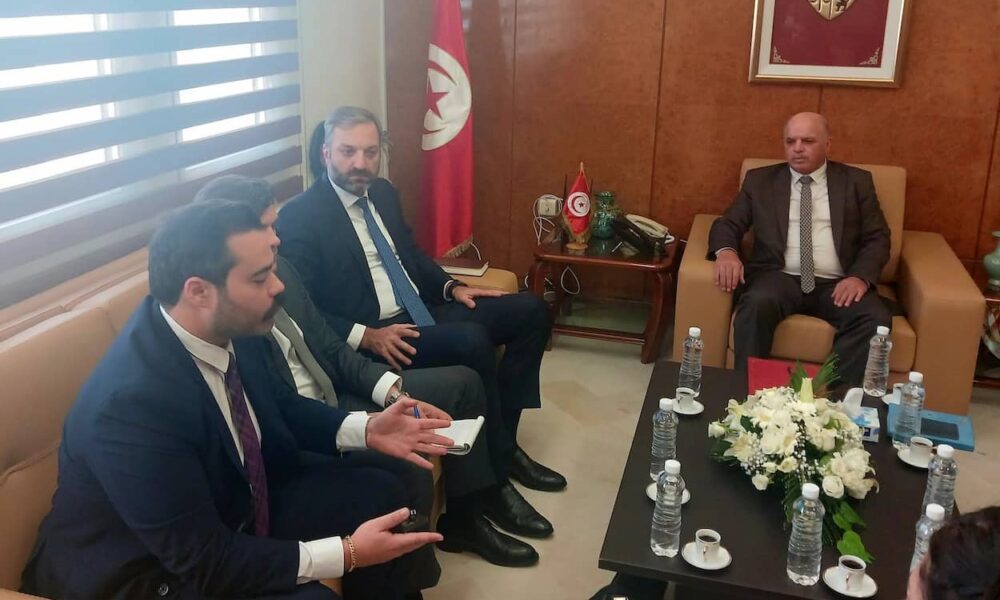
In a statement sent to Tunisia Digital on November 17, 2026, the manufacturers and assemblers say that full exemption of imported finished batteries could put local units at a disadvantage. They specifically cite the activities of Starz Energies, Starz Electronics, GPE, Assad, Actia and Batterie Nour as affected by this development.
Their critique centers on the coherence of industrial policy. Article 46 of Finance Law 2026 has already removed customs duties and reduced the VAT to 7% for a defined list of inputs not produced locally and needed to manufacture lithium batteries. The manufacturers argue that after encouraging this investment, the legislator should not establish a regime more favorable to imported finished products without an equivalence mechanism for domestic production.
Nevertheless, one must distinguish between the taxation of an input, that of a finished product, and the VAT deduction rules applicable to each operator. The exact competitive cost has not been independently quantified in the documents reviewed. The imbalance cited thus remains a position defended by the manufacturers and subject to parliamentary debate.
Prices to Consumers: A Price Drop Is Not Automatic
In their note, the manufacturers emphasize that a battery represents only part of a storage system: inverter, wiring, protections, installation, and possibly photovoltaic panels add to the bill. They also note that the reduction in import tax might not be fully passed on to the sale price.
Conversely, tax relief could improve access to certain equipment if importers pass on the savings and if competition works. Available sources do not allow predicting either a definite price decrease or a definite increase in household bills.
Safety of Equipment, After-Sales Service and Recycling at the Center of the Disagreement
The signatories call for technical controls applicable to all batteries marketed, whether manufactured in Tunisia or imported. They highlight issues of reliability, lifespan, fire safety, warranty, traceability, and recovery of used batteries.
They propose in particular to restrict the advantage to technologies not produced locally, to provide a comparable tax treatment for the Tunisian product, to frame safety standards, to establish take-back and recycling responsibility, and to examine the place of local components in public programs. These are collective requests, not adopted measures.
The Parliament Has Already Heard from the Industry
The parliamentary finance committees heard representatives of the sector on November 14, 2026. According to the Assembly’s official minutes, they requested the abandonment of Article 49 or, failing that, a reconsideration of the mechanism in consultation with STEG, ANME, professionals and consumer organizations. Several deputies expressed similar concerns about competition and the stability of the industry’s support rules.
The issue thus raises an economic policy question: how to make storage cheaper without discouraging local investments? Any potential modification of the text will have to reconcile the energy transition, consumers’ access to equipment, and industrial competitiveness. At this stage, the final wording of the measure has not been decided.