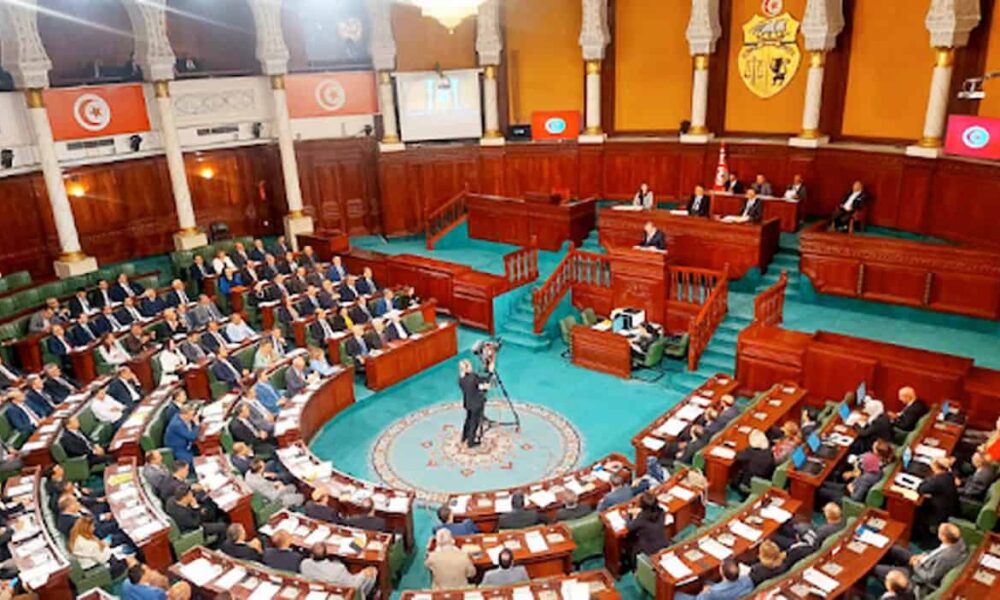
The finance and budget commissions of the People’s Representatives Assembly (ARP) and the National Council of Regions and Districts have adopted six articles of the finance bill for the year 2027. These provisions notably concern the funding of professional training, the collection of registration duties on public contracts, as well as the simplification of certain customs and tax procedures.
However, the two commissions decided to defer consideration of the article relating to the submission of biodegradable plastic bags under the environmental protection tax.
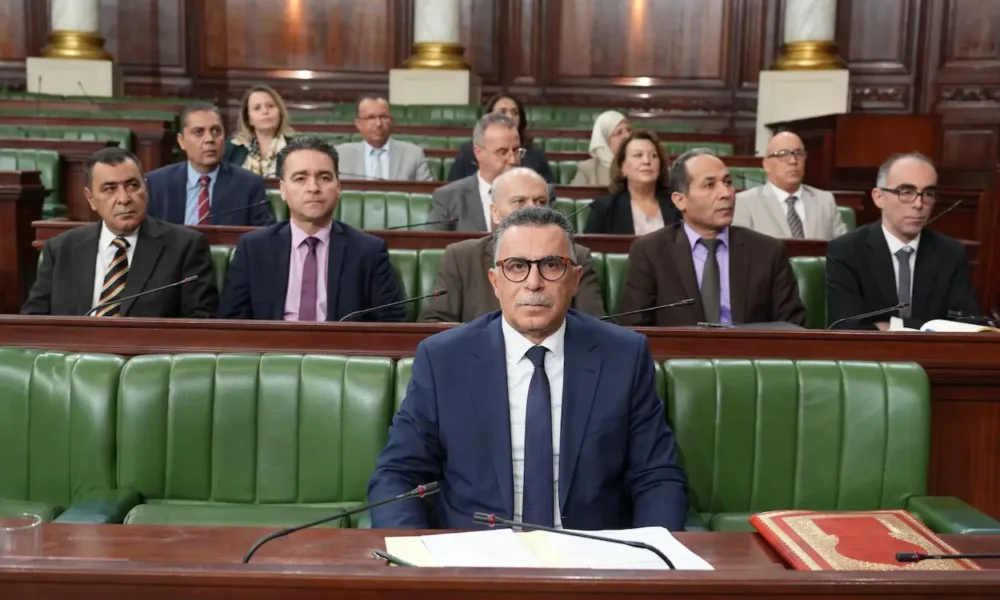
These decisions were taken at a joint session held on Thursday, November 19, 2026, under the presidency of Ali Hassoumi Biyouli and Maher Kettari, in the presence of representatives of the Ministry of Finance. The meeting was part of the ongoing examination of Articles 59 to 69 of the finance bill.
Article 59, adopted by the two commissions, concerns the revision of the financing mechanisms for professional training within enterprises. It provides for the abandonment of the advance system, which allowed companies to deduct 60% of the tax due for professional training, based on the amounts payable in the previous year. This arrangement will be replaced by a mechanism allowing training expenses to be deducted after they are incurred and upon presentation of the necessary supporting documents.
According to a Saturday press release from the National Council of Regions and Districts, representatives of the Ministry of Finance explained that this modification responds to difficulties encountered under the current system, notably the particularly long validation times and the complexity of tax audits. They indicated that about 30% of beneficiary companies had not presented their training programs or the required supporting documents, while files from nearly 20% of them had been rejected for formal reasons.
Asked by deputies about the reasons justifying the generalization of this reform to all companies, some lawmakers proposed maintaining the advance system while reducing its rate to 50%. The representatives of the ministry, however, stressed that the new mechanism would condition the benefit of this advantage on the actual completion of the training. Its entry into force is planned for January 1, 2028.
The two commissions also adopted Article 60, which aims to improve the collection of registration duties on contracts for public procurement concluded with foreign suppliers. This provision is intended to guarantee the full payment of the due duty, set at 0.5% of the contract amount, at the time of registration of contracts whose settlements are made directly from abroad.
Article 61, also adopted, concerns the simplification of procurement procedures meeting certain confidential needs. It provides for the widening of the list of public bodies benefiting from specific procedures allowing certain expenditures to be exempt from the prior approval of the public spending controller. This measure concerns several structures under the Ministries of National Defense and of the Interior.
The adoption also covered Article 62, relating to the harmonization of duties related to administrative formalities for transport authorizations. It provides for re-subjecting certain authorizations to the payment of duties, notably those concerning commercial transport vehicles with a weight exceeding 3.5 tons as well as buses, excluding passenger cars.
In the same vein, the deputies approved Article 64, which provides for a reduction in customs duties applicable to telecommunications terminal equipment. The rate will thus fall from 30% to 10% for modems and routers used to access the Internet via 4G and 5G networks, as well as fiber optic networks. This measure remains subject to obtaining the technical opinion of the competent services of the Ministry of Technologies of Communication.
The two commissions also adopted Article 65, relating to the alleviation of sanctions provided for for procedural infringements in customs matters. The new provision aims to establish a distinction between procedural breaches that cause no injury to the public treasury nor any breach of legal measures, and offenses that entail real harm.
Representatives of the Ministry of Finance clarified that offenses resulting in shortfalls in the payment of duties and taxes or violations of restriction and control measures will remain subject to the sanctions currently in force. The new provisions are expected to come into effect on January 1, 2027.
The two commissions will continue, at their next meetings, to examine the other articles of the 2027 finance bill, as well as proposed amendments, additional articles, and budget provisions.