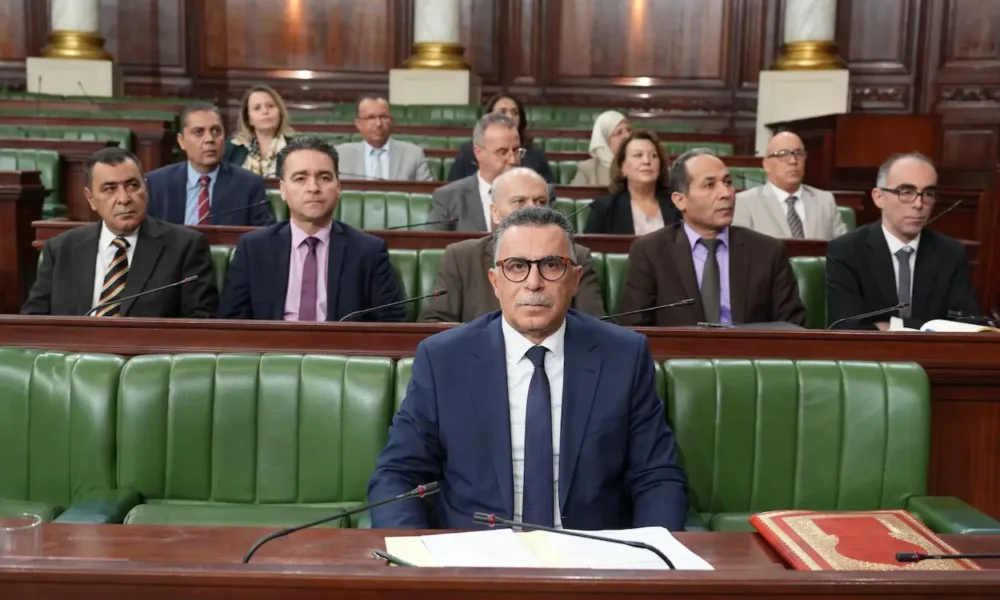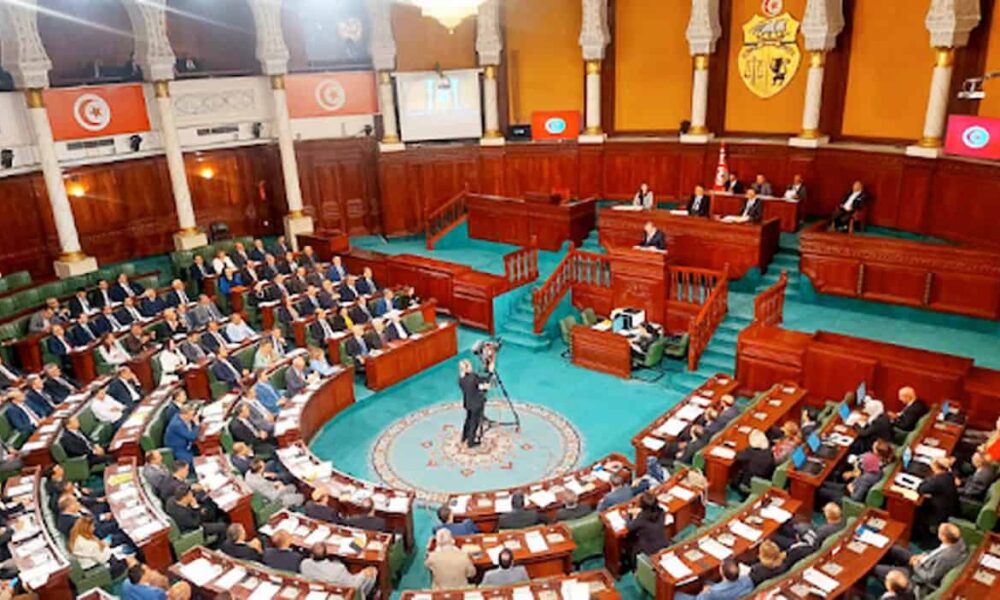
The Finance and Budget Committees of the People’s Assembly (ARP) and the National Council of Regions and Districts have adopted Articles 66 to 69 of the draft Finance Bill for the year 2027. These provisions notably concern strengthening tax control, curbing parallel trade, regulating the mobile phone market, and promoting electronic payments.
Article 66: Strengthening tax control
Adopted at the joint session held Thursday, November 19, 2026, Article 66 aims to strengthen the right of communication granted to the tax authorities. It provides to require delivery companies of goods sold online or via audiovisual media, as well as service providers of connectivity through electronic platforms, to transmit to the tax administration, every six months, a nominative list of the suppliers with whom they work. Fines are also provided in case of non-compliance with this obligation.
The representatives of the Ministry of Finance explained that this measure is intended to complement the provisions introduced by the 2025 Finance Law, which provides a 3% withholding at source on amounts paid to suppliers without a tax identifier, according to a communiqué issued Saturday by the National Council of Regions and Districts.
The yield of this withholding at source reached 5.9 million dinars in 2025 and 5.3 million dinars by the end of September 2026, according to data presented during the session.
The representatives of the ministry also indicated that the tax control services had carried out verification operations with about fifty delivery companies, whose combined turnover amounted to around 4.8 billion dinars in the period from 2021 to 2025.
This new provision aims to allow the tax administration to compare the transactions actually carried out with the tax declarations, broaden the tax base, and bring undeclared activities into the organized economic circuit.
The deputies expressed their support for the principle of tax justice and the application of the same obligations to all economic operators. They nevertheless stressed the need to clarify the limits of the liability of delivery companies and to ensure compliance with provisions relating to the protection of personal data.
Article 67: a 20-dinar tax on mobile phone registration
As part of regulating the mobile phone market and combating parallel trade, Article 67 provides for the establishment of a 20-dinar stamp duty for each registration operation of a mobile phone via the “Sajalni” platform, with the exception of the first registration.
The representatives of the Ministry of Finance clarified that this measure aims to strengthen the traceability of devices and to build a database enabling the identification of people registering a large number of phones, in order to verify the nature of their activities and their compliance with fiscal and customs obligations.
This provision raised questions from the deputies about its implications for citizens who acquire several phones for personal or family needs. They particularly stressed the need to clearly distinguish personal use from commercial activity.
Article 68: reduction of customs duties on smartphones
The two commissions also approved Article 68, which provides for a reduction in the customs duties applied to the importation of smartphones, which will drop from 20% to 10%.
This measure aims to reduce the cost of import through legal channels and to narrow the price gap between phones marketed on the official market and those offered in the parallel circuit.
The deputies estimated that this reduction could encourage the use of legal channels and help curb smuggling, provided it indeed results in lower prices on the local market.
Article 69: tax exemption for electronic payment equipment
With regard to promoting electronic payments, Article 69 provides to reduce to 0% the import duties on electronic payment terminals and to exempt them from value-added tax (VAT), whereas they were previously subject to a 7% rate.
According to representatives of the Ministry of Finance, this measure aims to reduce the acquisition cost of these devices for merchants, professionals, and artisans, as well as to encourage the use of dematerialized payment methods, especially since there is no local production of these devices.
The deputies, however, noted that tax reductions alone are not enough to generalize electronic payment. They called for revising bank fees, reducing the cost of equipment for small businesses and professionals, improving network quality, and ensuring service stability.
These measures are part of the ongoing examination of the 2027 Finance Bill by the two commissions. Work will continue in upcoming sessions with the study of amendment proposals, additional articles, and budget provisions.