Escalation resumes in the Gulf. The Islamic Revolutionary Guard Corps claim to have struck two U.S. Patriot air defense radars in Bahrain. Manama, by contrast, says that an Iranian attack hit a wholly civilian industrial facility, triggering a fire but with no casualties reported. In the Strait of Hormuz, two new alerts concerning tanker ships have further heightened maritime tensions.
These events come as Washington and Tehran continue to accuse each other of provocations, as Israel is reportedly considering new strikes against Iran according to American media, and as the Iranian president acknowledges the gravity of a “silent economic war.”
Beyond the conflicting military statements, the security of Gulf states, the flow of oil, and the prospects for negotiation are once again at the center of the confrontation.
The Essentials
November 21: Bahrain reports a civilian industrial site hit and no injuries in initial assessments. Iran claims strikes against two American Patriot radars, with no independent proof of their destruction.
Hormuz: UKMTO reports two incidents against tankers on the same day.
Washington: CENTCOM denies that any American F-16 was struck.
Diplomacy: contacts with Qatar and Oman continue, with no agreement on reopening the strait.
267 Days of War, 158 Days Since the Islamabad Memorandum
Saturday, November 21, 2026 marked the 267th day since the war was triggered by the Israeli-American strikes of February 28, counting from the day of onset, and the 158th day since the Memorandum of Understanding of June 17, 2026. These markers correspond to November 21; they evolve daily.
The Islamabad text was meant to pave the way for a durable cessation of hostilities. But disagreements over sanctions, the Iranian nuclear program, and navigation conditions in the Strait of Hormuz prevented the conclusion of a definitive settlement.
Bahrain: claimed American radars and a civilian site hit, according to Manama
In a statement released on November 21 by Iranian media, the Guards announced an operation combining missiles and drones against two Patriot radar systems, located, they claimed, on American positions in Al-Riffa and Awali, Bahrain. They presented the operation as retaliation for American actions against Iran and for alleged violations of its airspace.
Other information relayed by the Iranian agency Fars cited military facilities at Cheikh Issa and Al-Joufair. These designations should not be automatically conflated with the two claimed radars: the statements do not allow a precise reconstruction of all targets and impacts.
Meanwhile, Bahrain’s Interior Ministry announced that an Iranian attack had caused a fire at a civilian industrial facility. Initial assessments reported material damage with no casualties. Authorities issued alerts asking residents to seek a safe place; the kingdom’s air defenses said they had intercepted several attacks.
Bahraini diplomacy rejected the justifications offered by the Islamic Revolutionary Guard Corps, asserting that the site hit was strictly civilian in nature. The kingdom denounced a violation of its sovereignty and recalled its right to take measures to ensure its security.
The destruction of the two radars claimed by Tehran is not independently confirmed. The American denials published on November 13 and 17 concerned previous attacks and should not be presented as a definitive response to the claims of November 21.
Two Versions Not to Be Confused
Iranian Version: two American Patriot radars were targeted, even destroyed according to Iranian media. Bahraini Version: a civilian industrial site was struck and attacks were intercepted. Status of verifications: Bahrain reports material damage to the civilian site; the extent of military damage claimed by Iran remains undetermined.
U.S. F-16: Tehran claims an interception, CENTCOM denies
The Iranian military also claimed that an air-defense missile exploded near an American F-16 fighter jet over the Gulf, forcing, it said, the aircraft to abort its mission and perform an emergency landing.
The U.S. Central Command (CENTCOM) for the Middle East vehemently rejected this version on November 21. It stated that no American F-16 had been attacked during the episode and that all American combat aircraft in the region were safe and accounted for.
These two statements are contradictory. No independent public evidence confirms the Iranian account of the emergency landing.
Drones, Bushehr and Qeshm: a persistent aerial confrontation
The Guards also claimed the destruction of several drones deemed hostile. One was said to have been intercepted off Bushehr, in the northern Gulf. Footage broadcast by Iranian media is presented as showing the destruction of MQ-9 and MQ-1 drones in the Strait of Hormuz area. Their identification and the losses claimed have not been independently confirmed.
On November 17, however, an American military official told Reuters and AFP that there had been an American airstrike against a Guards’ missile-launch site on Iran’s island of Qeshm. Washington described the operation as an act of self-defense in response to attacks on its personnel and equipment.
The Iranian agency Fars also reported, on the evening of November 21, explosions heard at sea near Sirik, in southern Iran. The cause was not established. The hypotheses of warning shots or mine-related incidents are not confirmed explanations.
Hormuz: two tanker alerts and declining oil flows
Maritime traffic remains one of the main risk hotspots. On November 21, the British maritime safety service UKMTO recorded two incidents near the Omani port of Khasab: at 05:00 UTC, a tanker was reported hit in the stern 11 nautical miles north of the port; at 05:50 UTC, another report concerned a tanker struck in its engine room 17 nautical miles east. No injuries were reported in the initial accounts.
The British agency notes that the projectiles were not identified and their environmental impact was unknown. Early information did not allow one to say with certainty that the two alerts involved two different ships. A previous incident had already been reported on November 20, with a fire on board.
Iranian forces spoke of tankers hitting mines in a restricted area, but UKMTO has not verified this account. It would therefore be premature to attribute the two November 21 incidents to mines based solely on that statement.
According to preliminary maritime data reported by the Financial Times, oil flows passing through Hormuz during the second week of November were close to half of their level in the first week. For the week ended November 18, 263 ships crossed the passage, a 15% drop from the previous week; among them, the number of tankers fell from 52 to 37. These figures may change as undetected crossings are identified.
Why the Strait of Hormuz Remains Decisive
Before the war, this passage accounted for about a fifth of global oil flows. A decrease in traffic or a rise in insurance and transport costs can weigh on energy markets.
For Tunisia, potential exposure mainly depends on international hydrocarbons prices and logistical costs; no specific variation in Tunisia’s bill can be attributed to these incidents without additional data.
Iran views the American economic blockade as an “act of war”
Iranian Deputy Foreign Minister Kazem Gharibabadi described the American economic and maritime blockade as an “act of war.” He said Iran would take the measures it sees as necessary to break it, while continuing to engage with mediators.
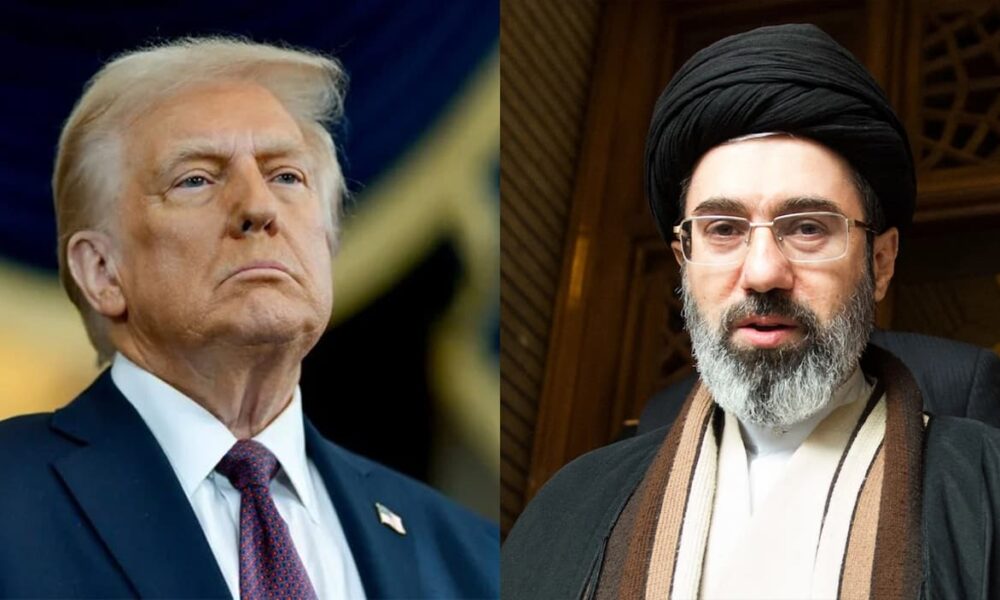
U.S. President Donald Trump, for his part, maintains his demand for an agreement he calls “real” and “permanent,” intended to prevent Iran from obtaining a nuclear weapon. He hinted that a decision on the next step might not come before 2027. Treasury Secretary Scott Bessent advocates a policy of strengthened Tehran’s economic isolation.
Gharibabadi also rejected American accusations mentioned by Tehran about a possible “dirty bomb” or other non-conventional weapons. No independent evidence of such a program has been presented in the materials consulted; these allegations should remain attributed to their authors.
Pezeshkian warns: the “silent economic war” could be harder
During an annual Tehran conference on the capital market, on November 21, Iranian President Massoud Pezeshkian described his country’s economic difficulties as a “silent war,” in his view more taxing than a confrontation limited to missiles.
He said producers, traders, and investors had managed to maintain economic activity despite the pressures and to avoid the widespread shortages feared by authorities. He did, however, acknowledge ongoing energy supply difficulties, worsened by damage to gas facilities, and warned of winter risks.
The head of state urged that industrial units be the last to suffer from potential electricity or gas restrictions, in order to protect production and employment. His remarks acknowledge economic constraints but do not, on their own, quantify inflation or Iran’s export losses.
Israel: Netanyahu pushes for new strikes, the army nuances urgency
According to CBS News and the Wall Street Journal, Israeli Prime Minister Benjamin Netanyahu is seeking American backing for a new campaign of strikes against Iran. The head of Mossad reportedly urged this during meetings in Washington.
The Israeli concerns cited by these outlets revolve in particular around the reconstitution of Iranian missile manufacturing capabilities and the burying of military and nuclear facilities. The same outlets, however, report a more measured view within the Israeli military, which would not regard the Iranian threat as immediately existential.
According to the Israeli daily Maariv, these differences would pit Netanyahu against some military officials over the assessment of nuclear risk. These are press reports based on sources cited by the media, not an official decision published by the Israeli army. Washington has not announced any new joint military operation.
In Tehran, a stance of firmness and call for a preventive strike
Conversely, Iranian officials display determination. The spokesperson for the parliamentary committee on national security and foreign policy, Ebrahim Rezaei, told the Tasnim agency that Tehran’s threats were “real and actionable.” He warned that strikes against Iranian infrastructure could provoke retaliation against Israeli infrastructure.
The Iranian daily Kayhan, close to conservative circles, for its part urged not to wait for a potential American-Israeli offensive and to consider a preventive action. This call reflects an editorial position: it does not constitute an announcement of an Iranian military order.
The deputy commander of the Basij, cited by the Fars agency, says that directives to increase firepower and the precision of missiles have been implemented. The centimeter-level precision mentioned in these statements has not been established by publicly verifiable tests. Iran’s state television has also aired new footage of missile launch systems, presented as a display of capabilities.
Qatar and Oman: diplomatic channels still open
Despite the threats, indirect discussions continue. According to Reuters, a Qatari delegation visited Tehran on the evening of November 20. Gharibabadi said the following day that contacts with mediators continued, notably to explore the possibility of a new diplomatic round.
With Oman, Iran had already mentioned, in an official joint statement dated August 25, a plan for a temporary navigation corridor and a mine-clearing mechanism for the Strait of Hormuz, followed by negotiations on permanent arrangements. This corridor remains a working proposal and not a full reopening yet.
Tehran still links a maritime solution to seven conditions, some of which are publicly detailed, including the lifting of sanctions, the unfreezing of assets, and the cessation of hostilities on several fronts. The full list of these conditions is not reproduced here due to lack of independent confirmation for each. Washington regards the Iranian conditions as unacceptable in their current form. Keeping the dialogue open does not mean an agreement is imminent.
Lebanon: Joseph Aoun denounces both Israeli occupation and Iranian meddling
The regional confrontation also weighs on Lebanon. In a speech delivered on November 21, on the eve of Independence Day, Lebanese President Joseph Aoun said his country faced two major challenges: Israeli occupation of Lebanese territories and external interference, notably by certain Iranian actors, in decisions and arms-related matters within the state.
He called for Israeli withdrawal while reaffirming that no foreign partner should decide for Lebanon’s institutions. His remarks illustrate Beirut’s difficulty in preserving sovereignty in a crisis involving several regional powers.
Cyber intrusions in the United States: another file, with no established link to the strikes
Finally, recent information about a suspected intrusion into the FBI’s National Crime Information Center (NCIC) and a cyber incident affecting the U.S. Department of Agriculture raise questions about the protection of sensitive U.S. systems. According to the Associated Press, the FBI is investigating its system, but the nature of potentially compromised data and the identity of the authors are not known.
There is nothing to establish a link between these cyber incidents and the Iranian military operations in Bahrain or the Strait of Hormuz. Temporal proximity does not by itself prove a coordinated cyber offensive.
What Remains Undetermined
Possible damage to the two Patriot radars; the actual number of drones shot down; the cause of the explosions heard at Sirik; the exact origin of the impacts on the tankers; the possibility of a new American-Israeli military operation; and the outcome of discussions with mediators.
Between military escalation and negotiation, an outcome still uncertain
The tally as of November 21 reveals a crisis on several fronts: claimed fire and interceptions in the Gulf, merchant ships exposed near Hormuz, threats of retaliation, economic pressure on Iran, and the possible prep of new Israeli military options.
At the same time, Qatar and Omani mediations maintain a possibility of discussion, with no public compromise on the main conditions of an agreement. The latest developments thus do not allow declaring an imminent regional war, nor considering a de-escalation as assured.
For the region and for global markets, the decisive developments will now be the confirmation of military damage, the security of navigation through Hormuz, and Washington and Tehran’s ability to convert their indirect contacts into verifiable commitments.