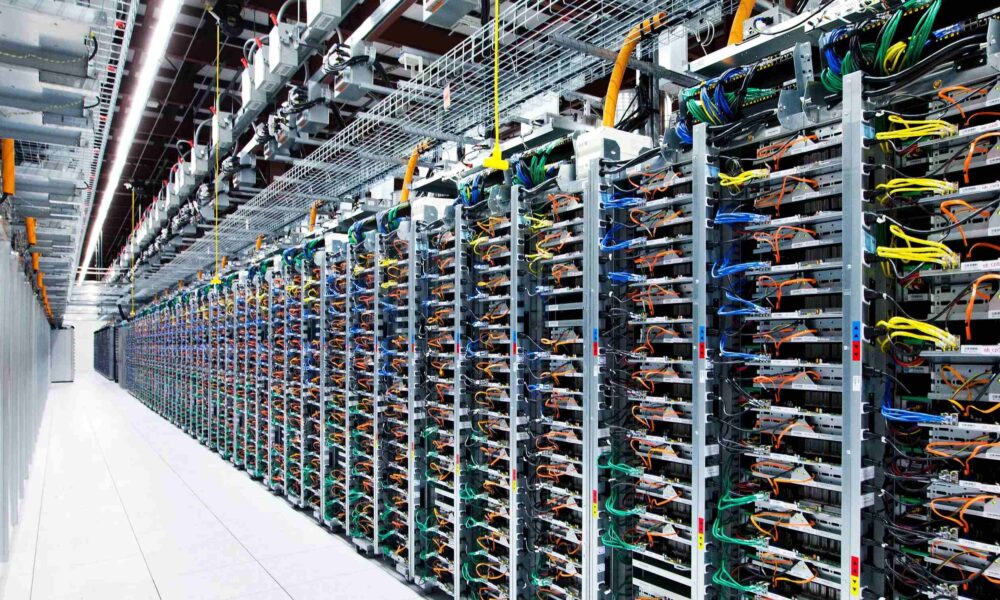
The accelerated development of infrastructure needed for artificial intelligence is entering a new phase in the United States: local acceptability. In the midterm elections, 41 local referendums related to data centers appeared on ballots in ten states. Of the 38 results already tallied the day after the election, 37 favored restrictions or stricter conditions, and only one favored development.
Why the issue is gaining traction
• The capacity of data centers under construction in the United States rose by 48 % between December 2025 and June 2026.
• Texas accounts for about a quarter of the planned U.S. capacity.
• The International Energy Agency estimates that large hyperscale operators should invest more than $700 billion in 2026, mainly in data centers.
• Debates focus mainly on electricity, water, grid costs, land, tax incentives and the number of jobs created locally.
41 Local ReferENDums on the Same Day
According to Reuters and local election-tracking databases, 41 measures relating to data centers were submitted to voters on November 3 in ten states. They did not all relate to the same thing: some proposed moratoriums or bans, others limits on power, new zoning rules or conditions imposed on specific projects.
On the day after the election, 38 results had been reported. Thirty-seven favored limiting or tightening the development of data centers and only one explicitly supported their development. Three results remained unreported at that time. These votes are local and do not constitute a national ban on data centers.
AI Requires a Massive Physical Infrastructure
Behind AI software lie buildings filled with servers, electrical systems, and cooling equipment. The surge in demand for computation has triggered an unprecedented wave of investment.
The International Energy Agency estimates that the largest data center operators should commit more than $700 billion in investments in 2026, mainly in developing new capacity. In the United States, capacity under construction had risen by 48% between December 2025 and June 2026.
Electricity: The First Tension Point
The primary issue is access to the electric grid. A large data center may require tens, or even hundreds, of megawatts. When several projects are concentrated in the same region, new transmission lines, substations or generation capacity may become necessary.
The debate then centers on cost allocation: what share should be borne by the developer, and what share might be passed on to other consumers? Several states have begun to modify their rules to prevent network investments necessary for data centers from being passed onto households and other businesses.
Water and Land Also Become Criteria
Data centers use water directly or indirectly for cooling, depending on their technology and location. The IEA estimates that nearly 40% of the AI-dedicated data center capacity it identified is located in areas already experiencing high or extremely high water stress.
Local concerns also focus on land, noise, backup equipment, emissions and the integration of large industrial buildings into their surroundings.
Texas Concentrates Part of the Debate
Texas is particularly watched as it accounts for about a quarter of planned data center capacity in the United States. The ERCOT grid operator was monitoring more than 400 gigawatts of potential interconnection requests related to data centers, a volume that does not mean all of these projects will be built.
Texas authorities had already paused certain approvals prior to the elections to assess impacts on the grid and on water. The newly elected governor, Gina Hinojosa, has urged maintaining the pause until new protections for communities and consumers have been defined.
Developers Emphasize Investment, Taxation and Digital Services
Industry players defend the benefits of their projects: multi-billion-dollar investments, tax revenues, construction and operating jobs, network development, and availability of digital capacities essential to businesses and AI services.
Amazon, questioned by Reuters before the election, specifically highlighted the jobs, tax revenues and technological services provided by the infrastructures, while noting that it is working with the concerned communities.
A Brake on AI? Not Necessarily
A slowdown in approvals in certain regions does not necessarily mean a drop in global demand for computing. Analysts questioned by Reuters believe some projects could be moved to other states or other countries with more electricity, water, or a more favorable regulatory framework.
Large players also have more options to relocate their investments than smaller developers. An increase in delays and constraints can therefore alter the geography of data centers without eliminating the computing needs that justify them.
A Lesson for Countries That Want to Attract These Investments
American experience shows that the attractiveness of a data center project is no longer determined solely by land price or a tax advantage. Authorities must also anticipate electricity capacity, the cost of grid upgrades, water supply, transparency about consumption, and local economic benefits.
For countries seeking to develop their digital infrastructure, the challenge is thus to find a balance between computing capacity, digital sovereignty, competitiveness and resource availability. The development of AI now hinges as much on electricity networks and planning policies as on laboratories and software.