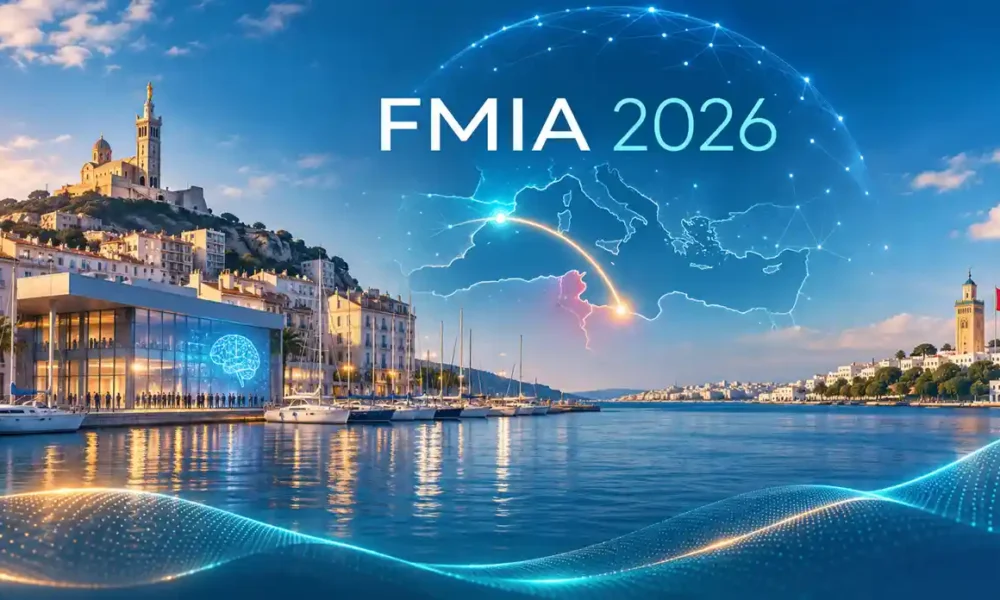
One year after the second edition of the Mediterranean Forum on Artificial Intelligence (FMIA), held on 20 and 21 November 2025 in Tunis, the first spillovers from this gathering are beginning to take shape.
The following edition, held on 5 November 2026 in Marseille, made it possible to measure the path travelled: support for Tunisian startups, selection of a national entrepreneurship support structure, cooperation projects in agriculture, health and the environment, and international recognition of Tunisian research.
But one question remains: the “third Mediterranean path of AI,” announced in Tunis, is it becoming an economic reality, or does it remain mainly a cooperation project?
Key Points
One year after Tunis FMIA, several commitments are beginning to take shape:
- A regional Sila program endowed with 1.8 million euros for five Mediterranean countries.
- Smart Tunisian Technoparks selected among five support structures.
- Two Tunisian startups, Amperon Technologies and Mitus AI, chosen for a specialized program.
- Ten other Tunisian startups present at the Marseille forum with the support of the CDC.
- A Tunisian researcher awarded for her work on AI applied to olive oil.
The main challenge: turning these programs and encounters into contracts, investments, commercialized innovations, and qualified jobs.
From Tunis to Marseille: a year to turn promises into actions
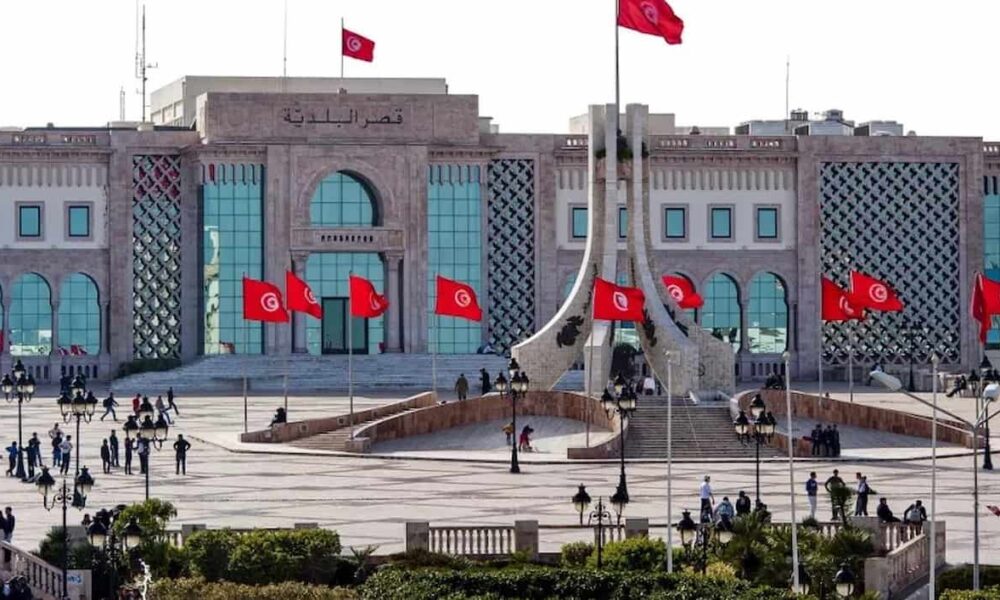
In November 2025, the City of Culture in Tunis hosted the second edition of the Mediterranean Forum on Artificial Intelligence, organized under the auspices of the Tunisian and French authorities.
The summary document sent to Tunisie Numérique mentions more than 3,700 participants and more than 100 startups and companies connected. The FMIA’s official site, for its part, records more than 3,000 participants, more than 500 startups and scaleups present, and more than 100 speakers. The figures concerning companies do not measure the same scope: attendance at the forum and connections made.
Beyond this mobilization, the gathering chiefly carried the ambition of fostering artificial intelligence tailored to the economic and social needs of Mediterranean countries.
The objective was not to reproduce American or Chinese models, dominated by large tech companies and substantial investments in computing infrastructures.
The advocated approach was different: to develop AI that is more accessible, less resource-hungry, respectful of local realities, and capable of offering solutions to concrete problems.
One year later, the Marseille meeting marked a more operational phase.
According to Expertise France, more than 500 participants and 70 speakers gathered at the Palais du Pharo, where 250 business meetings between companies and investors were organized.
These encounters provide business and cooperation opportunities, but should not be automatically equated with contracts signed or investments made.
Key figures of FMIA 2026
1.8 million euros: the envelope for the regional Sila program, covering five countries.
5 support structures: selected, including Smart Tunisian Technoparks.
10 startups: selected for Sila at the regional level, including two Tunisian ones.
10,000 to 30,000 euros: value of specialized services planned for each selected startup.
250 B2B meetings: organized during the Marseille forum.
16 challenge bearers and 75 experts: mobilized in the co-creation pathway, based on 126 proposals.
SILA: 1.8 million euros to structure the Mediterranean AI ecosystem
One of the main announcements at the Tunis forum in November 2025 concerned the launch of the Sila France-Mediterranean initiative.
Financed by the French Ministry for Europe and Foreign Affairs, through the Team France + Fund, and implemented by Expertise France, this program has an announced envelope of 1.8 million euros.
It concerns five countries: Algeria, Egypt, Lebanon, Morocco, and Tunisia.
This funding does not correspond to a grant envelope directly distributed to startups. It aims more broadly to structure national ecosystems, strengthen support structures, facilitate cooperation, and help innovative companies to grow.
For Tunisia, a first concrete result is the selection of Smart Tunisian Technoparks (S2T), among five entrepreneurship-support structures chosen in the five partner countries.
This selection was made after a call that received more than 100 applications. The selected structures benefit from a capacity-building program provided notably by INSKIP and the French Systematic cluster.
The program for these structures covers June to December 2026.
The stake is significant: supporting a startup is useful, but strengthening the bodies that accompany several generations of entrepreneurs can have more durable effects on the national ecosystem.
Two Tunisian startups selected to accelerate their development
The second result directly concerns Tunisian companies specializing in artificial intelligence.
Among the ten startups selected for the Sila program, two per country, are Amperon Technologies and Mitus AI.
The two companies are set to benefit, from November 2026, from a six-month personalized support program.
According to Expertise France, each selected startup may receive between 10,000 and 30,000 euros of specialized services, depending on its needs.
These services may notably include:
- The industrialization of AI solutions.
- Data infrastructure and governance.
- Regulatory compliance and intellectual property.
- Business development and access to foreign markets.
- Preparation for fundraising and meetings with investors.
What startups actually receive
A 30,000-euro grant does not necessarily mean a 30,000-euro bank transfer.
The Sila program provides support consisting of specialized services: technical expertise, strategic advice, business preparation, compliance, structuring, and investment support.
Therefore, one must distinguish the stated value of these services from cash subsidies, equity investments, or a commercial contract.
This distinction is essential. A startup may have promising technology without the means to turn it into a marketable product, obtain certifications, access large customers, or convince investors.
The proposed support aims precisely to overcome these obstacles.
The success of the program will now depend on its ability to generate measurable results: new customers, commercial partnerships, funding, and international expansion.
Ten other Tunisian startups presented to investors
Beyond the Sila program, the Tunisian Caisse des dépôts et consignations (CDC) supported the participation of ten Tunisian startups at the Marseille forum.
This initiative is part of the project “Startups and Innovative SMEs,” funded by the World Bank and implemented by the CDC in partnership with Smart Capital.
With the support of The Dot, these companies benefited from an exhibition space allowing them to present their solutions to economic and institutional partners present.
It is important to distinguish these ten Tunisian exhibiting startups from the ten startups selected in Sila across the five countries. They are two different schemes.
For Tunisian companies, this type of event has commercial value: identifying partners, meeting investors, understanding the needs of foreign markets, and seeking opportunities.
But presence at a trade show is not sufficient to demonstrate commercial success. The contracts signed and the funding actually obtained will be more decisive indicators.
Agriculture, water, health and environment: AI applied to regional issues
FMIA 2026 did not limit itself to promoting startups.
A co-creation pathway mobilized, according to Expertise France, 16 challenge bearers and 75 experts, from 126 proposals collected across the entire region.
This approach aims to bring together companies, researchers, local authorities and public bodies to design solutions tailored to identified needs.
Several areas show particular interest for Tunisia.
Agriculture and water management: using data to make better decisions
In a context of pressure on water resources, AI can help to better analyze agricultural data, anticipate irrigation needs, and improve crop monitoring.
The summary document notably mentions contributions from INSAT, Sowit and the Union for the Mediterranean.
Possible applications include weather data analysis, the detection of certain anomalies in crops, or improved decisions regarding water usage.
The aim is to help agricultural actors make better-informed decisions, without assuming that AI tools can substitute for hydraulic infrastructure or solve water scarcity problems on their own.
Maritime pollution: avenues to protect the Tunisian coastline
Coastal protection is another area of cooperation.
The co-creation pathway notably addressed Recycllux’s work on plastic pollution, with thoughts on adapting it to the Tunisian context.
The document also mentions the participation of the Mahdia municipality and the National Institute of Sciences and Technologies of the Sea (INSTM).
These initiatives could contribute to the development of monitoring and treatment devices for marine litter, subject to the actual realization of the proposed projects.
For Tunisia, the challenge particularly concerns the preservation of coastal ecosystems, marine resources, and economic activities that depend on coastal quality.
Health: developing reliable and usable AI
In the medical field, discussions particularly focused on healthcare professionals’ trust in AI and the challenges of large-scale deployment.
The document cites actors such as Cogepha, InstaDeep and the Pasteur Institute of Tunis.
Potential applications include data analysis, assistance in certain medical decisions, and improved health processes.
However, these solutions require guarantees regarding data privacy, reliability, and validation under real-use conditions.
The challenge is not only to develop a powerful tool in the lab, but to determine under what conditions it can be used safely and helpfully by professionals.
Industry 4.0: AI in the service of competitiveness
Discussions also linked industrial and training structures, including Saint-Gobain, Novation City and ISET of Nabeul, according to the assessment document.
The aim is to help companies integrate AI into their processes: equipment optimization, quality improvement, predictive maintenance, or reductions in consumption.
For Tunisian industry, these applications could become a driver of competitiveness, provided that companies have the necessary skills, data, and infrastructures.
The move from experimentation to industrialization will be decisive in measuring the real usefulness of the developed solutions.
A Tunisian researcher awarded for AI serving olive oil
The third edition of FMIA also confirmed the potential of Tunisian scientific research.
Researcher Farah Jemili, a member of the INSIGHT laboratory at ISITCom, University of Sousse, won the Economic Innovation Prize.
Her project mobilizes AI to authenticate olive oil varieties and contribute to olive yield forecasting.
This distinction was awarded within the Forum’s research prizes, for which more than 80 projects had been proposed. Six laureates were selected, according to Expertise France.
This recognition goes beyond academic acknowledgement.
It demonstrates how Tunisian scientific work can address national economic challenges, notably the valorization of agricultural products, their traceability, and export competitiveness.
The essential step remains: translating research results into operational tools accessible to companies and professionals in the sector.
Why the Mediterranean should not try to copy the AI giants
The Marseille forum also featured conclusions from a strategic report developed by the mathematician Cédric Villani and researcher Lamiae Azizi.
Based on consultations conducted in the five partner countries, this work seeks to identify the strengths and weaknesses of the Mediterranean AI ecosystems.
The assessment is mixed.
The region has scientific talent, engineers, researchers and entrepreneurs capable of developing innovative applications.
But it faces several structural obstacles: limited access to computing infrastructures, funding difficulties, data access, lack of bridges between research and industry, and insufficient capacity to scale projects.
Facing these constraints, the report advocates an approach based on frugal AI, adapted to the technological, economic and energy capacities of the countries involved.
Concretely, it is not necessarily about building the largest models, but about developing and adapting tools able to effectively address precise needs.
For Tunisia, this orientation could offer an advantage. It allows valuing existing skills and targeting economic sectors where the country already has know-how.
This approach does not eliminate the need to invest in training, infrastructure, research, and access to financing.
Investments: a new gateway between the two shores
Access to capital remains one of the main difficulties faced by startups seeking to scale up.
In this perspective, Bpifrance supported the creation of the Med AI community, hosted on its EuroQuity platform.
Its objective is to bring AI entrepreneurs and investors from the two shores of the Mediterranean closer together.
For Tunisian startups, the potential benefit lies in broadening their financial and commercial networks beyond the domestic market.
Nevertheless, one must distinguish the creation of this network from investments actually realized.
Opening a network is a first step; its economic impact will depend on the number of projects funded, the value of deals concluded, and the ability of companies to grow sustainably.
The Forum also gave a place to citizens and Mediterranean diasporas. About fifteen recommendations were formulated around trust in AI, training in digital tools, and supporting work transformations.
One year after Tunis, what assessment for Tunisia?
The assessment of this first year makes it possible to distinguish the advances already achieved from the results that still need to be measured.
Several commitments have begun to take shape: a funded regional program, a Tunisian support structure selected, two national startups benefiting from specialized support, an entrepreneurial presence in Marseille, sectoral cooperation work, and an international scientific distinction.
These results show that FMIA was not limited to a sequence of conferences.
However, turning this momentum into durable economic spillovers remains to be demonstrated.
The results still to be demonstrated
1. Contracts: how many Tunisian startups will sign commercial agreements following FMIA?
2. Investments: how much funding will actually be obtained thanks to investor contacts?
3. Concrete projects: which co-creation initiatives will move from reflection to field experimentation?
4. Research: which innovations developed in laboratories will be used by companies or administrations?
5. Employment: what measurable effects will these programs have on the creation and retention of skilled jobs in Tunisia?
At this stage, public documents consulted do not allow for a consolidated assessment of these spillovers.
It is precisely on these indicators that the “third Mediterranean path of AI” must now prove its worth.
One year after hosting the forum in Tunis, Tunisia has gained visibility and new cooperation opportunities.
The real challenge is no longer simply to show that Tunisia possesses AI talent. It is to give them the means to create, develop, and commercialize their innovations from Tunisia.