For a decade, companies have approached technology as if it were just another machine: one more tool, one more budget, a productivity gain expected at the end of the fiscal year.
Artificial intelligence is currently rendering this logic obsolete. What now distinguishes organizations that progress from those that stagnate lies less in the tools they own than in the way they make them converse with their teams.
This idea has a name, the Augmented Enterprise. It designates a strategic model in which human intelligence is articulated with a suite of technologies: artificial intelligence, machine learning, augmented and virtual reality, the Internet of Things, and robotic process automation. Its premise is that these technologies do not replace human capital; they amplify its reach.
The nuance is decisive, because it separates defensive automation from offensive strategy. Digitalizing a process means digitally reproducing what existed. To augment a company implies rethinking how value is created, delivered and captured in an ecosystem where humans and machines cooperate.
This is the thesis defended by the Arab Institute of Business Leaders (IACE), in a note titled “Understanding the Augmented Enterprise: the fusion of human intelligence and artificial intelligence.” The text offers four concrete translations: AI and advanced analytics placed at the heart of decision-making processes, employees equipped with intelligent tools, immersive and personalized customer experiences, and real-time data exploitation for predictive, agile, and resilient operations.
Schneider Electric: the factory that learns to watch itself at work
The first case selected is that of the energy-management giant. Schneider Electric rolled out EcoStruxure, an open-architecture platform based on the Internet of Things, across its global infrastructure. It connects devices, collects data, and enables real-time monitoring and control.
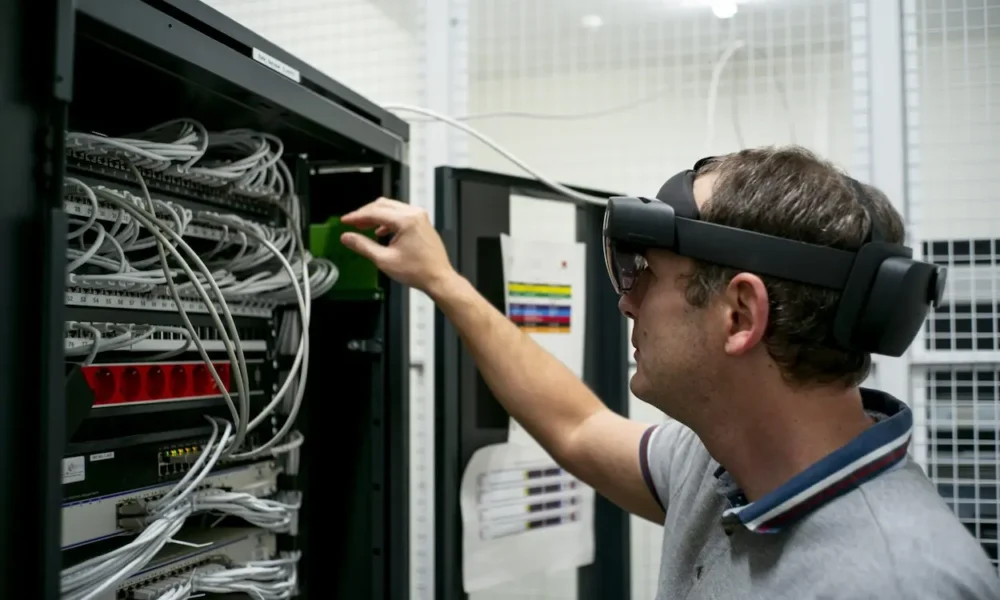
Artificial intelligence plays the role of a sentinel there: it continuously tracks energy consumption, identifies inefficiencies, and optimizes processes. On the human side, maintenance teams have augmented reality tools that enable remote diagnostics and guided repairs, for faster incident resolution.
The numerical result is telling. In its smart factory in Lexington, Kentucky, the group claims to have reduced its energy consumption by 30%, thanks to automation and the data coming from EcoStruxure. Maintenance operations also gain speed, with reduced downtime. The gain does not come from a single technology, but from their combination with the technician’s action.
DBS Bank: trust as the foundation of augmentation