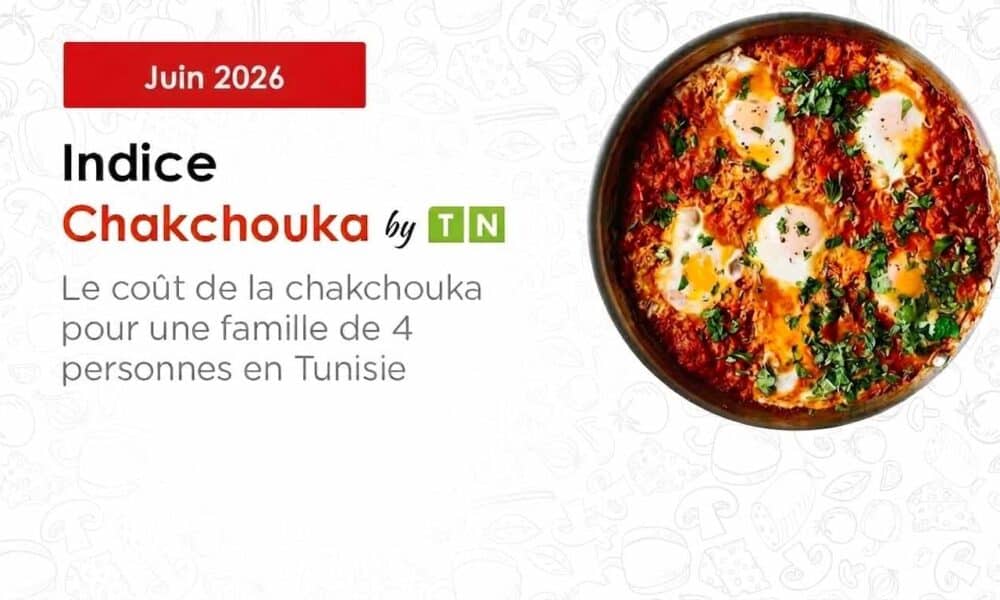
Chakchouka belongs to that category of dishes that are prepared almost without thinking about it. It does not have the ceremonial prestige of couscous, nor the symbolic weight of meat dishes. It is a matter of everyday life: a few vegetables, eggs, a little oil, spices, and the table is served.
It is precisely this simplicity that makes it an interesting indicator of the Tunisian pantry.
Because chakchouka not only tells how much a popular dish costs. It shows how a price can be distributed when no ingredient captures the essence of the bill.
In our series of indicators, dishes now outline a very clear scale of cost concentration:
– Beef makrouna represents the extreme case: beef flesh absorbs nearly 90% of the total price.
– The loubia remains strongly dominated by meat, around 75%.
– Chicken couscous introduces a more distributed structure, with chicken weighing 55% of the total.
– Chakchouka pushes this logic even further: eggs represent 38% of the price, in contrast to a vegetable base that accounts for about 40%.
Chakchouka is therefore not the inverse of couscous. It is its most balanced extension.