No country in the world embodies the contradictions of the energy transition better than China.
As the world’s leading manufacturing power, the top emitter of greenhouse gases, and also the world’s leading investor in renewable energy, Beijing advances on two legs that oppose each other, torn between its solemn climate commitments and the imperatives of an economic growth that cannot tolerate any jolts.
This constant gap sketches the portrait of a nation condemned, at least in the short term, to feed its factories with coal while rapidly building the solar and wind power of tomorrow.
A giant of renewables
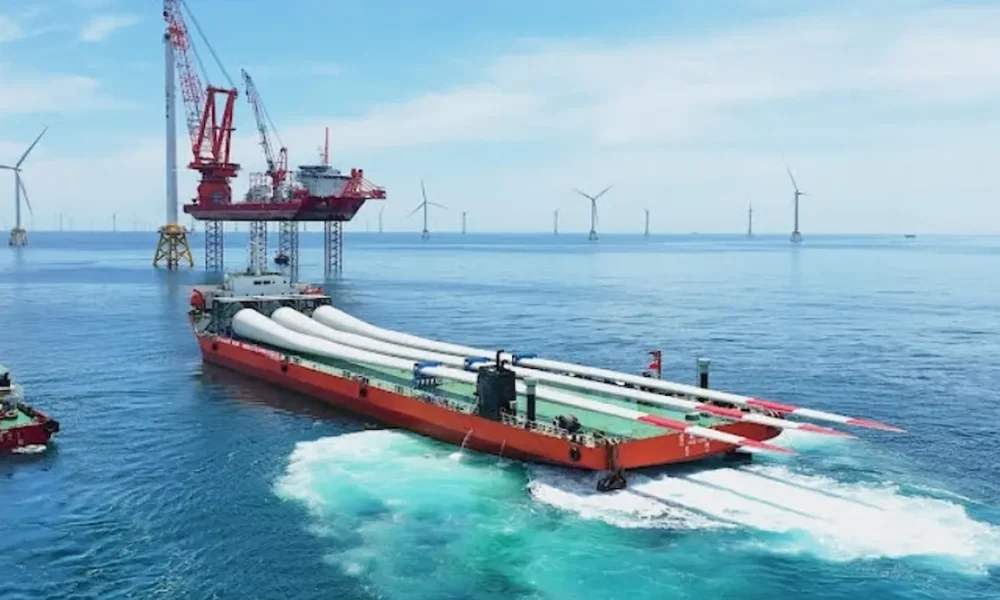
The numbers are dizzying. The combined capacity of China’s solar and wind installations has, for the first time, surpassed that from thermal sources, dominated by coal.
In the first half of 2025, the country installed 212 GW of solar capacity, an absolute record that alone exceeds the total solar capacity installed in the United States by the end of 2024. China currently accounts for more than 60% of the solar and wind energy under construction worldwide.
In the face of Washington’s climate-skepticism, President Xi Jinping reaffirmed that the country’s efforts “will not slow down,” despite the United States’ withdrawal from the Paris Agreement. A climate-leadership posture that is nourished as much by conviction as by well-understood economic interest: investments in green technologies represented 26% of China’s economic growth in the first quarter of 2025.
The Coal Reality of China Persists
Behind the dazzling showcase of solar panels, China’s coal reality resists with remarkable vigor. China has commissioned 21 gigawatts of coal-fired energy in the first six months of 2025, the highest total for a first half-year since 2016.