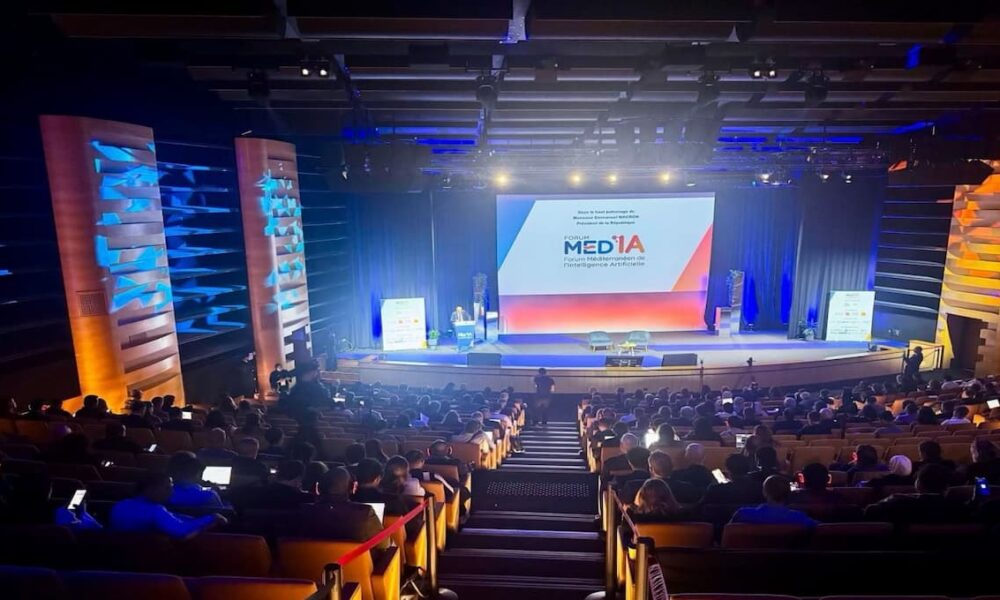
The third edition of the Mediterranean Forum for Artificial Intelligence (FMIA), organized on November 5, 2026 at the Palais du Pharo in Marseille, brought together nearly 700 economic, scientific, and institutional actors from more than 20 countries.
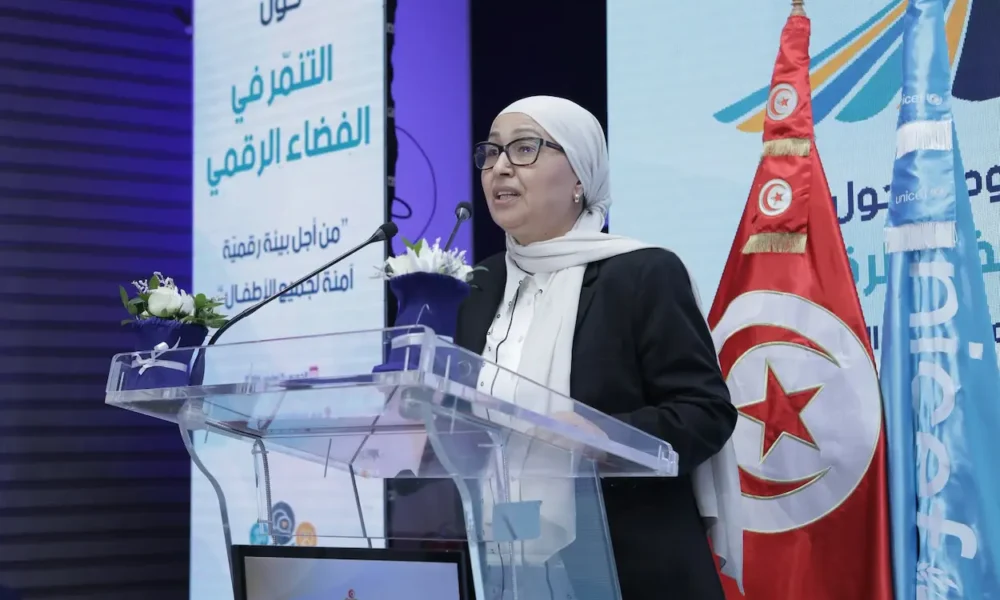
The Tunisian delegation held a particularly prominent place, led by the ambassador Dhia Khaled, with a presence spread across public institutions, investors, incubators, startups, researchers, and technology companies. The exact number of Tunisian participants, however, was not published in a consolidated manner.
The Core Highlights of FMIA 2026
• Nearly 700 participants, from more than 20 Mediterranean countries and more than 70 speakers.
• A strong Tunisian presence, spanning diplomacy to research, including investment, startups, and support structures.
• Two Tunisian startups, Amperon Technologies and Mitus AI, selected for the Sila program for six months of accompaniment.
• Tunisia is among the five countries covered by the new Strategic Report on AI in the Mediterranean.
• The Forum’s conclusions converge toward a Mediterranean AI more oriented toward concrete applications, data sovereignty, skills, energy efficiency, and the scaling up of projects.
A Large and Multi-Profile Tunisian Delegation
The official Tunisian delegation was led by the Tunisian ambassador to France, Dhia Khaled. The Consul General of Tunisia in Marseille, Mohamed Chergui, also took part in discussions with the French Inter-Ministerial Delegate for the Mediterranean, Nadia Hai.
According to the Tunisian Embassy in France, the Tunisian participation gathered representatives from the public and private sectors, the Caisse des Dépôts et Consignations (CDC), incubators, project promoters, startups and researchers. The Tunisian CDC also features among the co-financiers of FMIA 2026, while the Institut français de Tunisie is among the co-organizers.
This presence appeared in several segments of the program. Noomane Fehri, from MEDIN Fund, spoke on AI co-investment; Haïkel Drine, from Afrikanda, on talents and skills; Bechir Afifi, from Fabskill, and Imen Maouene, from EY Studio+, on entrepreneurial bridges between the two shores; Amir Ben Gacem, from Solecrypt, in the segment dedicated to digital sovereignty; and Ayoub Ben Younes, from Be Bouncy, on training and entrepreneurship.
Tunisia was also represented in the scientific track: the official Research Prize program notably mentioned researcher Yousri Kessentini, from the Center for Digital Research in Sfax, as well as ISITCom among the six finalists invited to present their work.
Two Tunisian Startups Selected for Six Months of Support
Among the most concrete outcomes for the Tunisian ecosystem is the selection of Amperon Technologies and Mitus AI in the Sila program, the France-Mediterranean Initiative for Artificial Intelligence.
Ten startups were selected in total, with two companies in each of the five partner countries: Algeria, Egypt, Lebanon, Morocco, and Tunisia. They are set to benefit, starting in November, from six months of tailored support.
Each startup can mobilize between €10,000 and €30,000 of specialized services, according to its needs. The support may cover technological industrialization, business development, internationalization, intellectual property, and preparation for investment.
Tunisia in Co-Creation Projects
Tunisia’s participation was not limited to panels. Among the Tunisian entities involved in co-creation challenges are the Pasteur Institute of Tunis, the National Institute of Sciences and Technologies of the Sea, and the municipality of Mahdia.
The co-creation mechanism announced for the 2026 edition had selected 16 project holders from 126 proposals gathered in the region and mobilized several dozen experts from both shores. The stated objective was to produce, depending on the maturity of the projects, pilots, commitments between partners, coalitions, or roadmaps accompanied by experimentation protocols.
A Strategic Report That Directly Includes Tunisia
One of the day’s highlights was the presentation of the Strategic Report on AI in the Mediterranean, coordinated by mathematician Cédric Villani and Lamiae Azizi. The document covers five southern shore countries, including Tunisia.
According to the Tunisian Embassy in France, the work notably addresses digital infrastructures, national AI strategies, applied research, computing and cloud capabilities, energy constraints, human capital, and the entrepreneurial ecosystem.
These themes directly align with the debates currently open in Tunisia on the 2026-2030 national AI strategy: skills training, data sovereignty, availability of computing power, financing of projects, and startups’ ability to access broader markets.
First Conclusion: Moving from Conferences to Measurable Projects
The central message of this third edition is the shift from a “forum that informs” to a “forum that transforms.” FMIA had explicitly set four types of outcomes: operational projects, structuring partnerships, financing opportunities, and recommendations for decision-makers.
This logic was reflected in the B2B meetings, startup pitches, the Sila program, co-creation workshops, and the networking between investors, researchers, and entrepreneurs. For Tunisia, the event’s value will thus be measured over time: projects launched, funding secured, experiments conducted, and access to new markets.
Second Conclusion: A Mediterranean “Third Way” for AI
The notion of a Mediterranean “third way” has been the thread guiding the Forum. The idea championed by the organizers is to build an approach tailored to the region’s constraints and strengths, rather than replicating American or Asian models wholesale.
This orientation rests on four cross-cutting challenges: data sovereignty and governance, training and employment, frugal AI and ecological transition, as well as ethics and inclusion. The priority sectors identified are industry, health, agriculture, and the maritime economy.
Third Conclusion: Talent Is Not Enough Without Infrastructure
FMIA discussions also highlighted the importance of infrastructure. Human skills and startups are assets, but the development of AI solutions also depends on access to data, computing power, cloud, networks, and energy available at a sustainable cost.
For Tunisia, this point is strategic. The objective is not merely to train engineers or create startups, but to have an environment that allows them to test, host, industrialize, and market their solutions from within the country.
Fourth Conclusion: The Mediterranean-Scale Market
The Forum placed significant emphasis on startup mobility, cross-border investments, and the “soft landing” between ecosystems. For Tunisian tech companies, the interest is evident: the domestic market can serve as a testing ground, but scaling often requires rapid access to other markets.
FMIA precisely aims to build these bridges between the countries of the southern Mediterranean and European ecosystems, with investors, support organizations, and industrial partners present in a shared space.
What Tunisia Must Now Translate into Results
After hosting the 2025 edition in Tunis, Tunisia was therefore not merely a invited delegation in Marseille. It was present as a financial partner, an institutional actor, an entrepreneurial ecosystem, a site of projects, and a reservoir of researchers and experts.
The next step will be to measure the returns: how many Tunisian startups obtain contracts or funding, which co-creation projects actually proceed to the pilot phase, which scientific collaborations are extended, and which infrastructures or new capacities are developed.
As of the morning of November 6, organizers had not yet published a comprehensive quantitative assessment of all concluded agreements nor a consolidated list of the members of each delegation. The Tunisian bilan must therefore distinguish between results already confirmed — institutional participation, Sila startups, scientific presence and B2B — and the economic spillovers that will need to be evaluated in the coming months.