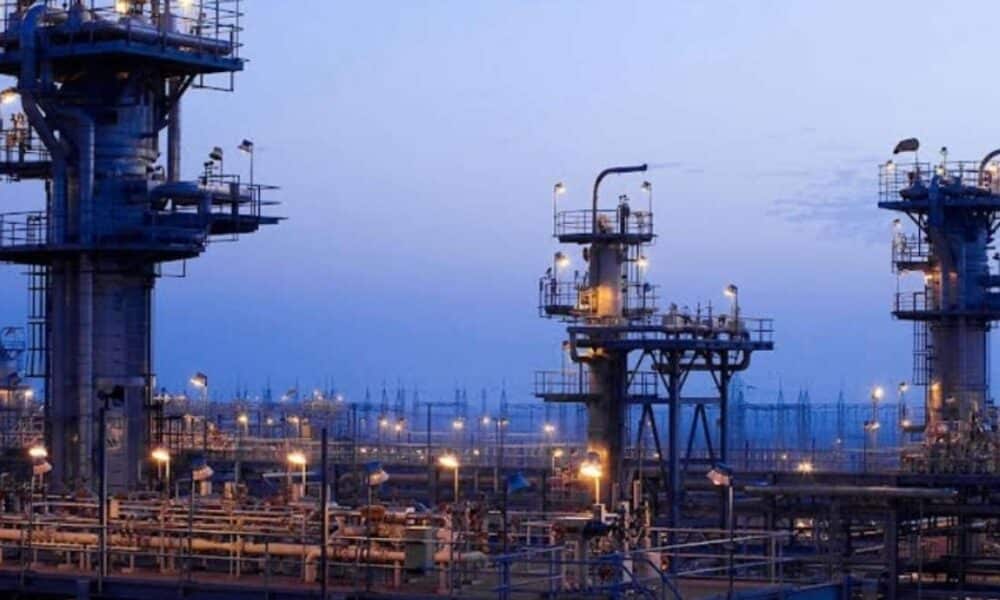
Oil stocks held by member countries of the Organisation for Economic Co-operation and Development (OECD) fell to their lowest level since 1990 in May.
OECD oil stocks fell in May to their lowest level since 1990, reflecting the ongoing repercussions of the Middle East conflict on the global energy market. The information was published by the International Energy Agency (IEA) in its latest report.
According to the International Energy Agency, since the start of the Middle East conflict, total OECD oil reserves have declined by 163 million barrels. This decline is due to governments continually drawing down reserves to compensate for disruptions to crude oil supply and transport in the Gulf region.
To mitigate the impact of higher oil prices following Iran’s closure of the Strait of Hormuz, the IEA coordinated the release onto the market of 400 million barrels of stored oil. As of June 12, 252 million barrels had been released onto the global market.
According to the IEA, the pace of releasing emergency oil reserves is expected to slow in June and July, following this week’s announcement of an agreement aimed at ending the conflict between the US-Israeli alliance and Iran.
The IEA nonetheless estimates that high oil prices will have an impact on demand this year, which is expected to fall by 1.1 million barrels per day compared with 2025.
The agency expects oil demand growth to recover to 2 million barrels per day by 2027, thanks to the gradual normalization of trade, lower oil prices and improving economic prospects.
Crude oil prices have fallen by more than 10% this week, buoyed by the prospect of a lasting peace agreement between the United States and Iran after more than three months of conflict that has jolted energy markets and intensified inflationary pressures.