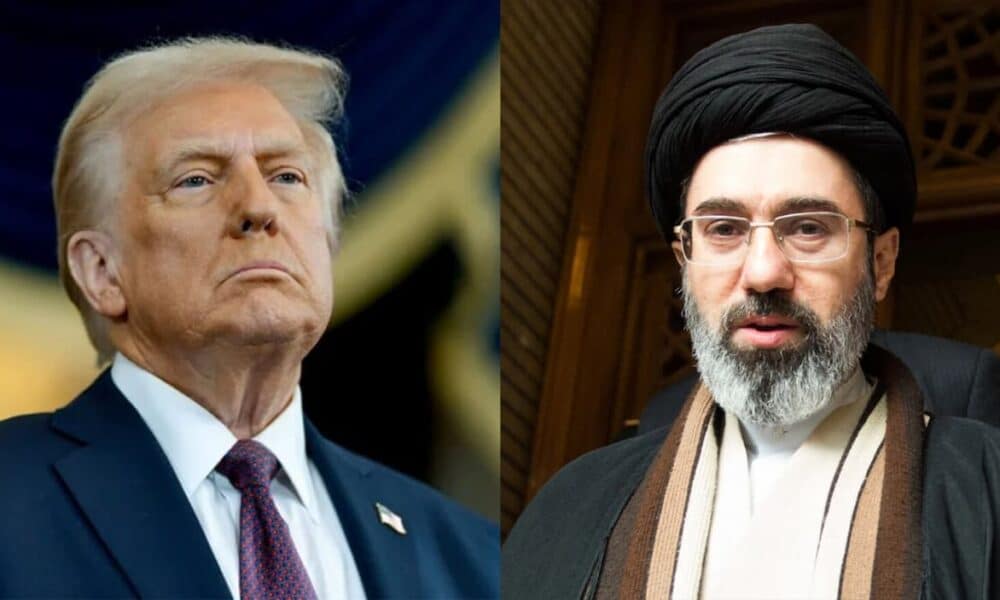
On the 67th day after the signing of the memorandum of understanding between Washington and Tehran, and 176 days after the start of the war between the two countries, tensions remain high around the Strait of Hormuz, as Iran issues warnings to neighboring states and expresses its willingness to continue the economic confrontation with the United States.
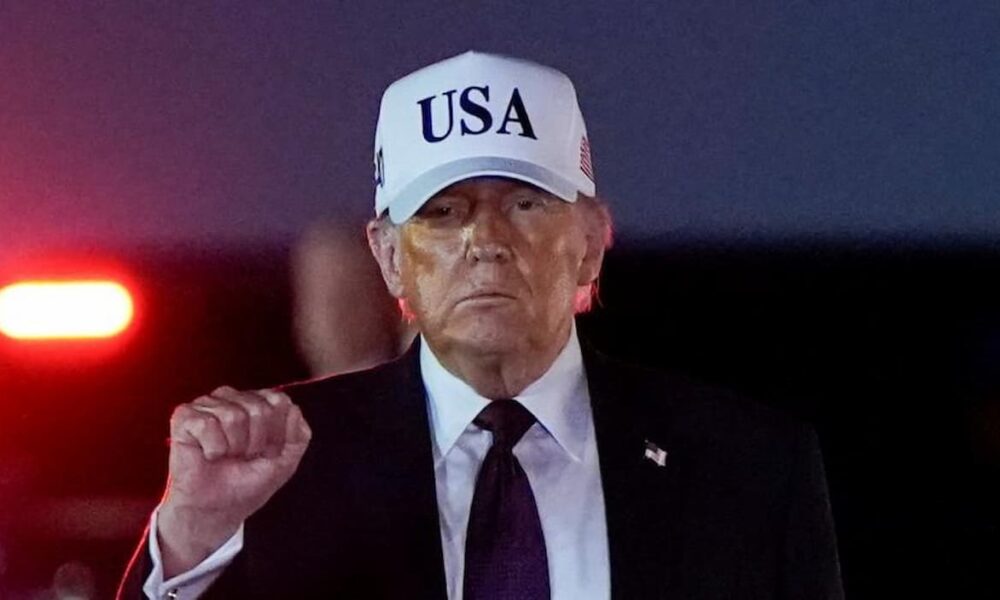
The American president Donald Trump has stated that the United States had escorted more than 1,000 ships in order to help them pass through the Strait of Hormuz, a strategic passage for global energy trade.
Tehran warns neighboring countries
The secretary of Iran’s Supreme National Security Council also issued a warning to regional countries, asking them not to participate alongside the United States in what Tehran calls an “economic war”.
According to him, any neighboring country that would engage in this policy alongside Washington could be considered by Iran as “an enemy”.
This statement comes as Iranian President Massoud Pezeshkian asserts that his country does not intend to make concessions to its adversaries.
The head of state declared that Iran could solve its difficulties “with force and logic” and that he continued his efforts in that direction. He also stated that it would be preferable to end the war today while Iran is, in his view, in a position of strength.
Iran highlights new military capabilities
The official temporarily serving at the Iranian Defense Ministry stated that the new military systems developed by Iran were ready.
He argued that the capabilities already observed by the adversary on the battlefield represented only a portion of the Iranian arsenal, adding that the means not yet revealed would be much more significant.
Meanwhile, the Lebanese National News Agency reported that the Israeli army had bombed several areas of the Nabatieh district, in southern Lebanon, using phosphorus munitions.
Pezeshkian asserts that Iran resists American sanctions
In new statements, the Iranian president also insisted on his country’s ability to withstand the sanctions imposed by Washington.
According to Massoud Pezeshkian, the United States claims to subject Iran to the harshest sanctions, but the country continues, he says, to resist and to confront what he describes as a “unequal war”.
He said that Iran’s opponents hoped to see the country collapse and anticipated an evolution similar to Venezuela’s, but Iran would have, in his words, become a power that surprised by its resilience and cohesion.
The Iranian president nonetheless acknowledged the economic difficulties facing the population, expressing hope that his government could overcome the crises affecting citizens’ living conditions.
The Pakistani army chief expected in Tehran
On the diplomatic front, the spokesperson for the Iranian Foreign Ministry, Esmail Baghaei, announced on Sunday that the head of the Pakistani army, General Asim Munir, would travel to Tehran on Monday at the head of an official delegation.
According to Iranian diplomacy, this visit should help strengthen bilateral cooperation between Iran and Pakistan and continue Islamabad’s efforts toward regional peace and security.
The Pakistani general is to meet with several senior Iranian officials in order to examine the latest developments in the region.
The Telegraph reports a cyberattack on a British energy facility
The conflict is also playing out in the digital realm. According to the British daily The Telegraph, a cyberattack attributed to Iran disrupted for four days the operation of a UK energy facility.
The paper describes the operation as an unprecedented Iranian cyberattack against a British energy infrastructure. It would have occurred alongside a series of attacks the previous month targeting water-related infrastructure in the United States.
British authorities have not publicly identified the affected facility, citing security reasons. According to The Telegraph, the site remained out of service for four days while teams worked to restore it.
However, the British government downplayed the scope of the incident. Cited by the paper, a spokesperson said that the attack affected a small energy generator and that at no time did it pose a threat to the entire UK energy system.
Between securing maritime traffic in the Strait of Hormuz, Iran’s warnings to neighboring countries, diplomatic contacts with Pakistan, and the extension of the conflict into cyberspace, the confrontation between Washington and Tehran continues to go beyond the purely military framework.