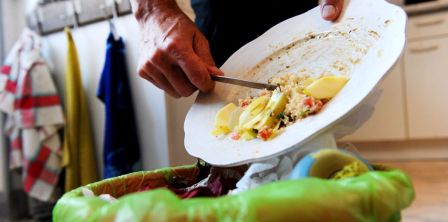
Every morning, in Tunisia, nearly a million loaves end up in the trash. The same country loses more than 23,000 hectares of fertile soil each year and imports 80% of its flour. On one side, lands that are being exhausted for lack of organic matter. On the other, kitchens that throw away a resource that these lands are waiting for. Between the two, a missing link: compost.
A Waste with a Price and a Weight
According to a study titled “Consumption Patterns and Food Waste in Tunisia: Characteristics and Alternatives” published in 2025, each Tunisian wastes on average 91 kilograms of food per year, i.e., more than one million tonnes for households alone. A high level compared to North America, Central Asia, or several regions of Europe.
The survey conducted among more than 2,000 households estimates the loss at around 17 to 19 dinars per household per month, i.e., about 20 dinars according to the estimate used in the study.
The number one culprit is bread. Households discard on average 15.7% of what they buy, i.e., 900,000 units per day and about 100 million dinars per year, according to the National Institute of Consumption. Pasta and cereals follow with 10.2%, vegetables with a little over 6%, fruits with 4.2%. Milk, for its part, is almost spared (2.3%).
The Subsidy Paradox
Bread embodies a striking economic contradiction. The state spends 400 million dinars per year subsidizing flour, while that same bread is massively thrown away.
The study suggests a track that will spark debate: raise its price by 40%, so that its value becomes visible again. The leftovers, however, are not all lost: 49% serve as animal feed, but 30.4% go to the trash. A formal recovery circuit could valorize them, including on a social level.
Waste is a matter of organization more than poverty