The United States carried out a new strike against a missile-launch site on Iran’s Qeshm Island in the Strait of Hormuz. A few hours later, Bahrain announced that it had intercepted several Iranian air attacks, while Kuwait mobilized its air defenses against hostile drones. This Wednesday, November 18, 2026, the standoff between Washington and Tehran again spills over to Gulf states, as the security of tankers and the economic cost of the conflict worry the markets.
This new day marks the 154th day since the American-Iranian memorandum of understanding of June and the 263rd day since the start of the war, February 28, 2026. Despite diplomatic contacts pursued with the help of regional mediators, the two sides continue to respond militarily to one another.
The Essentials
Qeshm: an American military official confirms a strike against a missile-launch facility of the Islamic Revolutionary Guard Corps. Bahrain: air defenses announce new interceptions; a fire at a building in Souq Waqif is the subject of a separate investigation.
Kuwait: hostile drones were targeted by air defenses, with no official attribution of their origin.
Hormuz: Iran claims new incidents involving mines, while 24 crew members of the Tara Gas gas carrier have been evacuated near Oman.
Oil: Brent finished Tuesday at $93.14 per barrel.
United States: a sentence of 330 months in prison was handed down in a case of an assassination plot attributed by American justice to an Iranian network.
Washington strikes a missile installation on Qeshm Island
A U.S. military official cited by CNN, Reuters and AFP said that fighter aircraft used precision munitions on Tuesday, November 17, to strike a missile-launch site attributed to the Revolutionary Guards on Iran’s Qeshm Island. The island lies in the Strait of Hormuz, a strategic passage between the Gulf and the Arabian Sea.
The official described the operation as a response to Iranian attacks targeting military personnel and U.S. facilities in the region, including in Bahrain. Iranian authorities acknowledged the strikes, stating that they had not damaged homes, businesses, or major civilian infrastructure. The exact material and military casualty tally from the strikes cannot be independently established.
The episode follows a drone attack claimed by the Revolutionary Guards against a U.S. radar installed at Sheikh Isa base in Bahrain. Iran says it struck the equipment, while U.S. Central Command asserts that the drones were intercepted with no damage to equipment or injuries on the American side. It is therefore necessary to distinguish the claimed attack from the results actually confirmed.
Bahrain: new interceptions and security warnings
This Wednesday, November 18, Bahrain’s defense force said its air defenses intercepted several attacks coming from Iran. The statement did not specify the exact number of projectiles or their type, and did not provide a casualty or damage tally.
The Bahraini Interior Ministry issued alerts urging residents to seek shelter in safe locations, before signaling the all-clear. The kingdom hosts the U.S. Fifth Fleet, making it a particularly sensitive point in the confrontation.
Separately, civil protection proceeded with a preventive evacuation of a multi-story building in the Souq Waqif commercial area, where a fire had broken out. The emergency services brought the blaze under control and no injuries were reported. The cause of this fire was still under investigation: nothing yet indicates it was linked to the air attacks.
Kuwait: air defenses mobilized against drones
The Kuwaiti army announced, overnight from Tuesday to Wednesday, that its air defense systems were responding to attacks by hostile drones. It noted that the explosions heard could arise from interception operations and urged residents to follow safety instructions.
Kuwaiti authorities did not publicly identify the origin of the aircraft in their initial statements and did not provide a damage assessment. The Iranian army claimed to have targeted Patriot systems and U.S. equipment at the Ali Al-Salem base in Kuwait using drones. This claim is not independently confirmed as to impacts on the targeted installations.
Hormuz: tankers exposed and 24 sailors evacuated
The Iranian Navy says a third tanker struck a naval mine east of the Strait of Hormuz and caught fire. Iran’s claims about mines and other ships being hit remain difficult to verify without full identification of the vessels and independent confirmation of the damage mechanism.
Yet the dangers to commercial navigation are very real. Omani authorities said they evacuated 24 crew members from Tara Gas, a liquefied petroleum gas (LPG) carrier, after a fire near the Musandam Peninsula, about two nautical miles from the coast. The ship is thus not to be described as a crude oil tanker.
The Indian Foreign Ministry said two of the rescued crew members were hospitalized in Khasab. Indian officials also reported one crew member missing after the attack, noting an initial crew of 25. Public communications on the total crew size were not fully consistent; the status of the missing sailor remained to be clarified.
The United Kingdom, through its UKMTO maritime watch center, also received reports of ship attacks in the area. An investigation is needed to determine precisely the weapons used and the responsibilities involved.
Commercial Navigation: beware the casualty figures
Tehran’s announcements, UKMTO reports, and Omani rescue operations sometimes concern different incidents and vessel categories. They should not be added together as if they represented independent, definitively established losses.
Oil: Brent climbs to $93.14 per barrel
Despite the risks around Hormuz, oil prices have not returned to the peaks seen in the autumn. At the close of Tuesday, November 17, Brent and U.S. WTI rose on concerns about attacks on ships, but expectations of a renewed Gulf export flow limited gains.
| Oil | Close on 11/17 | Session Change |
| Brent | 93.14 $/barrel | +0.70 $ (+0.76%) |
| WTI (US) | 86.01 $/barrel | +0.29 $ (+0.34%) |
Source: Reuters, close of futures contracts on Tuesday, November 17, 2026. U.S. dollars per barrel.
In November alone, Reuters notes a roughly 20% drop for Brent and 16% for WTI, despite the session gains on the 17th. Monthly changes and those of the last session should not be confused: the starting references are not the same.
The market is weighing two opposing forces. On one side, each new attack threatens crews, trade flows, insurance, and transport costs. On the other side, the partial resumption of Middle East oil shipments and expectations of a better balance between supply and demand dampen upward pressure on crude prices.
Hormuz: volumes remain well below pre-war levels
The latest data from the U.S. Energy Information Administration (EIA) quantify the scale of the disruption. Throughput of crude oil and petroleum liquids in the Strait of Hormuz averaged 21.6 million barrels per day in Q4 2025, versus 9.1 million bpd in Q3 2026.
This represents about a 58% drop between the two periods. This figure concerns volumes transported through the Strait; it is not a measure of global production or Tunisian consumption. The periods compared are different quarters.
In its November 13, 2026 report, the IEA estimates Gulf oil exports, excluding Oman, reached 18.4 million bpd in October, still 26% below their pre-war level. This figure covers a geographic and commercial scope different from the Hormuz transit measure published by the EIA; it should therefore not be directly compared with the 9.1 million bpd figure.
The IEA now forecasts a global oil-market surplus in Q4 2026, after supply rebounded faster than expected. It nonetheless highlights persistent tightness in refined products, notably diesel.
In its assessment of November 13, the IEA noted European diesel trading at around $180 per barrel, i.e., 77% above pre-war levels, despite the easing of crude prices. This is a refined-product price on a given market, not the Brent price or Tunisia’s fuel price.
Why is the barrel falling while the war continues
Oil prices reflect both anticipated supply and inventories as well as immediate military incidents. A partial resumption of exports can push prices down even when ship risks remain high. Conversely, diesel and certain transport costs can stay elevated due to bottlenecks in refining and logistics.
A war that costs the United States millions of dollars every day
An NBC News investigation, based on testimonies from American officials and a person familiar with operations, describes nearly daily exchanges of strikes between the United States and Iran, much of which has not been publicly detailed by the Pentagon in the past two months.
According to these sources, U.S. forces intercept drones and missiles aimed at their facilities and sometimes strike launch platforms on Iranian soil. The Pentagon has not publicly confirmed, operation by operation, the entirety of the strikes described. This information should be read as NBC’s reporting, not as an official exhaustive military record.
NBC cites more than 50,000 American troops deployed in the region and operation costs of several millions of dollars per day. This is not an audited total, and no exact daily sum can be inferred from this phrasing. The presence of three U.S. carrier groups in the area was also reported, though their overlap is partly due to a rotation announced as temporary.
Patriot missiles: a raw-material shortage slows production
Defense needs are also putting pressure on American industrial supply chains. An investigation by the Wall Street Journal reported that production of certain Patriot PAC-3 MSE interceptors is hitting an unexpected bottleneck: the supply of a special carbonized filament used for engine nozzles, able to withstand extremely high temperatures.
The industrial circuit involves France, via ArianeGroup, and an American supplier, Park Aerospace. Expanding capacity requires lengthy technical validations. The paper notes that a new French line could be operational by 2028, while a U.S. production project would aim for 2030. These dates represent industry outlooks, not guaranteed missile deliveries.
This constraint comes as the United States must supply its own forces and allies, including Ukraine. It illustrates the difficulties of rapidly scaling up production of complex military systems, even with additional orders.
The U.S. Navy acknowledges using expired munitions
During a Senate hearing on Tuesday, November 17, Hung Cao, acting Secretary of the Navy, stated that naval forces had used munitions whose authorized storage period had expired during the operation against Iran. He explained that some had been reclassified or recoded before their use.
His testimony does not specify precisely how many munitions were involved or their technical state in enough detail to conclude that they were all defective. He did, however, renew the debate about stock depletion, the pace of missile manufacture, and the conditions of their use.
The same hearing highlighted human difficulties aboard the naval campaign. Lawmakers spoke of eight reported suicide attempts aboard the aircraft carrier USS Abraham Lincoln, as well as issues with living conditions and prolonged deployments. This tally comes from parliamentary discussions; publicly available materials do not allow independent verification of each case.
Assassination plot: Asif Merchant sentenced to 27 years and six months
On the judicial front, the U.S. Department of Justice announced, on November 17, the conviction of Pakistani national Asif Merchant to 330 months in prison, exactly 27 years and six months, by a federal court in Brooklyn.
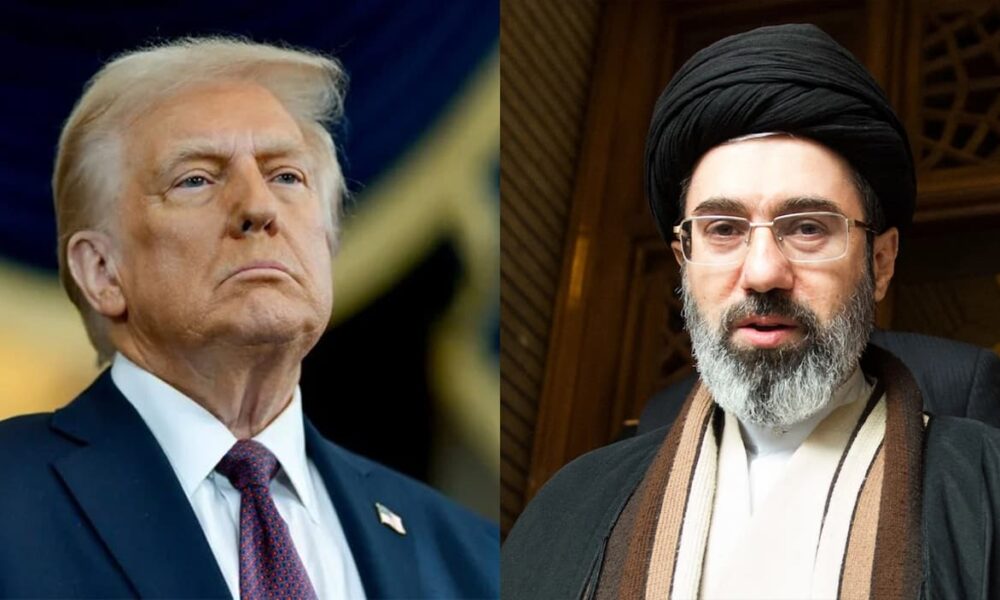
The American prosecutor presents him as an agent working for Iranian services and claims that he attempted to organize the assassination of American political figures, including Donald Trump, in the context of the death of Iranian General Qassem Soleimani in January 2020. Merchant had been found guilty by a jury in March 2026. The charges of Iranian state involvement are those of American judicial authorities.
The conviction concerns a foiled assassination plot, not an actual attack. It does not constitute proof that the threat scenarios discussed by U.S. services this week against Washington have become operational.
Rubio distinguishes Iranian threats from American computer outages
Speaking in the Philippines, Secretary of State Marco Rubio reminded that American authorities remain vigilant against threats targeting their citizens. He did not announce any confirmed imminent threat on U.S. soil.
Rubio also publicly rejected the idea of a link between the recent string of outages affecting Microsoft, U.S. aviation, banks, and other digital services. He said authorities found no evidence linking these incidents to one another or indicating they were caused by hackers, criminals, or a foreign state.
This statement concerns disruptions in the United States. It does not mean that all cyberattack risks or security threats have vanished: it clarifies the absence of signs linking the recent outages to hostile action.
Negotiations: Tehran hardens its tone after the U.S. elections
According to The New York Times, citing American and European officials, Iranian leaders reportedly adopted a tougher stance in their contacts with Washington after the midterm elections. Some interlocutors believe Tehran views Donald Trump’s political difficulties as a factor strengthening its position at the negotiating table.
These assessments do not mean Iran has closed the door to any agreement. Discussions still cover the maritime blockade, the security of Hormuz, access to frozen assets, and the guarantees necessary for de-escalation. Information attributed to the American daily also notes divergences in analysis about the true willingness of Iranian leaders to reach a compromise.
Chinese President Xi Jinping, for his part, has called for dialogue and the maintenance of global supply-chain stability. His remarks come amid ongoing trade tensions and the preparation of summit diplomacy in Asia.
What could be the consequences for Tunisia?
For Tunisia, the most immediate indirect effect could be transmitted through the price of crude oil, refined products, the cost of maritime transport, and insurance premiums. The high level of diesel on certain international markets shows that Brent’s retreat is not sufficient to erase all pressures on fuel supply.
Rising energy and logistical costs can influence imports, industrial prices, and certain agricultural or transport sectors. But their real impact on Tunisia’s economy depends on purchase contracts, the composition of imports, national price-setting mechanisms, and the duration of disruptions.
It would therefore be premature to announce a precise pump-price increase or to quantify the budgetary impact for Tunisia without national data aligned to the same periods. Distinguishing between international crude prices, refined products, and locally administered prices remains essential.
An escalation, despite an open diplomatic door
As of November 18, strikes on Qeshm, warnings in Bahrain and Kuwait, and the rising number of maritime incidents remind of the Gulf’s fragility. Information on the human, military, and financial cost of the war also raises increasingly urgent questions in Washington.
The oil market, for its part, reacts to both immediate risks and the partial resumption of regional exports. The true indicator of lasting de-escalation will be less a single price movement than the effective safety of crews and vessels in Hormuz, a reduction in strikes, and the emergence of an agreement between Washington and Tehran.