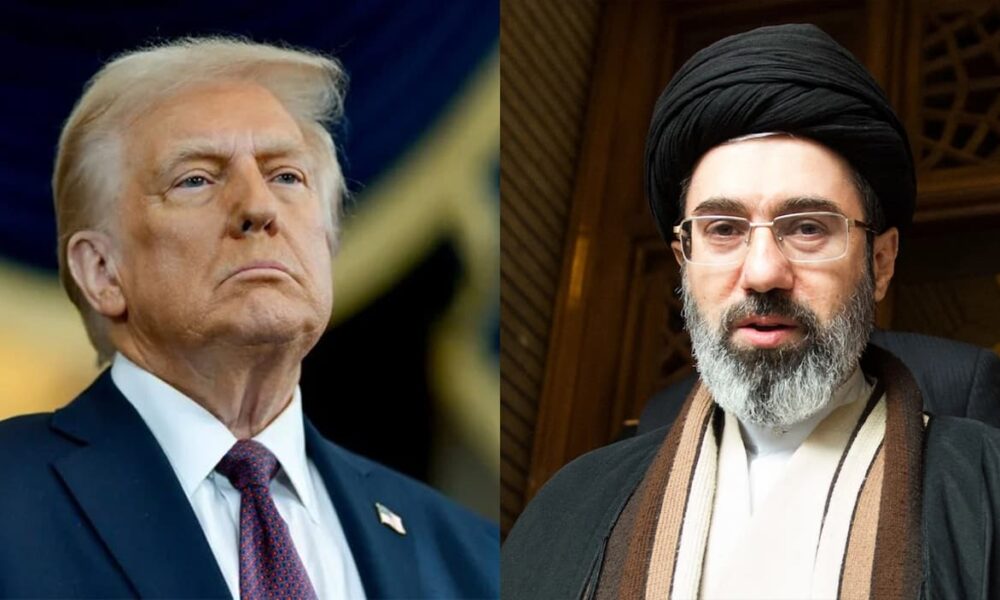
On the 163rd day of monitoring the Iran-American memorandum in June, and 272 days after the start of the war on February 28, 2026, tensions remain high in the Middle East.
Donald Trump threatens to strike an Iranian nuclear complex, while the death of two Italian nationals in Kuwait triggers a new diplomatic confrontation between Tehran and the Gulf authorities.
The Qatari and Pakistani mediations continue, with no agreement on the conditions for resuming negotiations.
The Essentials — Friday November 27, 2026
- Donald Trump threatens to target Pickaxe Mountain, an underground nuclear site near Natanz, if the United States resumes its strikes.
- Two Italian Rheinmetall Italia technicians are killed in Kuwait; two other people were injured. Kuwait and Rome blame Iran.
- Tehran denies any involvement and proposes a joint investigation with Kuwait and Italy.
- The American blockade of Iranian ports continues; the normal reopening of Hormuz remains at the heart of the disagreement.
- Brent was trading at $96.19 a barrel at 1:40 a.m. GMT on Friday morning, according to Reuters.
Trump Threatens to Strike the Pickaxe Mountain Complex
Speaking on Thursday November 26 from his Mar-a-Lago residence in Florida, the U.S. president said he was giving Tehran a chance to strike a deal. He indicated that a resumption of U.S. operations would notably target Pickaxe Mountain, literally the “Pickaxe Mountain,” an underground complex near Natanz.
Trump, however, said Washington had not observed significant activity there. He did not announce a decision to resume strikes. He also said he had recently spoken with Israeli Prime Minister Benjamin Netanyahu.
During a Thanksgiving-related address, the president reaffirmed his opposition to Iran acquiring a nuclear weapon, citing risks for Israel, regional countries and, ultimately, the United States. According to him, Iranian ballistic capabilities would be able to reach Europe, but not the American territory at present. These are the president’s assessments.
Kuwait: Two Italian Technicians Dead, Rome Demands Explanations
The Kuwaiti Ministry of Defence announced on Thursday the death of two Italian nationals who had been wounded in an attack on a facility in the country, attributed by Kuwaiti authorities to Iran. Two other people, a Kuwaiti and a Pakistani, were injured. According to the Kuwaiti army, the injuries were due to falling debris.
Italy’s Foreign Ministry confirmed that the two victims were Rheinmetall Italia technicians responsible for maintenance work on Kuwaiti air-defense equipment. Minister Antonio Tajani expressed condolences to the families.
Rome also attributed the incident to an Iranian attack. Kuwait says it reserves the right to take necessary measures to defend its sovereignty and security. Its Foreign Minister Sheikh Jarrah Jaber Al-Ahmad Al-Sabah called Antonio Tajani to express solidarity. The two countries discussed cooperation to establish the circumstances of the tragedy.
Tehran Denies Any Involvement and Proposes a Joint Investigation
Iran’s Foreign Minister Abbas Araghchi rejected the accusations during talks with Kuwaiti and Italian counterparts. According to the Iranian ministry, Tehran is ready to cooperate to determine the origin of the incident and accountability.
The spokesman for the Iranian armed forces, Abolfazl Shekarchi, and the Iranian embassy in Italy also denied Iranian involvement. The spokesman accused the United States and Israel of seeking to destabilize the region through operations wrongly attributed to Tehran. These allegations are not established by an independent investigation.
Antonio Tajani, for his part, said that early investigations had identified Iranian-made components, which by themselves do not establish who launched the device. The origin of the attack remains contested.
Washington Maintains Military Pressure and Naval Blockade
In Thanksgiving exchanges with American troops, Donald Trump said victory, in his view, was within reach, while expressing doubts about Tehran’s willingness to reach a deal. He announced the continuation of the deployment of Marines in the Middle East.
The American president also stated that U.S. forces had fired 150 missiles to protect merchant ships in the Strait of Hormuz from air threats. This figure is a presidential statement: the exact period covered and the independent tally of these interceptions are not specified.
Trump praised the effectiveness of the American naval blockade. In his exchanges with the military, he also mentioned the acceleration of production of Patriot and THAAD systems and Tomahawk missiles, as well as the construction of 21 large defense plants in the United States, which he said would open soon.
Hormuz: Iran Seeks to Mitigate the Effects of the Blockade
The American blockade of Iranian ports, reimposed on July 14 after a suspension in June, has lasted more than four months. Facing these restrictions, the Iranian government says that its northern ports are receiving more essential goods than during the corresponding period of the previous year.
First Vice President Mohammad Reza Aref announced an increase in unloading and customs clearance at non-southern entry points. He called for easier customs formalities and fuel supplies for road transport.
Greater use of the Caspian Sea ports and land connections may support domestic supply. It does not, however, demonstrate that these routes offset the oil exports affected by the blockade.
In an interview with Al Jazeera, Iranian journalist Mashaallah Shamsolvaezin, described as head of the journalists’ union, spoke of a possible humanitarian arrangement to facilitate the delivery of food and medicines in exchange for easing Iran’s navigation restrictions. It is a lead advanced by the interviewee, not a concluded agreement.
Qatar and Pakistan: Mediations Confront Red Lines
On November 26, Abbas Araghchi confirmed that Qatar and Pakistan continued to relay proposals between Washington and Tehran. The minister stressed Iran’s demands regarding the Strait of Hormuz, sanctions, and the end of the war.
Washington seeks to obtain restrictions on the Iranian nuclear program and strict monitoring mechanisms. The American requests also concern, according to the disclosed elements, ballistic capabilities and the regional role of armed groups supported by Tehran.
Iran in particular demands the lifting of economic and financial sanctions, the release of frozen assets, the end of the blockade, and assurances against new attacks. Tehran refuses to negotiate under military pressure and intends to exclude its defensive and ballistic capabilities from talks.
Earlier in November, Abbas Araghchi had agreed, on a Qatari proposal, to reduce the proposed timeline to restore normal navigation in the strait from seven days to two, subject to acceptance of Iran’s conditions. The disagreement also concerns the order of commitments.
The mediation continues as part of the Islamabad memorandum announced June 18 by the mediators. The diplomatic statement of June 21 confirms Pakistan’s role and commitments to de-escalation. This week, the Qatari Prime Minister met separately with JD Vance and Marco Rubio in Washington. No new agreement was announced.
Three Possible Developments, Without Presuming the Outcome
- A limited and progressive agreement: humanitarian measures or targeted easing of restrictions in exchange for a relaxation of navigation.
- A prolonged blockage: maintenance of the blockade, sanctions, and maritime tensions, due to a lack of agreement on guarantees and the timetable.
- A regional escalation: broader-scale operations if diplomatic efforts fail. These are scenarios, not predictions.
Oil: An Additional Risk for Importing Countries
The tensions in the Gulf continue to weigh on oil markets. Brent was trading at $96.19 per barrel at 1:40 a.m. GMT (2:40 a.m. Tunis) on Friday November 27, down 0.39% after a rise of nearly two dollars on Thursday. WTI reached $85.41, up 2.07% from its close on Wednesday; there was no official settlement Thursday due to Thanksgiving.
For Tunisia, a net energy importer, the persistence of high prices would constitute a pressure on its energy bill and compensation costs, depending on actual prices paid, the exchange rate, and imported volumes. It could also raise international transport costs. No estimate of the immediate Tunisian impact can be inferred from these price quotes alone.
This Friday, the conflict remains dominated by three unknowns: the outcome of the Kuwait incident investigation, the conditions for easing restrictions at Hormuz, and the willingness of the two capitals to resume substantive negotiations.