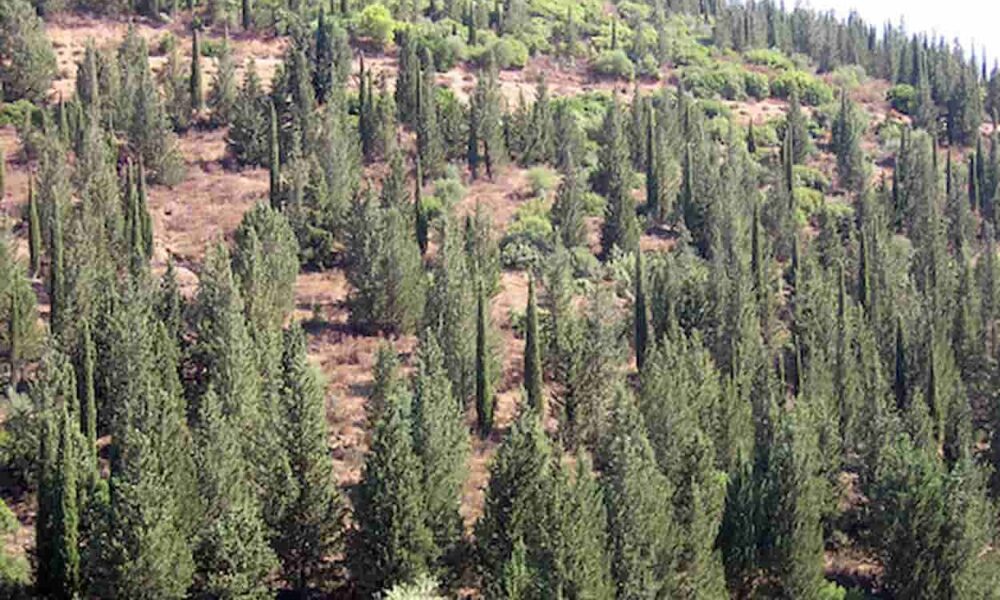
Eight million dinars have been mobilized for the implementation of an integrated program aimed at restoring forest ecosystems affected by the spread of bark beetles, notably the Aleppo pine forests, announced this Saturday by the Director General of Forests, Mohamed Noufel Ben Hahha. The actual start of the works is planned for early 2027.
In a statement to Tunis Afrique Presse (TAP), on the sidelines of the ceremony launching a reforestation campaign for the El Kliaa forest, in the El Kalaa area, under the Thala delegation, in the governorate of Kasserine, Ben Hahha stressed that the Aleppo pine forests of the region had been heavily affected by the spread of bark beetles, which also affect Mediterranean forest ecosystems as a whole. He thus estimated that fighting this phenomenon requires coordination and cooperation with Maghreb countries and other Mediterranean countries.
He clarified that the first intervention consisted of sanitary felling of infested trees, in order to prevent the insect’s spread to neighboring areas. This measure was followed by the development of a comprehensive program to restore the Aleppo pine forests, relying on renewing the vegetative cover and introducing new species and forest varieties, given the high combustibility of this timber species.
The official added that the project is currently at the stage of administrative preparation and finalization of the necessary provisions. He specified that the determination of the affected areas will depend on the intervention methodology, funding, and available resources, and not solely on the extent of the affected zones.
In the same context, the Director General of Forests indicated that fires that occurred in various regions of the country burned about 29,800 hectares of forest areas. The Kef and Zaghouan governorates were the hardest hit, which necessitates a revision of prevention and intervention mechanisms in the face of fires.
He also indicated that the forest services are currently developing a new program in preparation for the summer of 2027, in coordination with Civil Protection and the various concerned parties. This program notably foresees the use of modern equipment, the development of early warning systems, anticipation devices, and forest surveillance mechanisms, in order to improve the speed of interventions and limit damage.
Regarding the natural reserves of the Kasserine governorate, notably Chaambi Mountain and Semmama Mountain, the Director General of Forests acknowledged that these ecosystems had suffered significant damage due to fires, climate change, and human activities. He assured that efforts continued toward rehabilitating the natural reserves and preserving their biodiversity.
Finally, he stressed that restoring the forest ecosystems of these two reserves required coordination with security services and civil society components, as well as the mobilization of human, financial, and equipment resources necessary to enable intervention as quickly as possible.