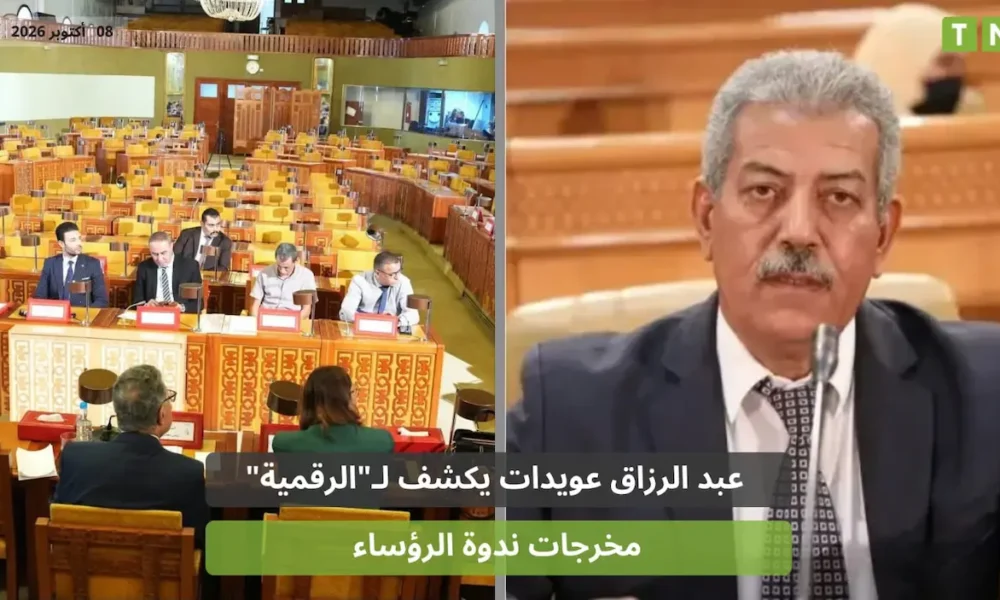
The rise in oil prices and legislative priorities were at the heart of the Conference of Presidents of the Assembly of the People’s Representatives, which had just concluded its work. In a statement to Tunisia Numérique, Deputy Abdelrazak Aouidet, head of the Sovereign National Line bloc, presented the main points.
The oil price gap questions the budget
The discussions focused on the economic and financial situation, particularly the consequences of rising oil prices on financial balances.
Abdelrazak Aouidet indicated that the assumption adopted in the 2026 Finance Law fixed the price of a barrel at $63, while it has surpassed $90. According to his estimate, every dollar of difference represents 150 million dinars over a year.
The deputy argued that this gap should lead to the preparation of a supplementary budget or, at the very least, to clarification of the resources mobilized by the government to cover it. He also deemed that Parliament should be informed of any transfers of funds between budget lines.
The priority texts on the agenda
The Conference of Presidents also examined the latest developments in national affairs and the need to establish a dialogue with the government.
Legislatively, discussions focused on listing priority bills on the Assembly’s agenda, whether presented by the government or proposed by MPs.
According to Aouidet, the government should submit the projects deemed priority. If not, MPs could present their own proposals, which parliamentary blocs and committees would rank according to their priorities. The texts would then be submitted to the Parliamentary Academy, then examined article by article in committee before being presented in a plenary session.
An advisory and coordinating body
Abdelrazak Aouidet recalled that the Conference of Presidents is a consultative and coordinating body. It brings together the Speaker of the Assembly, his two vice-presidents, the president’s assistant deputies, the chairs of the permanent commissions and the parliamentary blocs, as well as representatives of non-aligned deputies.
It does not have any decision-making power, he noted.