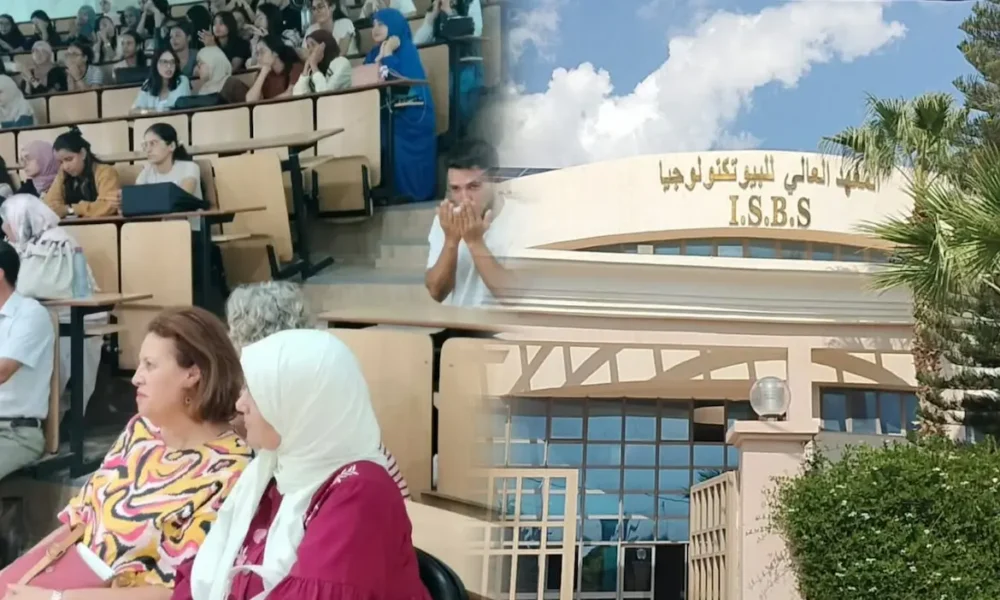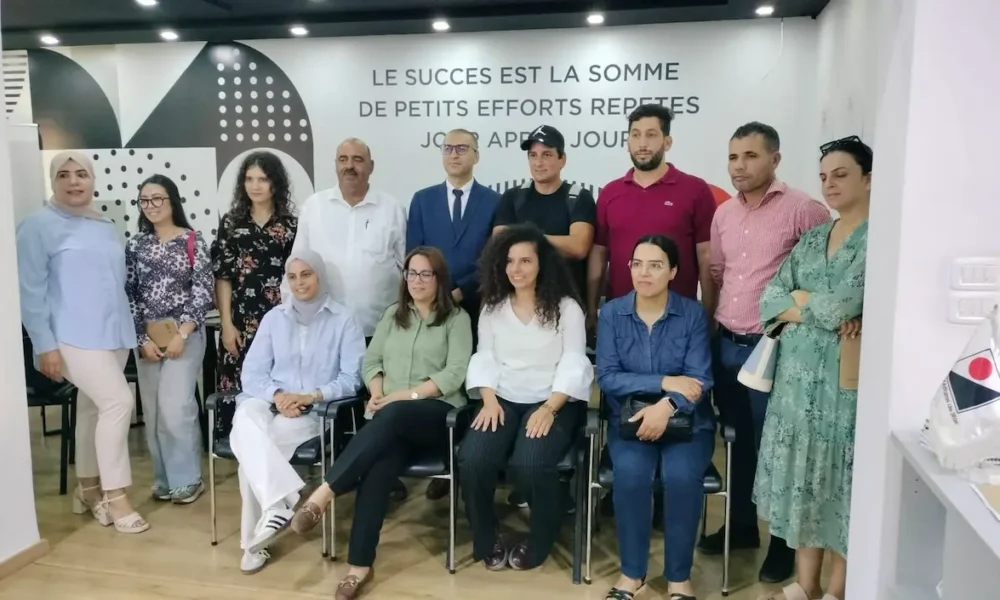
Sfax hosted an informational meeting devoted to presenting GreenAssist 3, a tool developed within the Greenov’i project to support small and medium-sized enterprises, artisans, and craftswomen in their ecological transition.
The event, organized at the Sfax Business Center, aimed to be more than a simple technical meeting. It highlighted a central idea: sustainability is no longer an intellectual luxury, but a new daily economic language, destined to assert itself in production, management, and marketing modes.
Through this meeting, the Greenov’i project chose Sfax to open a dialogue between the productive South and the demands of tomorrow’s economy.
Greenov’i, a project focused on action
Greenov’i is a project dedicated to supporting the ecological transition in Tunisia through a practical approach directly oriented toward economic actors.
Its objective is to enable small and medium-sized enterprises, artisans, and craftswomen to better understand their environmental impact, to reduce it, and at the same time to improve their economic performance.
The tool presented in Sfax, GreenAssist 3, offers a comprehensive environmental diagnostic. It specifically covers energy consumption, water use, waste management, and resource use.
Following this diagnostic, a clear and applicable roadmap is proposed to the companies involved, to help them undertake concrete actions.
A fully funded diagnostic
One of the main strengths of GreenAssist 3 lies in its funding mode. The environmental diagnostic is fully financed by Greenov’i, with no cost for the benefiting company.
This gratuity represents an important advantage for small structures, often faced with financial constraints and a steadily heavier energy bill.
In a context where international markets are increasingly interested in the environmental footprint of products, competitiveness no longer rests solely on price or quality, but also on the way of producing.
GreenAssist 3 thus aims to provide a concrete response to companies who wish to identify resource losses, reduce their charges, improve their efficiency, and strengthen their attractiveness to partners and funders.
Sfax, a strategic choice
The choice of Sfax to host this meeting is not incidental. The region is regarded as one of the country’s main productive hubs, where workshops, small businesses, and artisanal activities occupy a central place in the economic fabric.
It is in Sfax that many small units can evolve toward more organized structures, and that craft can transform into a larger-scale productive activity.
For the project initiators, succeeding in the ecological transition in Tunisia requires starting with these on-the-ground actors: the artisan, the workshop manager, the owner of a small business, or the founder of a budding project.
The message carried by the meeting is clear: the environment directly concerns the business, and the business can become a key part of the solution.
A program backed by national and international partners
Greenov’i is part of the “Green and Sustainable Tunisia” program. It is funded by the European Union through the green entrepreneurship component.
The project is implemented by Expertise France, in partnership with the International Center for Environmental Technologies of Tunis (CITET), under the supervision of the Ministry of Environment and the Ministry of Economy and Planning.
This institutional framework gives the project a national, technical and financial dimension, with international support aimed at fostering tangible results on the ground.
Sustainability as a lever of performance
The Sfax meeting served to remind that sustainability can be synonymous with savings.
Better control of energy consumption, more rational use of water, a reduction of waste, and more efficient management of raw materials can enable companies to cut costs and improve their performance.
The environmental diagnostic thus acts as a mirror allowing the company to identify its weaknesses, its wastage, and its margins for progress.
The next phase, that of the action plan, allows defining priorities and moving from a technical finding to a gradual and measurable transformation.
An opportunity for artisans and small businesses
GreenAssist 3 is aimed at artisans, craftswomen, owners of small and medium-sized enterprises, and entrepreneurs with new ideas who wish to integrate environmental considerations into their activity.
The journey begins with a simple step: the diagnostic. It is then followed by identifying solutions tailored to the capacities and needs of each structure.
This approach allows companies to undertake a gradual transition, without abrupt disruption, while improving their competitiveness and their ability to respond to new market requirements.
A green map that starts from the South
The Sfax meeting confirmed that ecological transition is no longer a distant, costly concept or reserved for large companies.
With GreenAssist 3, it becomes an accessible tool, which begins with a diagnostic, continues with improvement actions, and can open the path to new development, expansion, and export prospects.
From the Sfax Business Center, the outlines of a new green map thus begin to take shape. The challenge now is to transform this initiative into a concrete dynamic capable of guiding hundreds of companies toward smarter, less costly, and more environmentally friendly modes of production.