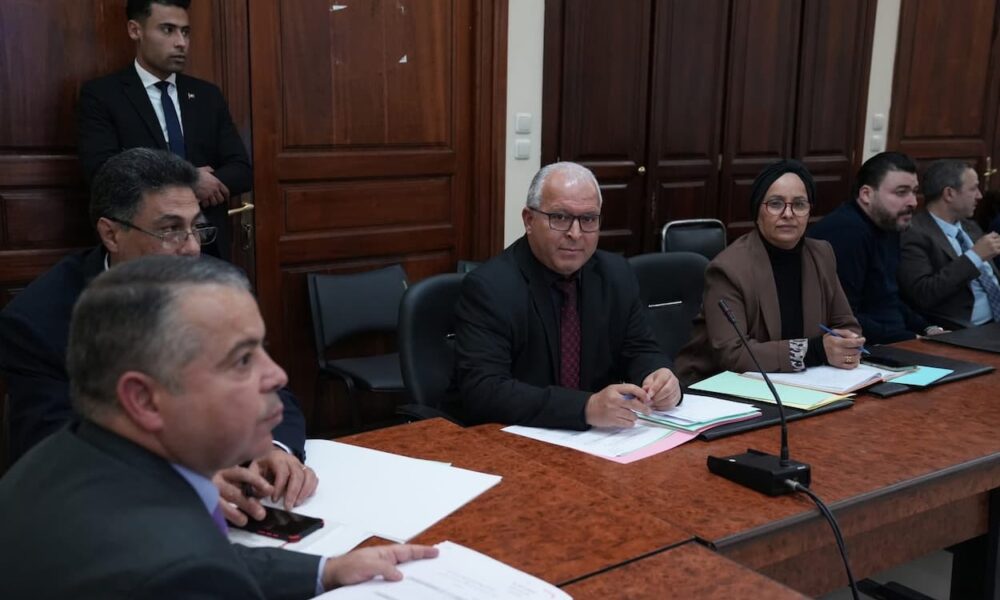
The Commission on the Organization of Administration, its Development, Digitization, Governance, and the Fight Against Corruption will hold, tomorrow Monday, a hearing with representatives of the Presidency of the Government and the Ministry of Religious Affairs regarding the draft law relating to the basic status of mosque staff (No. 78/2025).
The Assembly Bureau had decided, at its meeting on July 10, 2025, to refer this draft law, consisting of 12 articles and aimed at regulating the legal and professional status of mosque staff in Tunisia, defining their rights and duties as well as the mechanisms of supervision, training, and administrative and religious oversight, to the Commission on the Organization of Administration, its Development, Digitization, Governance, and the Fight Against Corruption, in accordance with the provisions of Article 123 of the internal regulations.
The explanatory document accompanying the draft law emphasizes that the mosque staff play a central role in guiding religious discourse and in anchoring values of moderation and tolerance. They also constitute a key element in preserving social peace and strengthening Tunisia’s national identity. However, they suffer from the absence of a clear and comprehensive legal framework guaranteeing the rights of mosque staff and ensuring them a stable professional situation, which affects the quality of their performance and their role in society.
The initiating body recalled that the current legal framework governing, in general, the status of mosque staff in Tunisia rests on the provisions of Law No. 33 of 1988 concerning the organization of mosques and grand mosques, as well as on decrees and ministerial orders setting the conditions of appointment and remuneration, particularly those issued by the Ministry of Religious Affairs and Ministerial Circular No. 15 of 2014, which constitutes a reference for determining the conditions of appointment of imams and preachers. This circular emphasizes scientific qualifications and integrity. However, it considers that the current system does not provide a unified status guaranteeing clearly the professional rights and establishing transparent mechanisms for recruitment, training, evaluation, and advancement, which leads to disparities in professional rights and the persistence of contract precarity and working conditions.
It also highlighted the existence of overlap in supervisory authorities, explaining that some municipalities or local associations, and in certain regions, exercise control over certain mosques without sufficient central oversight, which translates into a lack of opportunities for continuing training and professional development, in addition to the absence of objective and transparent evaluation mechanisms. It also stressed that politicization and non-professional interference remain obstacles to the independence of practice and to the neutrality of religious discourse.
Regarding the motives and justifications for the project, the initiating body stressed the need to establish a global and fair legal framework guaranteeing the professional and economic rights of mosque staff, to strengthen their professional stability and improve their working conditions, in a way that positively reflects on the quality of religious discourse. It also mentioned the necessity of building a transparent and just system of recruitment, training, and evaluation, guaranteeing effective performance and adherence to national values, combatting professional and employment precarity, ensuring comprehensive social protection, and supporting the role of mosque staff as a fundamental pillar of preserving social peace and embedding values of moderation and balance.
The draft law provides that the State commits to ensuring ongoing training programs for mosque staff in the fields of fiqh, religious sciences, communication, moderated religious discourse, law, and religious administration. It also provides that their appointment shall be by ministerial decision and in accordance with the civil service recruitment rules, classified according to the professional scale.
According to the draft law, the mosque staff would also benefit from a fixed monthly salary, full social coverage, the right to annual leave, sick leave, career advancement, and incentive bonuses based on competence. In return, they would be required to respect the Constitution, to observe political and partisan neutrality, to advocate a moderated religious approach, and not to misuse the pulpit for purposes outside their religious mission.
The text also provides for periodic performance evaluations of mosque staff by regional technical commissions and a national scientific reference. It furthermore considers that acts of incitement, calls to hatred, the exploitation of the mosque for political purposes, and the non-compliance with administrative and scientific rules constitute serious professional offenses, punishable by a written warning, temporary suspension, or definitive revocation of the position.
Finally, the proposal calls on the State to regularize the professional and legal status of all mosque staff currently in service before the enactment of this law, within a period not to exceed two years from its entry into force.