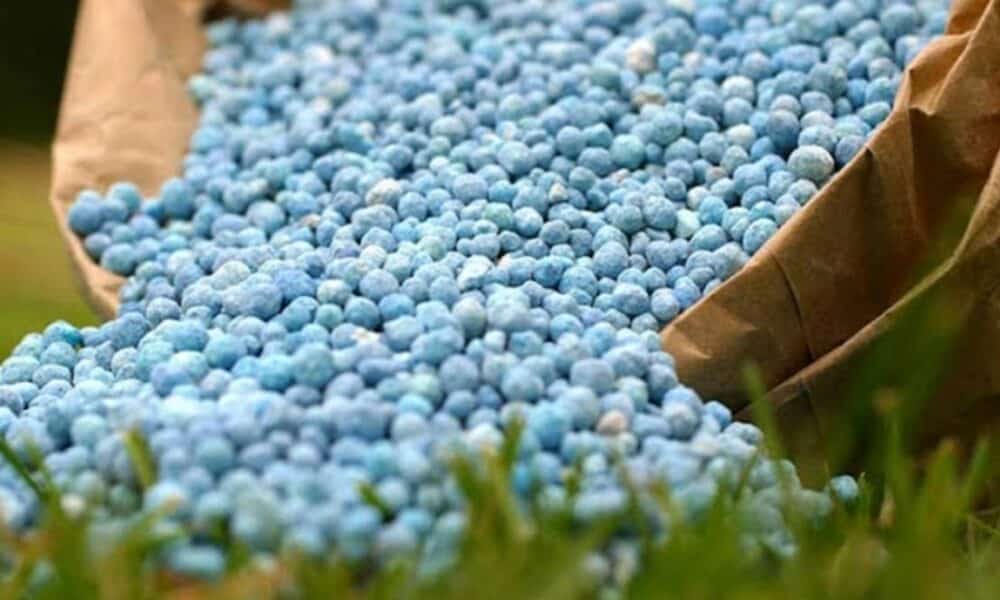
Since late February 2026, American-Israeli strikes on Iran have transformed the Strait of Hormuz into a war zone. In a matter of days, maritime traffic there fell by 97%.
But this chokepoint, barely 40 kilometers wide at its narrowest point, does not merely concentrate one fifth of the world’s oil: it is also the nerve center of the global fertilizer production.
A third of the maritime trade in fertilizers passes through it, and with it, the capacity of a large portion of the planet to feed its people. The war in the Middle East is triggering an agricultural and food crisis whose effects are expected to be lasting and deep.
The Underestimation of Agriculture’s Reach
The Strait of Hormuz is well known as an energy artery. In 2025, according to the International Energy Agency (IEA), about 20.1 million barrels of crude oil passed through it daily, representing roughly 20% of global consumption. But what public opinion pays less attention to is its equally decisive role in supplying agricultural inputs. According to UNCTAD (United Nations Conference on Trade and Development), one third of global maritime trade of all fertilizer categories uses this route.
The Gulf monarchies, namely Qatar, Saudi Arabia, the United Arab Emirates and Iran, alone account for between 43% and 49% of global urea exports, about 30% of global ammonia exports, and up to 44% of maritime sulfur, an input indispensable to the manufacture of phosphate fertilizers. Almost all of these volumes must cross the strait to reach Asian, African or European markets.
The reason for this concentration is geological and economic: the Gulf region has among the most abundant and cheapest natural gas reserves in the world, and natural gas is precisely the feedstock base for producing ammonia, itself necessary for the manufacture of nitrogen fertilizers.
These nitrogen fertilizers, headed by urea, account for half of global agricultural production. In other words, the closure of Hormuz not only deprives the world of fuel: it directly threatens the ability of millions of farmers to till, sow and harvest in the months to come.
The Market Shockwave
The market reaction was immediate. The American price of urea – the nitrogen fertilizer far and away the most used in maize and wheat cultivation – jumped in a matter of days from $100 per tonne to $570 per tonne, surpassing the previous October 2022 record reached at the height of disruptions linked to the war in Ukraine.