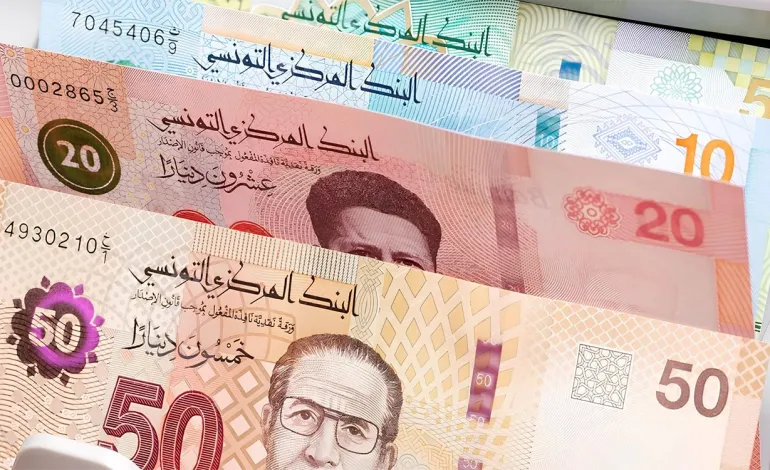
With a dinar weakened against the euro and the dollar, a question keeps coming back with insistence among Tunisians living abroad: could the moment finally be favourable to repatriate part of the savings to the home country?
In a context of dinar depreciation, the exchange differential transforms the purchasing power of income in foreign currencies. For an investor with income in euros or dollars, certain assets become more accessible: rental real estate, interest-bearing foreign currency accounts, business creation, or even agricultural investments. In theory, the opportunities seem favorable, and in some cases they truly are.
This apparent attractiveness masks a more technical fact. Investing from abroad in Tunisia is not merely a decision about asset allocation. It is a legally structured act, framed by a specific exchange-control regime, where the nature of the account used, the traceability of funds, and the non-resident status determine the very quality of the investment.
The Tunisian framework strictly distinguishes the regimes applicable to residents and non-residents, and organizes the convertibility of funds according to precise rules. Between foreign-currency accounts and convertible-dinar accounts, between free investment and operations subject to authorization, an initial misstructure can transform a profitable placement into capital that is difficult to mobilize for several years.
The real gamble is therefore not simply the stated yield, but the effective ability to secure the exit of capital, the transferability of gains, and the tax coherence between the home country and Tunisia.
A country that remains competitive on several fronts
Despite a demanding macroeconomic context, Tunisia retains several structural advantages.
The first concerns its geographic position, less than two hours by flight from many European capitals. The second lies in the existence of a qualified workforce at costs still competitive compared with several Mediterranean countries. The third relies on the existence of an arsenal of investment incentives established notably by the Investment Code of 2016.
Moreover, Tunisian legislation guarantees foreign investors freedom to invest in a large number of economic activities, subject to certain authorizations or sectoral restrictions provided by the texts in force.
The sectors currently attracting the most interest are digital technologies, exporting services, renewable energy, high value-added industrial activities, private health, higher education, and certain niches of tourism.
The often-negliged decisive factor
The most frequent mistake is to analyze a project exclusively from the perspective of profitability.
In Tunisia, foreign exchange regulation often constitutes the central element of any wealth-management or entrepreneurial strategy.
The legal framework rests mainly on the Foreign Exchange and Foreign Trade Code as amended and supplemented by the texts of 1993, 1994 and 2011, and especially clarified by the circulars of the Central Bank of Tunisia (BCT) which indicate the operational modalities applicable to non-residents, to TRE and to foreign investors.
This regulatory architecture is not aimed at preventing investments but at framing cross-border financial flows. The distinction between an investment properly structured from the outset and a poorly documented investment can make the difference between capital freely transferable and capital difficult to recover several years later.
A question that goes beyond mere yield
For an investor based in Europe or North America, the true calculation is not only to measure the gross yield of a real estate asset or of a business.
It is also necessary to evaluate the future liquidity of the investment, the convertibility of the generated income, the modalities of disposal as well as the mechanisms for transferring capital abroad.
It is precisely on these aspects that the most important successes and failures are at stake.