Tunisia’s external trade, at current prices, rose in the first half of 2026 for both exports and imports compared with the same period in 2025, in a context marked by the persistence of the trade deficit and the decline in the import coverage ratio by exports.
According to external trade data published in a report by the National Institute of Statistics, export value reached 34,645.2 million dinars, compared to 31,773.7 million dinars in the first half of 2025, a 9 % increase. At the same time, imports rose by 13.3 %, to 47,214.6 million dinars, compared with 41,674.1 million dinars during the same period last year.
This evolution widened the trade deficit to 12,569.4 million dinars, compared to 9,900.4 million dinars in the first half of 2025. The import coverage rate by exports, for its part, fell to 73.4 %, from 76.2 % during the same period of 2025.
On the sectoral level, exports of mechanical and electrical industries rose by 9.1 %.
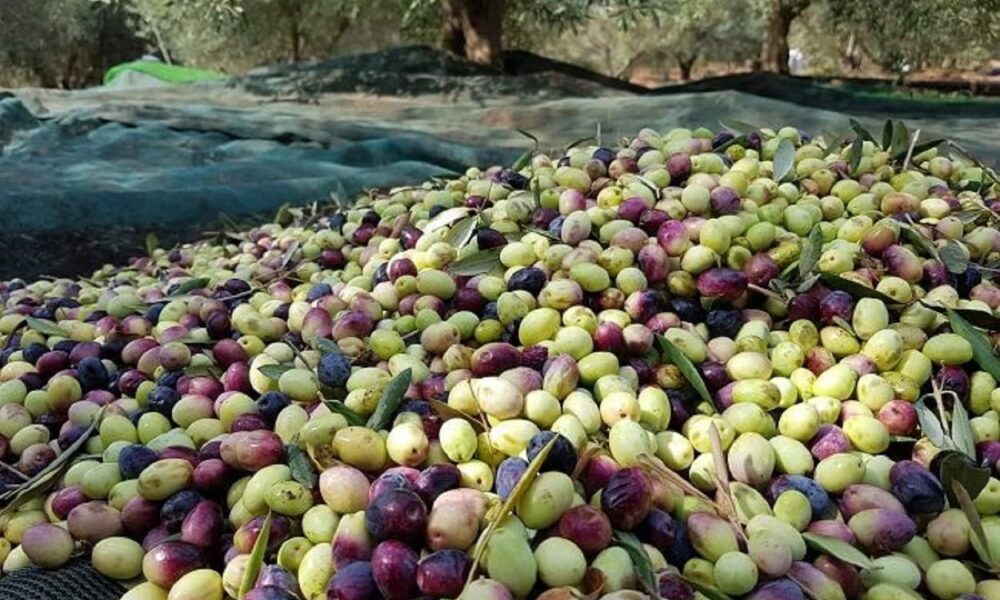
Exports of agricultural and agri-food products also rose by 25.2 %, supported by the increase in olive oil sales, which reached 3,383.8 million dinars, compared with 2,346.6 million dinars during the same period of 2025.
The energy sector also recorded a growth of 49.1 %, thanks to the increase in exports of refined products, which amounted to 807.9 million dinars, compared with 245.6 million dinars.
However, exports of the phosphate and derivatives sector declined by 19 %, while textiles, clothing and leather exports fell by 3.5 %.
Regarding imports, the rise affected different product categories. Energy imports rose by 33.5 %, food product imports by 27.1 %, capital goods by 8.4 % and consumer goods by 9.3 %. Imports of raw materials and semi-finished products increased by 6.5 %.
Geographically, the European Union absorbed 70.4 % of all Tunisian exports, for a value of 24,375.1 million dinars, compared with 22,348.9 million dinars during the same period in 2025. Exports to France rose by 8.6 % and those to Italy by 5.5 %, while they fell by 0.5 % to Germany and by 27.4 % to Greece.
Exports to several Arab countries also rose, notably to Egypt, with an increase of 104.8 %, and to Saudi Arabia, with an increase of 52.4 %. They, however, declined by 26.2 % to Morocco, 18.7 % to Algeria and 3.9 % to Libya.
Regarding imports, those from the European Union reached 21,196 million dinars, or 44.9 % of the total, compared with 18,354 million dinars in the first half of 2025. Imports from France increased by 18.5 % and those from Italy by 13.7 %, while they fell by 8.8 % from Bulgaria and by 1.4 % from Portugal.
Outside the European Union, imports from Turkey rose by 9.5 %, those from India by 22.9 % and those from China by 4.5 %. By contrast, imports from Russia fell by 44.8 % and those from the United Kingdom by 12.4 %.
The results of the trade balance by product category show that the overall deficit is mainly explained by the energy deficit, estimated at 6,779.3 million dinars, as well as by the deficit in raw materials and semi-finished products, which stands at 3,266.4 million dinars. The deficit of capital goods reached 2,228.4 million dinars and that of consumer goods 1,267.2 million dinars. By contrast, food products generated a surplus of 971.8 million dinars.
Data also show that the trade deficit, excluding the energy sector, narrows to 5,790.1 million dinars. The energy balance deficit alone stood at 6,779.3 million dinars, compared with 5,214.8 million dinars in the first half of 2025.