Tunisia aims to strengthen its military production capabilities and its technological autonomy in order to reduce its dependence on foreign sources of arms and defense equipment. This strategic orientation was presented by Samia Souissi, the rapporteur of the competent committee at the National Council for Regions and Districts, during the examination of the National Defense Ministry’s mission.
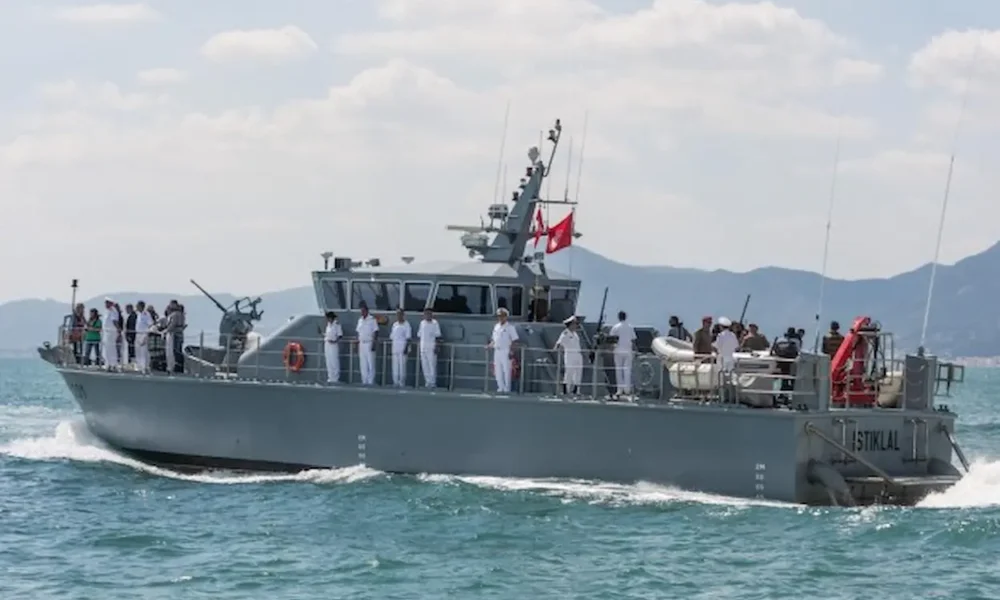
She notably announced the completion of the fabrication of the military naval unit “Kairouan”, 52 meters long, while outlining the main axes chosen to develop the Tunisian military industry.
The Essentials
- The development of the national military industry is presented as a strategic priority.
- Three axes are envisaged: creation of a military manufacturing structure, valorization of scientific research, and diversification of partnerships.
- An opening to the private sector is planned within the framework of developing industrial capacities.
- The fabrication of the military naval unit “Kairouan”, 52 meters long, is completed.
Reducing dependence on foreign military equipment
According to Samia Souissi, the development of the military industry and the mastery of technologies constitute strategic choices for the Ministry of National Defense.
This orientation aims to strengthen national sovereignty, improve the country’s defense capabilities, and progressively reduce its dependence on foreign suppliers of weapons and military equipment.
The rapporteur explained that the rapid evolution of security threats requires a transformation of traditional approaches to defense.
She stressed that military power is no longer measured solely by the number of soldiers or the volume of available equipment.
It also rests on technological mastery, innovation capabilities, the development of tailored solutions, and risk anticipation.
A dedicated structure for military manufacturing envisaged
Samia Souissi specified that the Ministry of National Defense is working to translate this orientation into reality around three main axes.
The first concerns the creation of a dedicated establishment for military manufacturing, in order to develop national production capacities of equipment intended for defense needs.
The second axis focuses on directing scientific research toward industrial and productive applications.
This approach aims to establish a closer link between research activities, technological development, and the operational needs of the military institution.
Finally, the third axis rests on diversifying partnerships and opening up to the private sector, within a framework of industrial and technological cooperation.
The information presented, however, does not specify the timetable for creating the envisaged structure nor the investments required for its implementation.
Scientific research: betting on Tunisian competencies
The rapporteur stressed the importance of investing in scientific research to develop a national military industry.
She estimated that the success of this strategy requires valuing Tunisian competencies and providing them with the technical and financial means indispensable for innovation.
According to Samia Souissi, national competencies have already demonstrated their ability to design innovative solutions when they benefit from favorable conditions.
The strengthening of ties between scientific research and industrial production thus constitutes one of the pillars of the strategy presented to enhance the technological autonomy of the defense sector.
“Kairouan”: a 52-meter military naval unit completed
Among the achievements presented is the completion of the fabrication of the military naval unit “Kairouan”, whose length reaches 52 meters.
According to Samia Souissi, this project aims, in a first phase, to meet the needs of the military institution for naval units.
The announced objective is then to gradually expand production capacities in order to also meet the needs of other public structures.
This perspective reflects the willingness to develop industrial capacities capable of serving multiple state bodies.
The information provided does not specify the detailed technical characteristics of the “Kairouan” unit, its manufacturing cost, or its commissioning date.
Towards diversification of national industrial capacities
The directions outlined by Samia Souissi highlight the aim to strengthen national capacities in the fields of military manufacturing, applied research, and technological innovation.
The development of partnerships with the private sector could also contribute to mobilizing complementary industrial skills within the framework defined by the competent authorities.
The completion of the naval unit “Kairouan” constitutes a milestone presented within this dynamic, while the creation of a specialized structure for military manufacturing remains an announced project.
The challenge stated by the Ministry of National Defense is to progressively develop a national industrial and technological base capable of meeting part of the country’s defense needs and strengthening its autonomy in terms of equipment.