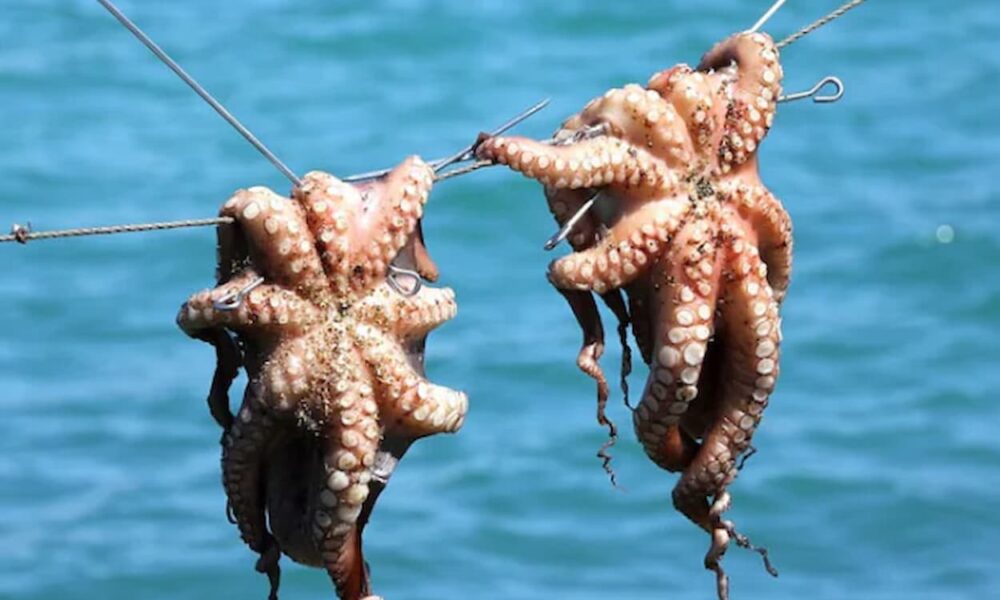
After the biological rest period, the octopus fishing season resumes in Tunisia this Monday, November 16, 2026, following the extension of an additional month of the ban on this activity. This decision is based on the results of scientific monitoring carried out by the National Institute of Marine Sciences and Technologies (INSTM), which revealed that the majority of the specimens studied had not yet reached the legal minimum commercial weight, set at one kilogram.
In order to ensure sustainable fishing and to preserve the renewal of marine resources, the association Tunsea for Participatory Sciences called on the various stakeholders to respect a series of recommendations.
It stresses in particular the compliance with the legal weight, avoiding fishing or keeping octopuses weighing less than one kilogram. It also recommends not catching young specimens and returning to the sea, with caution and without injuring them, the small individuals caught accidentally.
The association further advocates the exclusive use of authorized fishing gear and adherence to legal methods, while avoiding anarchic practices likely to degrade marine habitats.
Its recommendations also focus on the protection of octopus breeding and refuge zones, as well as the preservation of its natural shelters. They also call not to abandon nets on the seabed, to combat unregulated fishing, to report violations and to respect the biological rest periods as well as the regulations governing fishing campaigns.
Tunsea emphasizes that the preservation of this marine wealth and the guarantee of its sustainability are the collective responsibility of all concerned stakeholders.
As a reminder, by a decision of the Minister of Agriculture, Hydraulic Resources and Maritime Fisheries, dated October 14, 2026, the period of prohibition on octopus fishing in Tunisian waters was extended by an additional month, until November 15, 2026.
This measure followed the work of the consultative commission responsible for organizing maritime fishing, which met on October 13, 2026, and had recommended maintaining the ban and extending it by one month.
The objective was to grant octopuses additional time to reach maturity, in order to preserve natural stocks and guarantee the sustainability of their exploitation in Tunisian waters.