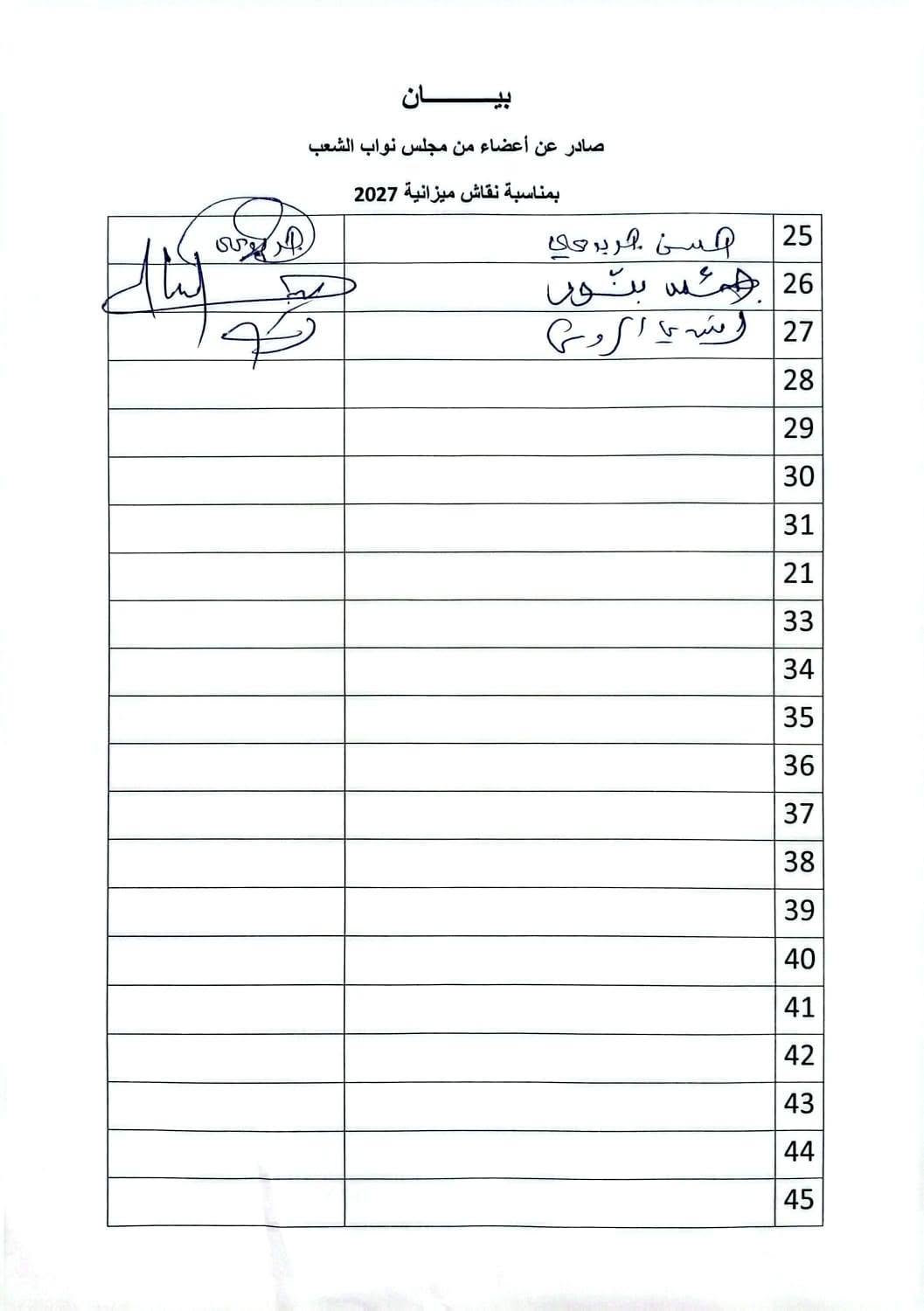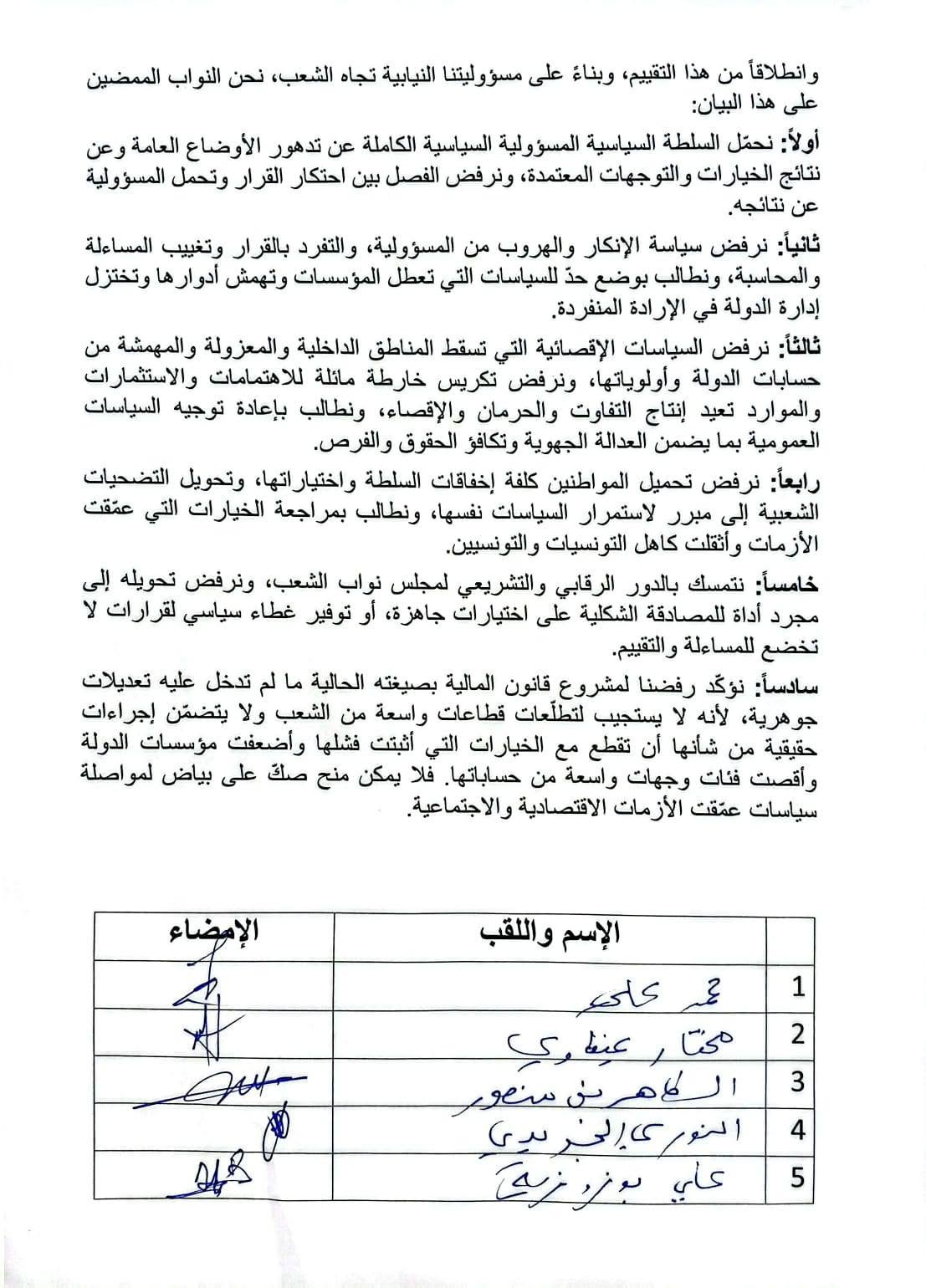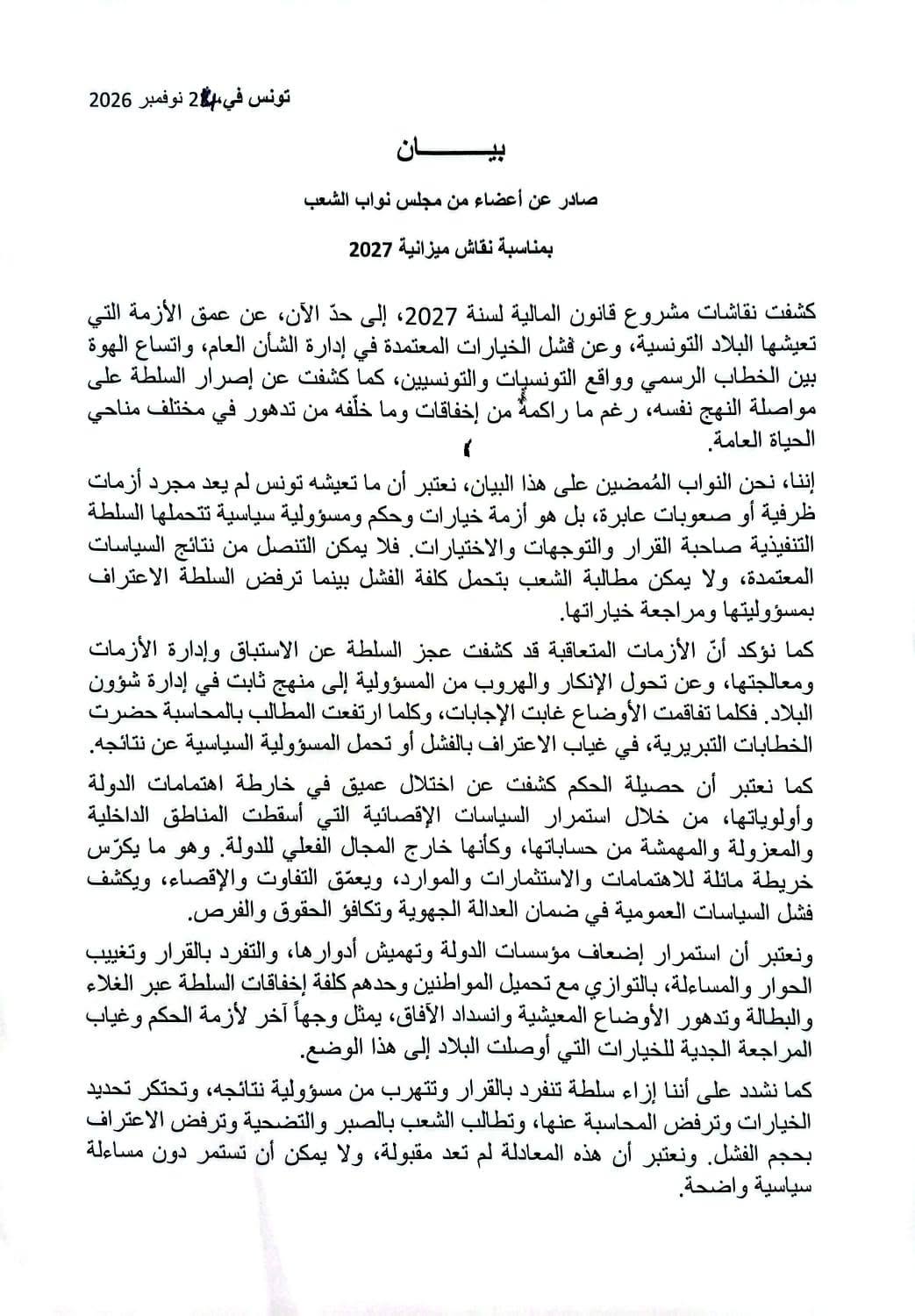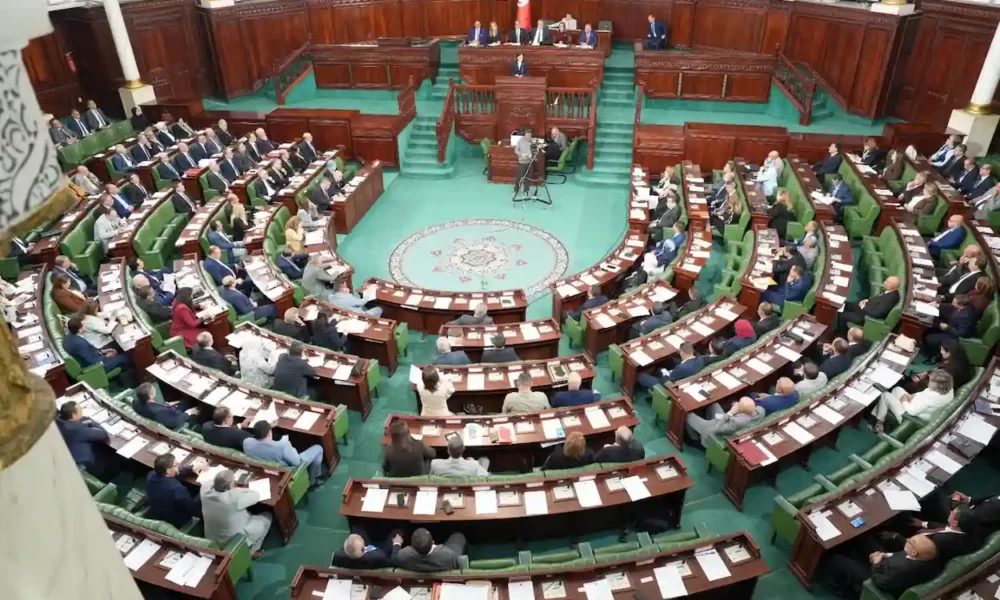
In a statement published in Tunis on November 24, 2026, on the occasion of debates on the 2027 finance bill, several deputies challenged the political and economic choices pursued by the authorities. They consider that the country’s situation constitutes a governance crisis and call for a reconsideration of the orientations adopted.
The political responsibility in question
The signatories attribute to the executive authority the responsibility for the deterioration of the general situation and for the consequences of the choices made. They reject any distinction between the political decision and the responsibility for its outcomes, and they denounce, in their words, the denial of responsibility and the concentration of decision-making power.
They also call for greater dialogue and accountability, as well as an end to policies that, in their view, hinder the functioning of institutions and diminish their roles.
A call for greater regional justice
The deputies criticize economic policies that, in their view, relegate inner regions, isolated and marginalized, to the background. They denounce an unbalanced distribution of investments and resources, likely to exacerbate disparities and exclusion.
They call for a reorientation of public policies to ensure regional justice as well as more equitable access to rights and opportunities.
The contested finance bill
The signatories oppose citizens bearing the cost of the authority’s choices and failures. They call for reexamining the directions which, in their view, have contributed to crises affecting Tunisians, and oppose the continuation of the same policies in the name of sacrifices made by the population.
They also reaffirm the role of oversight and legislation of the Assembly of the Representatives of the People, rejecting its transformation into a mere body approving decisions already made or political cover for choices that would not be subject to accountability.
Finally, they express their opposition to the 2027 finance bill in its current version, deeming that it does not meet the expectations of a wide part of the population and does not provide sufficient measures. In their view, the text cannot be dissociated from the orientations that, in their eyes, weakened institutions and marginalized certain social groups and regions.