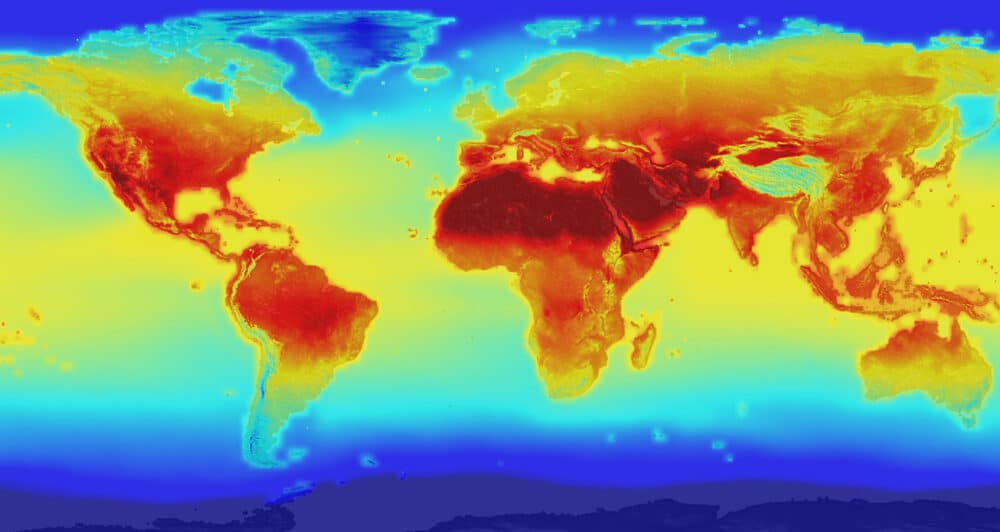
Soon, the world is about to surpass the 1.5°C threshold of climate warming, which will trigger climate disasters that are even more severe and more frequent than today.
But it will still be possible to limit this overshoot and even bring temperatures back down, says a new report from the United Nations Environment Programme, published this Wednesday, September 2.
The crossing of the 1.5°C threshold for Earth’s climate warming is now inevitable and is expected to occur in just a few years. Not exceeding this figure was the objective set by world governments. But despite the overshoot, one must not abandon this objective, the researchers say.
“What we must do is limit the peak warming and shorten the overshoot period,” explains Debra Roberts, one of the South African authors of the UN report. To achieve this, “we must avoid polluting and drastically reduce all our greenhouse gas emissions.”
“But to lower the temperature from this peak, to around 1.5°C, we will also need to remove carbon dioxide from the atmosphere and store it in a durable way,” she adds.
What should we do?
To succeed in these objectives, planting new forests is a path to explore, since plants are capable of absorbing CO2. Another advantage: rely on technologies that capture carbon from the air. But these techniques are uncertain and very limited.
“We consider that a warming of 1.8 °C is a maximum threshold. Beyond that, these measures would not even be effective anymore,” warns Debra Roberts. According to her, such a level of warming would cause “irreversible cascading changes.”
There is therefore an urgency to act: the longer we wait, the longer and harder it will be to go back.