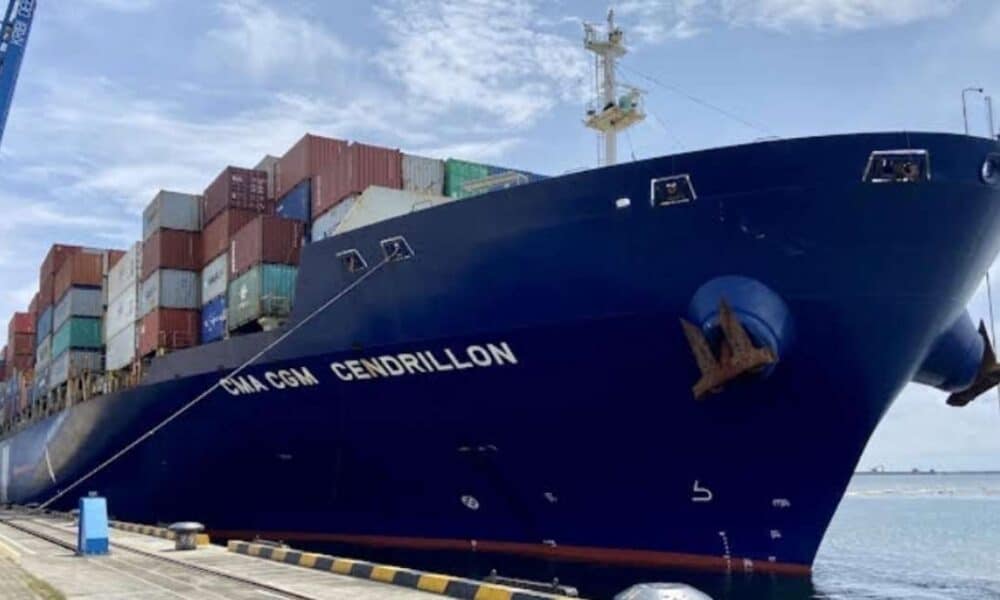
A notable shift is looming in the dynamics of African trade.
According to Afreximbank projections, intra-African trade is expected to reach $230 billion in 2026, up from $210 billion in 2025, an increase of about 10%.
Beyond this rise, a more structural mutation is on the horizon, marked by a gradual transformation in the content of exchanges and by the rising prominence of new instruments for economic integration at the continental scale.
The new drivers of continental integration
The anticipated acceleration of intra-African trade rests first on concrete institutional advances. The entry into force of the Pan-African Payment and Settlement System, the PAPSS, represents a major breakthrough in this regard. By reducing foreign exchange costs by 20 to 30%, this mechanism addresses one of the historic barriers to African trade, namely dependence on third-country currencies in intra-continental transactions.
Meanwhile, the progressive removal of non-tariff barriers on the main commercial corridors improves the fluidity of exchanges, while the adoption of the Protocol on Digital Trade within the AfCFTA introduces a new dimension to economic integration. These financial, logistical, and digital levers reconfigure intra-African competitiveness and reduce structural frictions that have long fragmented markets.
A still fragile upgrade in value-added
Beyond quantitative growth, the qualitative evolution of exchanges deserves particular attention. The share of intra-African trade in the continent’s total trade should rise from about 15% on average in recent years to 16% in 2026. If the increase may seem modest, it nonetheless signals a structural movement in an environment historically dominated by outward-oriented flows.
Even more significant is the sectoral repositioning. The manufacturing and agro-food sectors are projected to account for between 48% and 50% of intra-African trade, up from 46% in 2025. This evolution indicates a gradual upgrading, with partial substitution of raw materials by processed goods. It also suggests increasing integration of regional value chains, a necessary condition for the continent’s industrialization.
Contrasting regional dynamics
The regional architecture of African trade remains marked by persistent asymmetries. Southern Africa continues to dominate intra-continental trade, backed by relatively developed infrastructure and more mature industrial networks. By contrast, West Africa and East Africa are expected to strengthen their participation as AfCFTA implementation accelerates and regulatory obstacles ease.
North Africa, for its part, is pursuing a strategic repositioning. Traditionally oriented toward European markets, the region is gradually moving closer to the other African sub-regions. This shift could, in the long run, play a pivotal role in reconfiguring continental trade flows, particularly in terms of logistical connectivity and diversification of markets.
A disbalanced global insertion
Despite these advances, African trade remains deeply unbalanced in its global structure. In 2025, Africa’s total trade, including intra- and extra-African flows, reached around $1.4 trillion. However, exports outside the continent remain dominated by raw materials, accounting for between 60% and 70% of total exports.
Conversely, African imports consist of more than 60.5% manufactured goods. This classic pattern of asymmetric trade continues to limit the continent’s ability to capture added value. It partly explains why Africa’s share of world trade remains around 3%, a level well below its demographic and economic potential.
Massive untapped potential
Estimates highlight a substantial growth reservoir, estimated at $433.8 billion in additional exports. This potential largely rests on the domestic processing of resources. Processing agricultural products alone could raise export revenues by 42.3%, reflecting the magnitude of gains associated with upgrading to agro-industrial products.
Furthermore, value addition to mineral resources appears as a major strategic lever. It could generate up to $120 billion per year, create about 412,000 jobs, and contribute about 4.3 percentage points to GDP growth. These figures illustrate the economic cost of the current specialization in raw exports and underscore the urgency of an industrial repositioning.
Conditions for a lasting trend
Realizing these prospects remains conditioned by deep structural reforms. Strengthening regional integration is a priority, not only commercially but also in coordinating economic policies. Improving economic governance is also essential to secure investments and guarantee the predictability of regulatory frameworks.
Finally, infrastructure investment remains an indispensable prerequisite. Without efficient transport networks, without reliable energy interconnections, and without modern logistics platforms, integration ambitions will remain limited. The challenge is clear: to enable the continent to capture a growing share of the value added generated by its own resources.
In this context, the expected growth of intra-African trade in 2026 should not be interpreted as a mere cyclical uptick. It is part of a broader trajectory of economic transformation, whose outcome will depend on the ability of African economies to move beyond their extractive model and to embed themselves sustainably in integrated and competitive value chains.