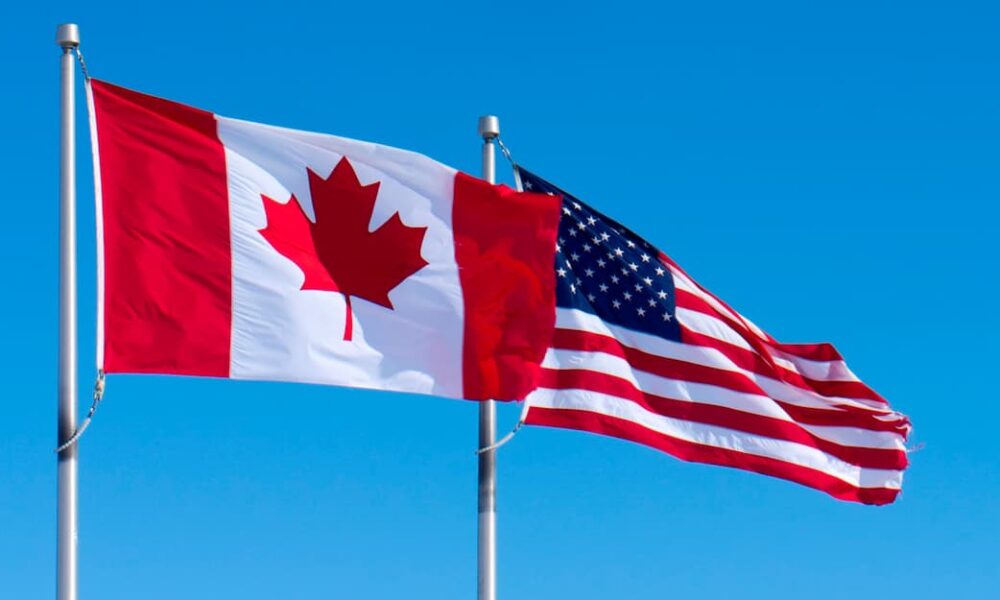
Washington and Ottawa announced, late Friday, the failure of their trade negotiations. The United States will impose a 50% tariff on certain imports from Canada, marking a new escalation of tensions between the two countries.
An official from the administration of U.S. President Donald Trump said these tariffs, imposed under Article 338, will cover Canadian products valued at about $20 billion and will take effect starting at midnight on the night from Saturday to Sunday.
Canadian Prime Minister Mark Carney announced the suspension of trade negotiations with Washington, noting that Canada would respond to these new tariff measures in kind.
The decision by the American administration comes after three consecutive days of discussions in Washington between Canada’s minister responsible for trade with the United States, Dominic LeBlanc, and the American Trade Representative, Jamieson Greer.
In a statement, Mark Carney said: “I have decided to suspend trade negotiations with the United States and asked Canadian negotiators to return to Ottawa.”
He added: “The negotiators have made considerable, good-faith efforts to defend Canadians’ interests up to the last moment. However, the last-minute changes to the conditions proposed by the United States were unfair and economically harmful, raising doubts about the credibility of any agreement.”
Although the new measures affect only a relatively small portion of Canadian exports, they come on top of the U.S. tariffs already applied to steel, lumber and automobiles.
These new tariffs could further weaken Canada’s still fragile economic recovery and affect how the two neighboring countries will approach, in the coming months, broader negotiations around their free trade agreement.
These tariffs will apply regardless of whether Canadian products qualify for the preferential treatment provided by the Canada–United States–Mexico Agreement (USMCA), which had until now protected a large portion of the Canadian industry from previous U.S. tariff measures.

Adel Khelifi