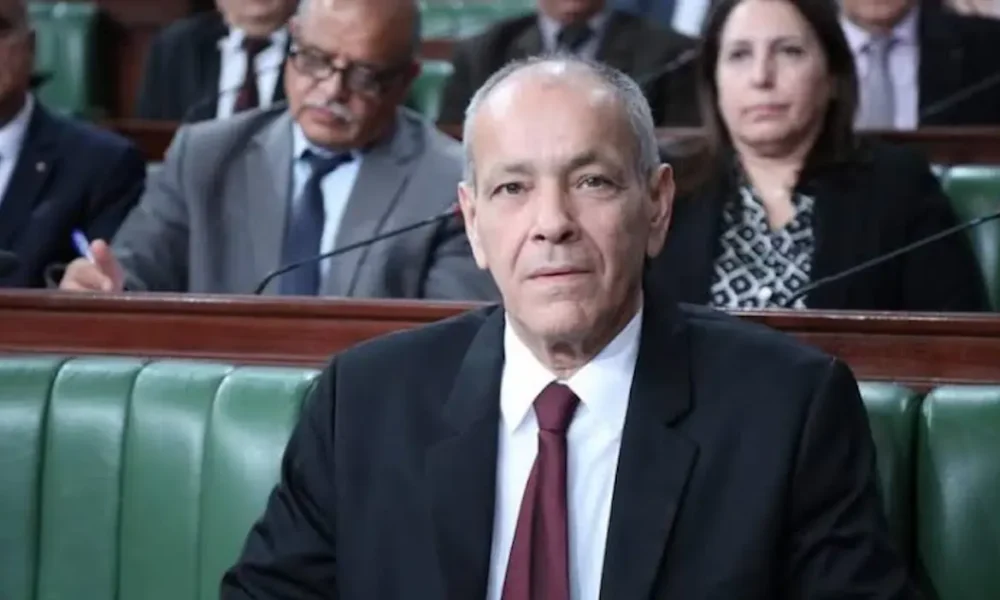
The Minister of Environment, Habib Abid, announced, on Monday in Bardo, that his department is working to modernize the waste management system, through a gradual transition from landfilling to waste valorization, energy production and alternative fuels, as well as the rehabilitation of dumps presenting environmental problems.
In response to the interventions of the deputies of the Assembly of the Representatives of the People and of the members of the National Council of Regions and Districts, during the joint plenary session devoted to examining the ministry’s budget for the year 2027, the minister indicated that his department aims to transform waste landfills into valorization units. An approach whose implementation has already begun in several regions of the country.
To this end, he cited the Beja center, which is now aligned with this new orientation, as well as the Sousse center, which produces electricity from waste. The Djerba center, for its part, has already come into operation and should be officially inaugurated as soon as possible.
The minister added that his department intends to generalize these experiences to other regions, while preparing three to four new projects, including the one concerning the rehabilitation of the Agareb landfill in the Governorate of Sfax. This site is among the areas facing environmental problems. He specified that this project will constitute the first operation of closing and rehabilitating a landfill according to the new approach adopted by the ministry.
Furthermore, Habib Abid reported the existence of 62 waste collection and transfer centers. Their establishment aims in particular to bring collection points closer to municipalities and to reduce the distances traveled for waste transport.
Regarding industrial waste, the minister indicated that the project to manage these wastes in the Jeradou region has reached an advanced stage of preparation.
He also announced the development, in coordination with the Ministry of Health, of a program aimed at equipping hospitals with devices for treating medical waste. The objective is to ensure the availability, in every hospital, of an incinerator or appropriate treatment equipment, while encouraging private sector investments in this field.
Regarding construction and demolition waste, Habib Abid specified that more than 53,000 tonnes were collected during the current year in nine governorates. This program will continue during the next period, in coordination with the Ministry of Equipment and Habitat.
As part of the waste valorization strategy, the minister also announced the preparation of a decree setting the conditions for the production and transport of fuel derived from non-hazardous waste, also called alternative fuel, to allow its use in cement plants.
He specified that meetings have been organized with representatives of cement plants, who expressed their willingness to buy this type of fuel. Valorization will also involve waste sorting and the recovery of reusable materials, notably plastic and metal wires, whose exploitation could be entrusted to the private sector.
The minister also emphasized that organic waste, particularly food scraps, can be used to produce energy. The residual materials can, in turn, be directed toward the production of alternative fuels or agricultural uses.
In this regard, he cited the Djerba experience, which should enable more than 150 tonnes of materials destined for valorization to be supplied. Contracts have also been concluded with farmers so that they can benefit from the products derived from this process.
Finally, Habib Abid stressed that these programs are part of the ministry’s strategy to reduce the quantities of waste destined for landfilling, to strengthen their economic valorization, and to ensure compliance with sanitary and environmental standards.