By the end of 2025, Tunisia records a notable inflation lull. The inflation rate stands at 4.9% year-on-year in December, i.e., unchanged from the previous month and the lowest level observed in more than four years.
For the year as a whole, inflation falls to 5.3%, down from 7% in 2024, confirming a deceleration phase that began in 2023.
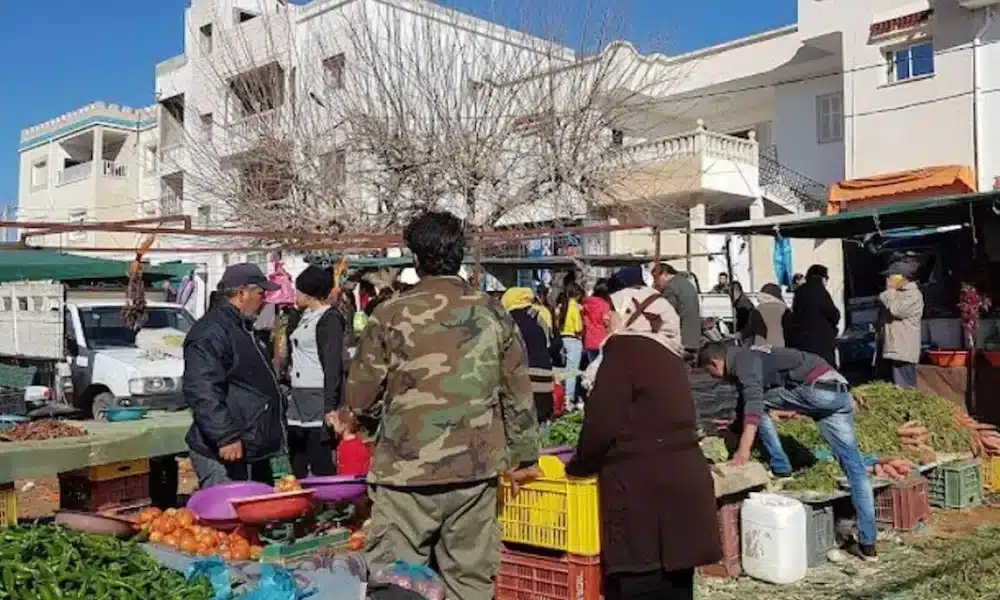
This apparent retreat does not, however, translate into an easing of households’ perceived burden. Behind the overall stabilization, sectoral tensions persist. Food prices still rise by 6.1%, manufactured goods by 4.9% and services by 3.9%.
These components, at the heart of daily consumption, feed a sense of the high cost of living that is out of step with the aggregated indicators. This gap fuels growing distrust of economic policy, revealing a fracture between statistical reality and social perception.
The Structural Drivers of Inflation in Tunisia
Price developments in Tunisia unfold within a structural configuration typical of emerging economies. Inflation, historically oscillating between 3% and 7%, reflects deep determinants: dependence on imports, exposure to fluctuations in the dinar, the duality between administered goods and liberalized markets, and underlying inflation dynamics.