There are decisions that, taken in isolation, resemble technical adjustments. Cargo planes taking off, a notice to nationals, a withdrawal from an oil organization. But taken together, they tell a different story: a region preparing, without saying it outright, for a new phase of tension around Iran and the Strait of Hormuz.
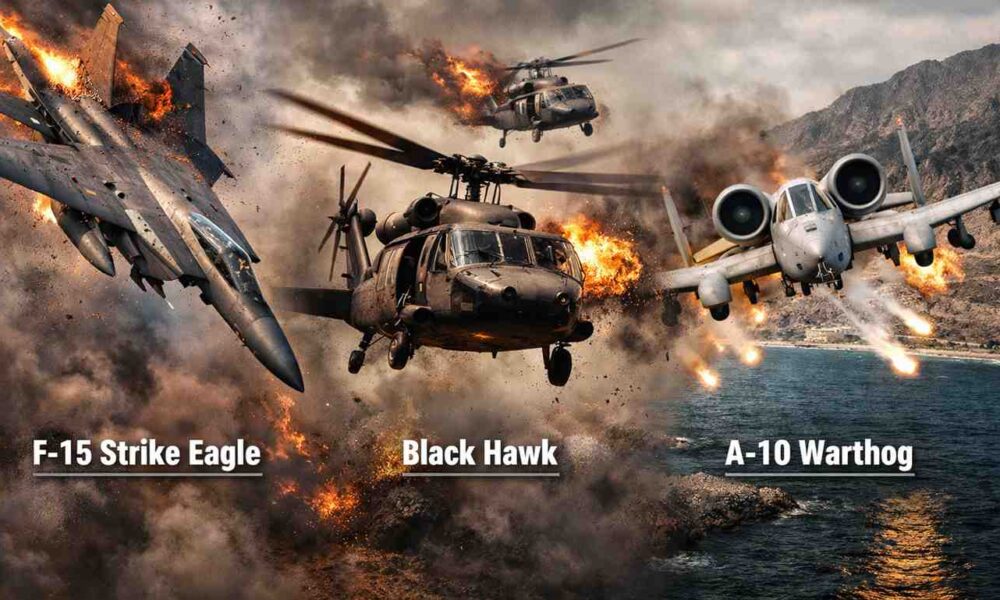
The most visible signal comes from the sky. According to air-tracking data from Flightradar24 and ADS-B Exchange, at least 30 American military freight flights were recorded between Germany and the Middle East in around 48 hours. Among them, 29 flights were carried out by C-17 Globemaster III aircraft capable of carrying heavy equipment, and one by a C-130J-30 Hercules, used for tactical transport.
The visible destinations provide an initial read of the situation: 7 flights to Israel, 4 to Jordan, and 18 others reported more broadly to the “Middle East,” without public specificity. Tracking data do not say what those aircraft were carrying. But their frequency, their concentration over two days, and the aircraft involved exceed ordinary logistical background noise.
This movement comes as Washington speaks with ambiguity. Officially, the Donald Trump administration says that hostilities with Iran have ended since the ceasefire at the start of April. But on the ground, military signals continue to accumulate, hinting at a situation far from fully stabilized.
In the Gulf, the United Arab Emirates have also sent a strong signal. On April 30, Abu Dhabi banned its nationals from traveling to Iran, Lebanon and Iraq, and asked those already in these countries to leave immediately. The official justification is a simple phrase: “regional developments.” In diplomatic practice, this kind of decision is rarely taken without anticipating a serious risk.
This measure takes on particular significance after the UAE announced its withdrawal from the OPEC. The move is energy-related, but it is also strategic. By freeing itself from the cartel’s constraints, Abu Dhabi regains room to maneuver at a moment when oil is once again a tool of power.
Before the February 28 attacks, the UAE exported about 3.3 million barrels per day. According to several estimates, their production could rise toward 4.5 million barrels per day if conditions permit. In a context of tension around the Strait of Hormuz, this capacity becomes a central lever.
For the Strait of Hormuz is not a simple maritime passage. A significant share of global oil transits through it. Any disruption—military, political or logistical—repercussions immediately on prices, maritime insurance, and transport costs. It is a global tipping point.
The United Arab Emirates occupy a particular position in this framework. Since the Abraham Accords, they maintain normalized relations with Israel and remain closely linked to the United States on issues of regional security. This does not mean they are about to enter directly into war with Iran. But it places them in a clearly identified strategic camp, and thus potentially exposed.
The temptation would be to move too quickly and conclude to an imminent entry into war. That would be too much. No public element today allows us to affirm that Abu Dhabi will participate directly in strikes against Iran.
But the signals converge. An accelerating military airlift. A regional power evacuating its nationals. A withdrawal from a petroleum alliance at a moment when oil is resurfacing as a weapon. A strategic zone — the Strait of Hormuz — under permanent tension.
For Tunisia, these movements are not abstract. A sustained crisis in the Gulf would quickly translate into pressure on energy, transport, and import prices. In an economy sensitive to external shocks, this type of tipping could spread quickly — from the barrel of oil to the consumer’s basket.
The question is therefore no longer only whether a new escalation will occur. It is to understand why so many actors are already behaving as if this hypothesis should be taken seriously.
Peace may be announced. But, in practice, the region is preparing.