Long perceived as a discreet player in the digital arena, Tunisia is beginning to position itself as a credible destination for IT nearshoring, notably for German companies.
In a context where European companies seek to secure their technological skills, reduce costs and bring their development teams closer together, the Tunisian site is gaining visibility.
An article published by Germany Trade & Invest, the German federal agency responsible for foreign trade and investment, notes that Tunisia is moving from a “confidential good plan” to an increasingly serious IT nearshoring site. The country highlights three major assets: qualified skills, geographical proximity to Europe and competitive costs.
According to the data cited by GTAI, the Tunisian digital sector counts more than 2,000 companies and around 40,000 direct jobs. Tunisia also benefits from an Internet penetration of about 85%, widespread 4G coverage in urban areas and the deployment of 5G launched in February 2025, initially focused on major metropolitan areas and economically dynamic coastal regions.
A Nearby Alternative for German Companies
Nearshoring responds to a very concrete need: finding engineers, developers and qualified tech profiles without straying too far from European markets. For German companies, Tunisia offers several practical advantages.
Flight time between Frankfurt and Tunis is about two hours, the time difference is small, and costs remain below those of several sites in Eastern Europe. For IT projects, engineering, software development, cybersecurity, artificial intelligence or embedded systems, these parameters matter as much as the technical level of the teams.
The GTAI article particularly cites the Tunisian company Wevioo, founded in 2000 and employing around 450 staff, as one of the major players in IT services. Its CEO, Mehdi Tekaya, believes Tunisia now has real credibility in outsourcing and nearshoring, thanks to its engineers, its technological capabilities and its experience in international projects.
El Ghazala, a Showcase of a Structured Tech Ecosystem
The El Ghazala technopole, in Greater Tunis, is presented as the country’s main IT cluster. It brings together companies active in software development, telecommunications, artificial intelligence, cybersecurity and embedded systems.
There are both international groups and major Tunisian providers, including Orange/Sofrecom, Actia, Sagemcom, Sopra HR, Vermeg and Proxym Group. The German group Kromberg & Schubert also has a technology and engineering center there.
El Ghazala’s interest lies not only in the presence of companies. The site also hosts training and research institutions such as ISET’COM, SUP’COM, ESPRIT and the SESAME University. This proximity between education, research and industry creates an ecosystem conducive to technological projects and industrial cooperation.
A Large Pool of Engineers, but a Retention Challenge
Tunisia has a substantial technical talent pool. Each year, around 10,000 students complete engineering studies there, with nearly half of them women. The country hosts around 45 engineering schools, and more than twenty institutions have some programs certified by European agencies.
This is crucial for German companies, often facing recruitment tensions in tech fields. Tunisia can offer them qualified, available teams that are culturally close to Europe.
But the challenge remains significant: according to the Tunisian Order of Engineers, about 6,000 engineers leave the country every year. GTAI notes, however, an interesting evolution: more and more Tunisian engineers choose to stay in Tunisia while working remotely for international clients.
This trend could turn brain drain into an opportunity if the country can further structure its exportable service offerings.
The Positive Role of the Tunisian Embassy in Germany
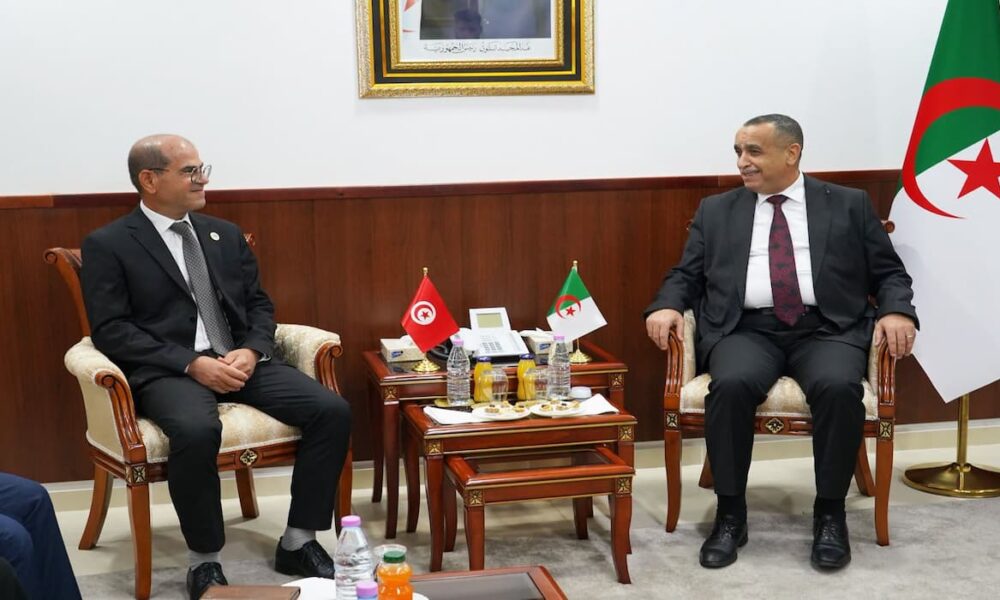
This momentum does not rest on companies alone. It is also supported by increasingly active diplomatic and economic work. The Tunisian embassy in Germany plays a positive role in promoting the Tunisian site to German business circles.
In a demanding German market, trust is decisive. The role of an embassy is not limited to ceremonial representation: it can facilitate contacts, support the visibility of Tunisian competencies, accompany economic exchanges and help position Tunisia more credibly as a technological partner.
This action is all the more important because one of the observations highlighted by sector professionals concerns the deficit of international marketing of the Tunisian site. Mehdi Tekaya regrets that Tunisia still suffers from a visibility problem, despite the quality of its engineers, its technological skills and its experience in international projects.
The Tunisian embassy in Germany can thus act as a bridge: linking German companies with Tunisian digital players, mobilizing the Tunisian diaspora in Germany, highlighting existing successes and helping to build a more assertive economic narrative around Tunisia’s digital sector.
A Solid Tunisian-German Cooperation
IT potential fits within a broader economic relationship. Germany is among Tunisia’s major economic partners. According to figures cited by the Tunisian press, more than 300 German companies are established in Tunisia, with tens of thousands of jobs created in industry, automotive, electronics, technical textiles and technology services.
This industrial presence is an advantage for IT nearshoring. German companies already know Tunisia as a site for production, engineering or industrial subcontracting.
The challenge now is to evolve this perception toward a more technological image: Tunisia should not only be seen as a competitive industrial platform, but also as a provider of high-value digital skills.
Tech216, AHK and GIZ: Tools for Connecting with German Companies
The GTAI article also highlights the role of German institutions present in Tunisia. The Tech216 initiative, implemented by GIZ on behalf of the German Federal Ministry for Economic Cooperation and Development, supports the development of IT outsourcing and nearshoring projects between German and Tunisian players.
The Tunisian-German Chamber of Industry and Commerce also plays a central role in networking, market entry and organizing business meetings. In November 2026, the Import Promotion Desk plans, in cooperation with several German partners, a mission to Tunisia dedicated to digital services and products, with company visits, B2B meetings and institutional networking.
These measures matter because nearshoring is not decided solely on cost. German companies also seek legal certainty, operational quality, compliance, data protection and the ability to work with reliable partners over the long term.
Cost, a Real Advantage but Not Sufficient
The cost advantage remains one of the most visible arguments. Youssef Hedhili, founder of Scope Merge, explains to GTAI that total costs for a European client can represent around 60% of the cost of a comparable position in Germany. His model is to help European companies build dedicated engineering teams in Tunisia, without having to set up a local entity immediately.
But cost cannot be the sole argument. To compete with India, Romania, Serbia, Vietnam or Ukraine, Tunisia must offer a more complete proposition: geographical proximity, cultural compatibility, trained engineers, English proficiency in international projects, industrial experience, low time-zone difference, and the ability to work in an integrated mode with European teams.
The Real Challenge: Marketing Tunisia’s Tech Capabilities More Effectively
The GTAI article is positive, but it also reveals a strategic weakness: Tunisia has many strengths but does not yet translate them sufficiently into an international brand image.
The country has engineers, schools, companies, references, a qualified diaspora in Germany and an evident proximity to Europe. Yet its positioning remains less visible than that of certain competitors in Eastern Europe or Asia.
This is where the combined role of companies, the state, the Tunisian embassy in Germany, FIPA, the diaspora, the chambers of commerce and private players becomes decisive. IT nearshoring is a trust market. Therefore one must reassure, demonstrate, document and better tell what Tunisia already knows how to do.
An Opportunity Window to Transform
Tunisia today has a genuine opportunity window. German companies are looking for talent, want to reduce certain costs, secure their digital projects and bring their development teams closer. In this context, Tunisia has strong arguments.
The country is not yet a giant in IT nearshoring, but it is no longer a marginal actor. Its engineers, its digital companies, its technological ecosystem and its proximity to Europe give it a place to defend.
The active role of the Tunisian embassy in Germany can reinforce this momentum, provided it is embedded in a broader strategy of economic promotion. For the issue is no longer simply to train engineers.
It is now a matter of making known, in Germany and Europe, that Tunisia can be a serious, competitive and reliable platform for digital services, engineering and tomorrow’s technological projects.