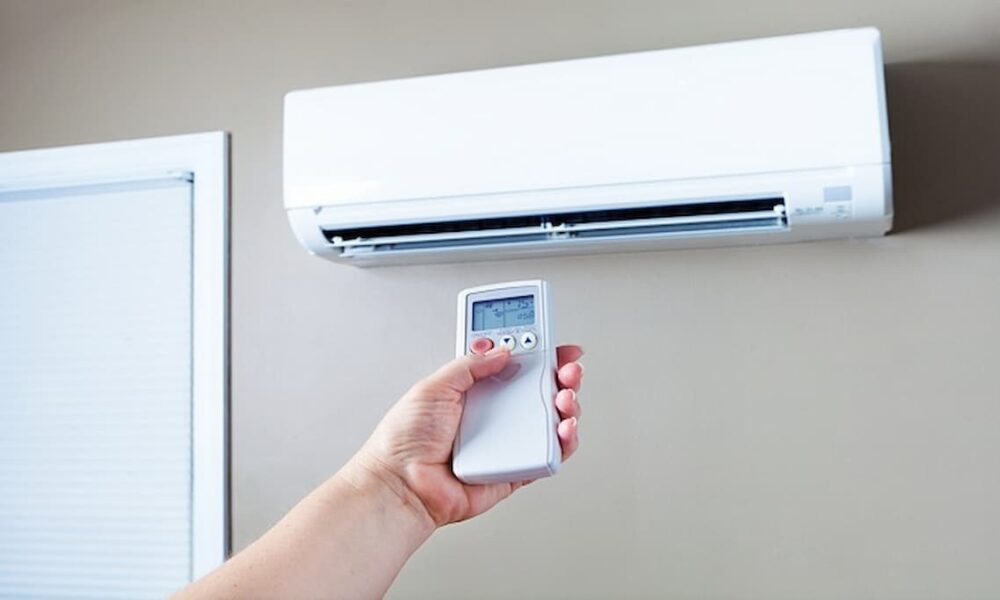
The air conditioner runs nonstop, blows cool air and consumes electricity, but the room temperature no longer drops as it normally would. Many Tunisians notice this when the heat becomes extreme or after power outages and disruptions to the electrical grid.
In many cases, this drop in performance does not mean the air conditioner is broken. It may simply indicate that the unit is reaching its limits in the face of scorching outdoor air, a heat-soaked home, or an unstable power supply. But some signs should nevertheless lead you to call a technician.
The essentials in two minutes
Yes, an air conditioner can cool less effectively during a heatwave without being broken. The hotter it is outside, the more the unit struggles to expel the heat extracted from the home.
Too low or unstable electrical supply can also disrupt the operation of the compressor, particularly after outages or during periods of high demand.
Set the temperature around 26 or 27 °C, close blinds and windows, clean the filters and keep the outdoor unit clearly unobstructed.
If the appliance no longer cools, even at night, if it frosts up, leaks, stops frequently or makes an unusual noise, a professional inspection becomes necessary.
What you can do immediately
Before calling a repairer, a few simple checks can noticeably improve the air conditioner’s performance and help distinguish a heatwave-related difficulty from a genuine breakdown.
1. Set the temperature around 26 or 27 °C
Setting the air conditioner to 18 °C does not mean it will immediately deliver air that is much colder. In most cases, it mainly requires it to run longer to try to reach a temperature that can become unrealistic when the outside is extremely hot.
A setting around 26 or 27 °C reduces the load on the unit while maintaining a more tolerable indoor temperature. In a home that is very sun-exposed or poorly insulated, it is possible that the room stays above this value during the hottest hours, even with a well-functioning air conditioner.
2. Close windows, shutters and curtains
An air conditioner cannot indefinitely compensate for the heat entering through an open window, a sun-exposed glass door, or a heavily heated roof. Close the windows and doors leading to non-air-conditioned rooms. Lower the shutters and draw the curtains before the sun heats the walls and glazing directly.
It is often more effective to properly cool a single closed room than to try to cool the entire home with an undersized unit.
3. Clean the filters
Dusty filters reduce air flow and force the unit to work harder. The air conditioner may then blow less strongly, cool more slowly and unnecessarily consume electricity.
Turn off the unit, remove the filters according to the manufacturer’s instructions, clean them and let them dry completely before putting them back. Do not dismantle electrical parts or interfere with the refrigerant circuit.
4. Check that the outdoor unit is breathing
The outdoor unit must be able to eject heat freely. Objects placed too close, a buildup of dust, a closed balcony or a poorly ventilated space can trap hot air around the unit and greatly reduce its efficiency.
Never cover the outdoor unit with a tarp, cloth or any protection pressed against its grills. Any sun protection should be placed far enough away to never block the air intake or air outlet.
5. Reduce other heat sources
If possible, avoid using the oven, electric plates, water heater or several heat-producing devices at the same time. Turn off unnecessary lights and limit repeatedly opening exterior doors.
The simplest test
Observe the air conditioner’s behavior early in the morning or late in the evening, when outside temperatures drop and electricity demand is typically lower.
If it cools noticeably better at these times than in the middle of the afternoon, outdoor heat and grid conditions are probably playing a significant role. This test, however, does not completely rule out maintenance issues, an undersized unit, or an early-stage technical problem.
Attention after a power outage
After electricity returns, it is best not to switch the air conditioner back on immediately. The compressor operates with a pressurized fluid. After a sudden stop, a few minutes may be needed for internal pressures to re-balance.
After the power returns
Preferably wait three to five minutes before restarting the unit, especially if it is an older model. Many modern air conditioners already have automatic protective delay.
If the power comes back and then cuts out several times, leave the unit off until the power supply seems stabilized. Repeated restarts and large voltage fluctuations can fatigue electrical components.
If voltage variations are frequent in your neighborhood, a qualified electrician can measure the power supply and check whether appropriate protection is needed. A stabilizer or protection device must be properly sized for the air conditioner’s power. An ill-fitting device or an improvised connection can create an additional risk.
When should you really call a technician?
A heatwave can explain a drop in performance, but it should not be used to justify every malfunction. Some symptoms indicate that a professional diagnosis is necessary.
- The air conditioner produces almost no cool air, even at night or in the early morning.
- The outgoing air is consistently warm while the unit is set to cooling mode.
- The indoor unit or the pipes show frost.
- Water is dripping inside the dwelling.
- The appliance makes unusual noises, a strong vibration or an abnormal odor.
- The air conditioner stops and restarts continuously.
- The circuit breaker trips regularly during operation.
- The outdoor unit no longer starts while the indoor unit continues to blow.
Frost does not automatically mean there is a refrigerant leak. It can also be caused by a very dirty filter, poor air circulation, a dirty exchanger or a faulty fan. Likewise, a water leak may simply come from a clogged condensate drain line.
It is therefore important to avoid quick diagnoses and above all never add refrigerant without having determined the exact source of the problem. The circuit must be checked by a professional equipped to detect a possible leak.
An important rule
The fact that an air conditioner cools better at night is evidence of the external heat effect. It is, however, not an absolute proof that the unit is in perfect condition. A dirty, aging, or undersized machine may also show its limits only during the hottest hours.
To go further: why does heat reduce performance?
To understand this phenomenon, one must first recall that an air conditioner does not generate cold. It removes part of the heat present in the room and rejects it outside through a circuit containing a refrigerant.
The indoor unit absorbs heat from the room air. The compressor then pressurizes the fluid, and the outdoor unit dissipates this heat into the ambient air. This cycle repeats continuously until the requested temperature is reached.
Discharging heat into already hot air
When outside air becomes extremely hot, the outdoor unit has more difficulty disposing of the calories extracted from the dwelling. Operating pressures rise, the compressor works harder and overall efficiency decreases.
The power rating on a climate control’s data sheet is measured under standardized conditions. In extreme heat, the unit may no longer provide exactly the same cooling capacity as in milder conditions.
The exact limit depends on the model. Some devices are designed to better withstand very hot climates and are sometimes marketed as tropicalized or suitable for conditions of type T3. Others may reduce their power or temporarily enter protection when outdoor temperature becomes too high.
The dwelling itself stores heat
The air conditioner does not only combat the outdoor air temperature. It must also compensate for the heat stored in walls, roofs, floors, furniture and glazing.
After several days of a heatwave, a building can continue to release heat for hours, even after sunset. A dwelling on the top floor, facing west, with large glass surfaces or poor insulation will require much more effort from the air conditioner.
A unit correctly sized for a typical summer day may therefore seem insufficient during an exceptional episode. This does not necessarily mean it is defective, but it may indicate that it is operating at its maximum capacity.
Why can unstable voltage disrupt cooling?
The compressor is the heart of the air conditioner and one of its main electricity consumers. It needs a power supply within the range specified by the manufacturer.
When the voltage drops sharply or fluctuates, the compressor may have difficulty starting, overheat, operate at reduced capacity or trigger protection. In some cases, the indoor unit’s fan continues to blow while cooling production has been interrupted or reduced. The user then feels that the air conditioner is functioning normally, but the air gradually becomes less cool.
Reactions are not identical across all devices. Older fixed-speed air conditioners, inverter models and equipment with electronic protections may respond differently to unstable power.
A drop in performance during peak hours does not, however, by itself prove that the neighborhood voltage is insufficient. Only a measurement conducted with suitable equipment can confirm it.
An undersized unit can seem broken
The required power depends on the area, but not only. Ceiling height, orientation, insulation, the number of windows, the floor, the number of occupants and the electrical appliances present in the room also influence needs.
A air conditioner chosen solely based on the number of square meters can thus be too weak for a highly exposed room. It will run almost continuously, without reaching the set temperature during the afternoon.
Conversely, an overly powerful unit is not always the ideal solution. It can cool too quickly without removing enough humidity and multiply start-ups and stops. Sizing must be adapted to the actual dwelling.
Air conditioning and peak consumption
During a heatwave, thousands of air conditioners are turned on almost simultaneously. This massive usage greatly increases electricity demand, particularly during the hottest hours.
When the network or certain local equipment are heavily loaded, voltage drops, outages or shedding operations can occur. These disturbances, in turn, complicate the operation of air conditioners, creating a situation where heat increases consumption while electrical difficulties sometimes reduce device efficiency.
This is not a request for vulnerable people to go without air conditioning. The elderly, children, chronically ill people and residents of heavily overheated homes must remain protected from heat.
To limit consumption without endangering health, it is better to prioritize cooling a single room, close other doors, maintain a reasonable setpoint and avoid using several highly energy-intensive appliances at the same time.
What to remember
A air conditioner can cool less well during extreme heat without being broken. The scorching outdoor air, heat stored in the building, and a disrupted power supply can reduce its performance.
Set the unit around 26 or 27 °C, shield the room from the sun, clean the filters and keep the outdoor unit completely unobstructed.
After a power outage, preferably wait three to five minutes before turning it back on and avoid repeated restarts when the power remains unstable.
If the unit no longer cools even during cooler hours, if it frosts, leaks, makes noise or trips the breaker, call a professional.