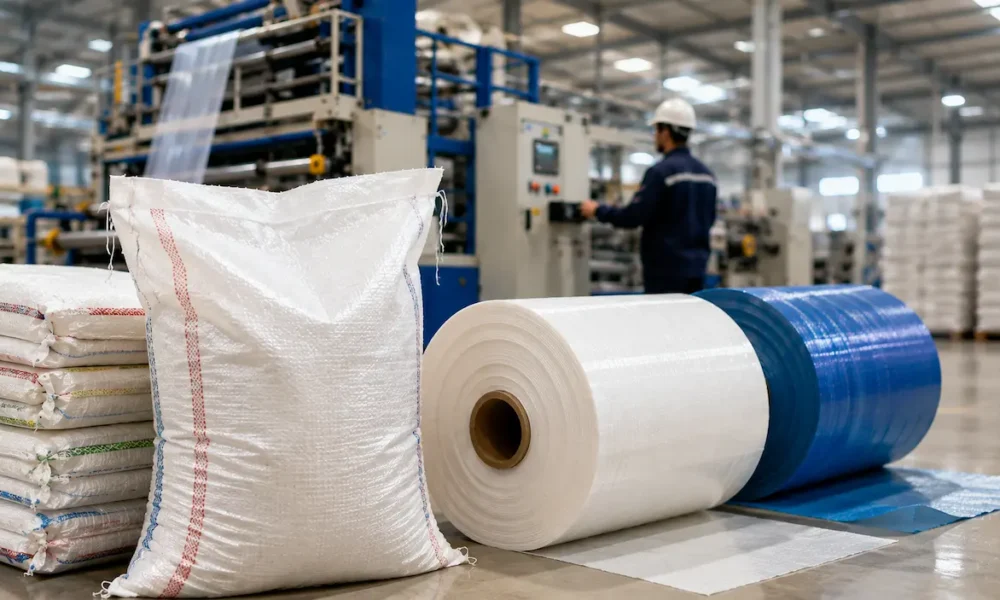
Penalized by an asymmetrical tax treatment relative to their importing competitors for a long period, Tunisian manufacturers of polyethylene and polypropylene bags and woven fabrics have seen their situation clarified since January 1, 2026.
Article 60 of the 2026 Finance Law, now clarified by a joint note from the tax administration, extends the environmental protection tax to finished woven products while neutralizing the risk of cascading taxation. A technical reform with significant competitive implications for a sector that weighs heavily in the national manufacturing fabric.
Historic Competitive Gap
The environmental protection tax is part of the Tunisian fiscal arsenal. It targets basic plastics and a range of products deemed polluting.
A Tunisian manufacturer of bags or woven fabrics made of polyethylene or polypropylene bears the tax once on its raw materials, before passing it on into the cost of its finished product, whereas its foreign competitor pays it only once at the entry into the customs territory. This differential has ultimately widened a competitiveness gap detrimental to local processors.
Article 60 of the 2026 Finance Law, Law No. 2025-17 of December 12, 2025, comes to correct this asymmetry. The text is clarified by Common Note No. 5 of 2026, published on March 6 by the General Directorate of Studies and Legislation of Taxation. The explicit objective is to align the tax treatment of imported products with that of finished products manufactured in Tunisia, by subjecting bags and woven fabrics obtained from strips of polyethylene or polypropylene to the same 7% tax, whether imported or locally produced.
The new fiscal perimeter