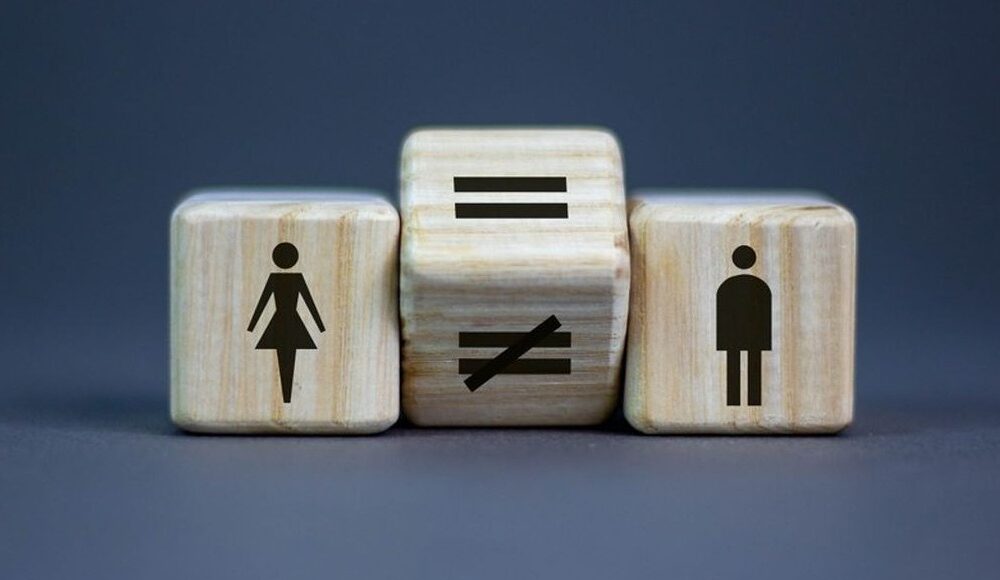
Twenty years of continuous measurements sometimes lead to an uncomfortable conclusion. Accumulating gains is not enough to transform a balance of power. This is precisely what the latest global spotlight on gender parity reveals for Tunisia.
The country shows in 2026 an overall score of 65.0%, continuing a steady rise over two decades, yet it falls in the international ranking.
This disconnect between performance and position is the throughline of an analysis that deserves to be read not merely as a simple report card.
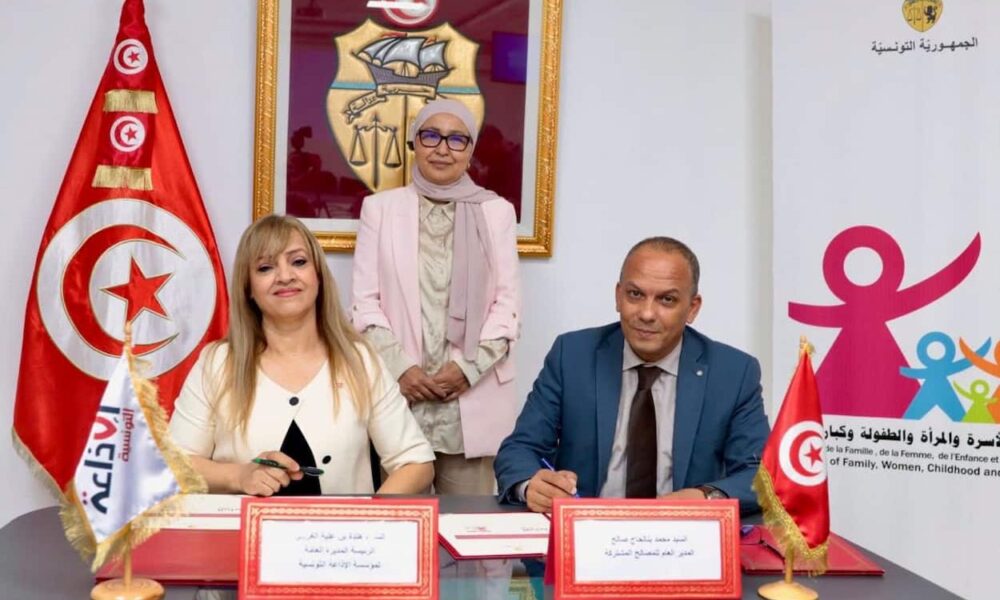
These data come from the Global Gender Gap report published on September 16, 2026 by the World Economic Forum, in its twentieth edition, conducted in Tunisia in partnership with the Arab Institute of Business Leaders (IACE).
A global perspective that is by no means insignificant
At the global level, the exercise covers 145 economies this year and relies on a constant sample of 97 countries tracked without interruption since 2006, making it the longest-running series ever built on the topic.
The general finding is sober. Global parity has improved by 5.2% over twenty years, a pace so slow that another 120 years would be required to reach it fully in the historical sample.
Nevertheless, this average masks trajectories that are radically different depending on the domains observed.
Education and health could achieve full equality in only eight years at the current pace.
Economic participation, by contrast, would require 129 years. Political empowerment, 194 years.
Thus, the world closes gaps where access to resources is measured, and leaves open those where the sharing of power is at stake.
The Tunisian case
This conceptual shift, between parity of resources and parity of power, sheds direct light on the Tunisian case.
From 2006 to 2026, the country’s score rose from 62.9% to 65.0%, a real advance of 2.1 points. Meanwhile, its global rank deteriorated, dropping from 90th to 125th place out of 145 economies covered.
This paradox is not a statistical accident. It reflects a relative speed phenomenon: Tunisia is moving forward, but other economies are advancing faster. The ranking does not measure an absolute level; it illuminates a position in a race where the peloton has tightened and broadened significantly since 2006.
A fully formed human capital
The first takeaway from the report is that Tunisia has little left to prove on the terrain of human capital.
In education, the country posts a score of 97.4%, with complete parity, i.e. 100%, in enrollment rates at primary, secondary, and higher education.
The health pillar confirms this strength, at 96.8%, notably supported by a favorable sex ratio at birth that places Tunisia at the top of the world on this precise indicator.
These results place the country among economies where access to fundamental resources between women and men is largely stabilized.
The Tunisian problem thus no longer lies in the formation of skills, but downstream, at the moment when this capital should translate into actual presence in the economy and in public decision-making.
The economic challenge: a potential left on the dock
That is where the sticking point lies. With a score of 51.9% on the pillar of participation and economic opportunities, Tunisia ranks 131st worldwide, one of the weakest positions among the entire national index.
The female activity rate tops at 41.1%, placing the country 138th, and the estimated working income for women remains barely above one third of men’s, at 36.3%.
Even more telling, only 26.3% of parliamentary, senior civil service, and executive posts are held by women, even as they account for 93.7% of the workforce in intellectual and technical professions. The gap between the qualifications gained and the responsibilities exercised constitutes, in itself, the heart of the Tunisian diagnosis.
The institutional wall, the most closed dimension of the system
Institutional empowerment represents the deepest fault, with a score of only 14%, down from 2025. Women’s parliamentary representation, at 18.8%, remains the most fragile point of the entire national index, while their presence in government, at 26.3%, remains at an intermediate level.
Placed in its environment, the Tunisian position takes on nuance.
The country retains 3rd rank in the Middle East and North Africa region, behind the United Arab Emirates and Bahrain, two economies whose progress has been particularly marked since 2006.
On the African continent, however, Tunisia falls from 14th out of 23 measured countries in 2006 to 32nd out of 38 economies covered today, a retreat explained mainly by the widening of the sample rather than by a massive overtaking by other countries.
The message carried by this edition for Tunisia can be summed up in one sentence: the country has won the battle of education/training, but has not yet won the battle of conversion. Transforming fully formed women’s skills into real economic participation and actual presence in decision-making spaces now constitutes the true test of the next decade, far more than access to schooling or care.