Tunisia and Libya have jointly relaunched one of the most expansive oil and gas bidding rounds in the Mediterranean.
According to information gathered by Energy Platform, a Washington-based specialized platform, the stake goes beyond mere geological exploration, as it is a strategic maneuver aimed at turning a shared sedimentary basin into a lever for regional energy security, at a time when the two economies seek to reduce their dependence on hydrocarbon imports.
A basin with colossal reserves
The Gabès-Tripoli basin holds potential resources estimated at more than 1.6 billion barrels of oil and 3.1 trillion cubic feet of natural gas, spread across five exploration sites identified by the Tunisian-Libyan joint venture Joint Oil: Fayçal, Hadaf, Siraj East, Siraj West and Zarat Deep.
This colossal potential rests on seismic data that are already old but robust, covering about 1,900 square kilometers in three dimensions and 6,500 square kilometers in two dimensions, complemented by five exploration wells drilled between 1976 and 2010.
The Hadaf site alone concentrates a little over one billion barrels of oil distributed across two geological layers, making it the most promising oil deposit in the area. Siraj West, on the other hand, stands out as the main gas reservoir, with about 1.7 trillion cubic feet of potential gas, in addition to nearly 358 million barrels of associated oil, according to data reported by the specialized platform Upstream Online.
Timeline to attract investors
According to details obtained by Energy Platform, the schedule set by Joint Oil, in partnership with the specialized firm Moyes & Co, structures the process precisely. The offshore tender will open on September 7 and close on December 31, 2026.
Proposals from international oil companies must be submitted no later than January 8, 2027; preliminary results will be communicated to the shortlisted candidates on February 26, followed by an official announcement expected on April 30, 2027.
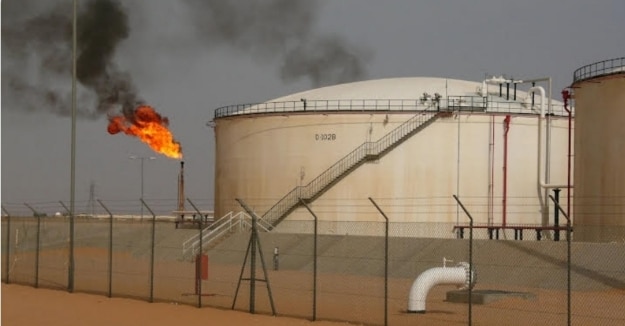
The exploration block operated by Joint Oil covers 3,000 square kilometers, with water depths ranging from 80 to 120 meters. It adjoins oil fields already in production, including Bouri, Jorf and Bahr Essalam on the Libyan side, as well as Sidi El Kilani, Ashtart, Miskar and Didon on the Tunisian side, all infrastructures that could facilitate the rapid development of the newly discovered resources.
Zarat, symbol of shared energy governance
The second part of this relaunch concerns the development of the Zarat field, located straddling the Tunisian-Libyan maritime border, at a depth of 90 meters below sea level.
Discovered by Marathon Oil in 1992 and evaluated in 1995, this field would contain the equivalent of 320 million barrels of oil, with a gas column reaching 75 meters thick at the Zarat-1 exploratory well. Three additional wells confirmed the presence of an oil layer 15 to 18 meters thick.
The resources in place are estimated at 266 million barrels of oil and condensates, as well as 1.1 trillion cubic feet of gas, with technically recoverable reserves estimated at 72 million barrels and 835 billion cubic feet, respectively.
Exploitation of this cross-border field will require three structuring agreements covering development and production sharing, resource unification, and joint operation of the unit, complemented by an operations services contract.
Among the technical options considered are connecting seven wells to a mobile floating production unit, exporting the oil via the Miskar facilities, using a floating storage unit, or a direct route to the coast.
A high-stakes regional equation
This joint revival illustrates a rare dynamic of cross-border energy cooperation in North Africa. For Tunisia, whose energy bill weighs heavily on public finances, access to new proven reserves would represent a macroeconomic lifeline. For Libya, it confirms the willingness to restructure its oil sector despite persistent political uncertainties.
The success of this operation will now depend on the two states’ ability to legally secure their sharing agreements, a crucial condition to convince international majors to invest in a high-potential area whose governance remains fragile.