As Tunisia faces an increasingly severe water stress, research that mobilizes artificial intelligence to better understand the evolution of the country’s water resources has just been distinguished by the 2026 Best Female Scientific Work Award.
According to a decision by the Minister of Family, Women, Children and the Elderly, published in the Official Journal of the Tunisian Republic (JORT) No. 82 of August 14, the prize — accompanied by a 15,000 dinar reward drawn from the ministry’s budget — was awarded to researcher Khaoula Khemiri (خولة خميري in JORT), for a study devoted to “the impact of climate change and human pressures on Tunisia’s blue water resources.”
What is “blue water”?
The term, technical, refers to the water that we can see and mobilize: that of rivers, lakes, dams, and groundwater. It is contrasted with “green water,” the moisture stored in soils and absorbed by vegetation.
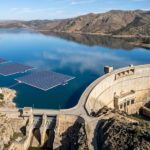
It is precisely this blue water — the country’s reserves — that climate change and human activity are putting under pressure, and which lies at the heart of the awarded research.
AI to anticipate water stress
The originality of Khaoula Khemiri’s work lies in its method. An engineer in hydrology and hydro-meteorology, stationed at the National Institute of Meteorology (INM), the researcher developed an AI-based approach to simultaneously cross climatic data, satellite imagery, and hydrological data.
The objective: to better understand the evolution of water resources, anticipate risks, and provide more precise decision-support tools, in the face of a double challenge — the scarcity of reserves and increasingly irregular precipitation, against a backdrop of growing agricultural demand. The research was conducted at the National Institute of Agricultural Research in Tunisia (INRAT), affiliated with the University of Carthage.
Award obtained among 14 applications
The 2026 edition of the prize was devoted to innovations in artificial intelligence serving water and food security — a theme that directly brings research closer to the country’s emergencies.
Khaoula Khemiri’s work was selected from 14 applications, after a two-stage selection process. Five studies were retained in an initial phase before the final examination of the files. According to the chair of the scientific committee, the evaluation notably focused on scientific quality, the innovativeness of the proposed solutions, and their economic, social, and environmental impact.
The JORT, for its part, sticks to the essentials: the name of the laureate, the title of the study and the prize amount. It does not publish either a summary or detailed results of the research.