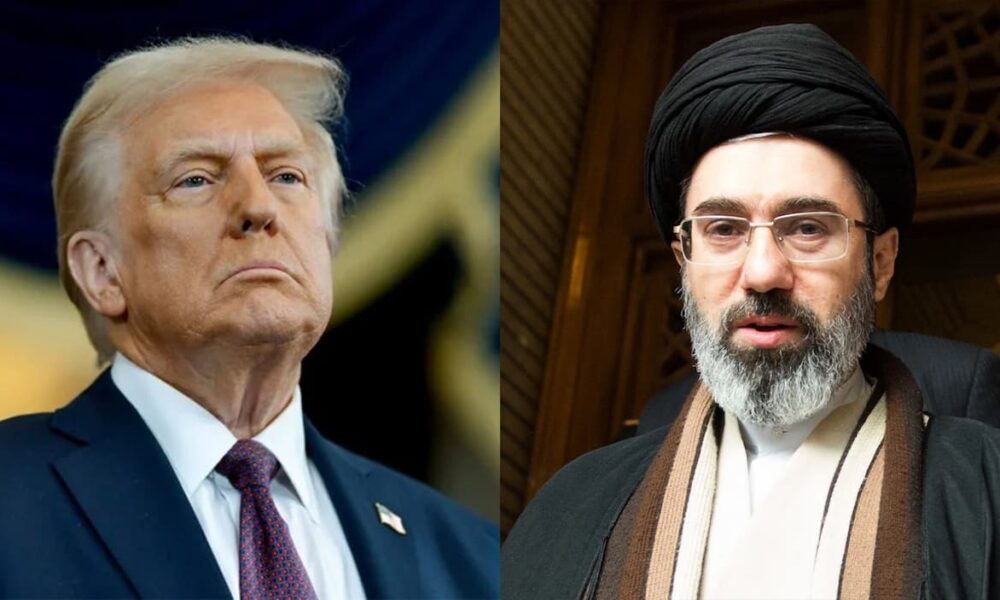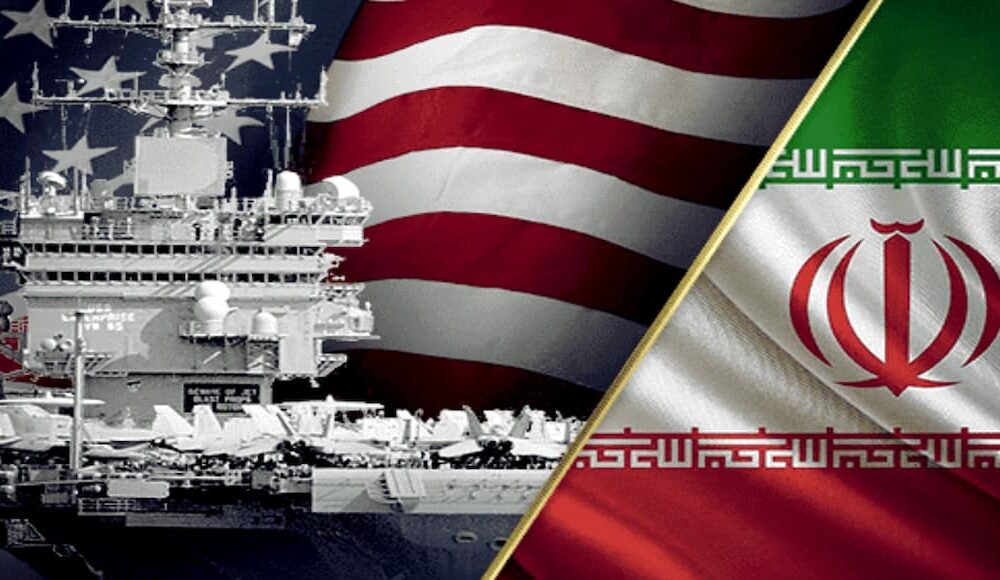
On the 188th day of the war between the United States and Iran and 79 days after the signing of the memorandum of understanding between Washington and Tehran, the confrontation between the two countries enters a new phase. The pressure is no longer limited to the military and maritime arena: it now extends more to the international financial system, while Washington conditions any resumption of discussions on the halt of attacks against commercial navigation.
U.S. Treasury Secretary Scott Bessent announced that the European Union had officially joined the campaign aimed at strengthening Iran’s economic isolation. In his view, American Vice President J.D. Vance assured that “all options” remained available in the face of Tehran.
The essentials
- The European Union has officially joined, according to Washington, the campaign to intensify the economic and financial isolation of Iran.
- J.D. Vance conditions any resumption of talks on the halt of attacks on commercial ships and says that all options remain open.
- CENTCOM says it has diverted 87 vessels, neutralized three ships, and boarded two others within the maritime setup.
- Iran acknowledges that the blockade is affecting its oil transport and deliveries to customers, while claiming to seek ways to bypass it.
- An American strike that hit a wedding in southern Iran would have left 4 dead and 68 injured; the U.S. command is conducting an internal review of the incident.
- Alongside the hardening of military and economic pressure, mediators are said to be working on a new negotiation framework addressing notably the Strait of Hormuz and the Iranian nuclear dossier.
The European Union joins the economic pressure
Scott Bessent indicated that the European Union had officially joined what he described as a campaign to turn Iran into an “economic pariah.”
According to the U.S. Treasury secretary, Washington intends to work with its allies to prevent the Iranian regime from using the global financial system to fund its nuclear ambitions and weapons programs.
The American official estimated that the international community was now sending a message to Tehran by seeking to cut off financial channels still accessible to the country.
This development adds a European dimension to the American strategy, until now marked by a combination of economic sanctions, pressure on Iranian exports, and a maritime arrangement around the Strait of Hormuz.
Vance rules out discussions as long as ships are targeted
U.S. Vice President J.D. Vance said that Washington did not plan any new discussions with Iran as long as attacks on commercial ships and threats to navigation in the Strait of Hormuz continued.
He also noted that the United States would not set a precise timetable for the end of the conflict.
According to him, the outcome will depend on the results achieved by the two main levers used by Washington: military action and economic pressure.
The American vice president further stated that “all options” remained on the table.
87 vessels diverted, according to the American command
The U.S. Central Command (CENTCOM) says it has strengthened its setup aimed at enforcing the blockade imposed on Iran.
According to figures released by the U.S. military, 87 vessels have been diverted, three ships neutralized, and American forces boarded two other vessels.
Tehran acknowledges, for its part, that these operations affect its energy trade.
Iranian Oil Minister Mohsen Paknejad said that the maritime arrangement had an impact on oil transport and deliveries to customers. He nevertheless assured that Iran was taking measures to circumvent these restrictions.
The Strait of Hormuz thus remains at the center of the confrontation. This sea route constitutes a major strategic passage for the Gulf’s energy exports.
Trump rejects reports of ammo shortages
Donald Trump also sought to deflect questions about American military stockpiles.
The American president rejected claims that U.S. forces were running short of munitions, instead asserting that troops deployed in the region had adequate stocks.
This intervention comes as several American media outlets report concerns within the administration about the duration of the conflict and its political implications ahead of the midterm elections.
According to Politico, a White House official says that the Iran dossier will remain in the background of the electoral debate until November.
A Republican official quoted by the magazine also said that the war with Iran has now become a campaign issue for the midterm elections.
A strike on a wedding examined by CENTCOM
The civilian dimension of the conflict is reappearing at the center of attention.
Iranians attended Thursday the funerals of victims of an American air strike that reportedly hit a wedding in the Sirik region, near the Strait of Hormuz.
According to reported information, four people were killed and 68 others wounded.
Arms experts cited in the available information estimate that the damage would likely be due to the direct impact of a U.S. munition, rather than the ricochet of a projectile that had initially targeted another target.
Axios reports, citing American officials, that CENTCOM has opened an internal review of the incident.
The New York Times had previously reported that an American bomb had hit a wedding in Kuhestak, in southern Iran, during a strike conducted on Tuesday.
The final conclusions of the American review have not yet been released publicly.
Washington would seek a broader deal with Tehran
Despite the hardening of the American stance, indirect diplomatic contacts continued.
According to the Financial Times, the Trump administration would seek to reach a broader agreement with Iran, covering both the nuclear dossier and the Strait of Hormuz’s security.
Washington would notably have informed mediators that it wished to keep the Strait open to navigation independently of the evolution of discussions between Tehran and Muscat.
Mediators are currently working on drafting a framework that could underpin negotiations between the United States and Iran.
This diplomatic approach remains conditional, in American discourse, on the evolution of the maritime situation.
Israel threatens Iranian energy infrastructures
Israel’s Defense Minister, Israel Katz, has, for his part, hardened the tone toward Tehran.
He threatened to strike Iranian energy infrastructures and facilities in the event of an attack on Israel.
Prime Minister Benjamin Netanyahu also announced that the Israeli army had taken control of the Ali Taher heights, ensuring that the area no longer posed a threat and that many fighters had been eliminated.
In Israel, concerns about a new confrontation remain significant. According to a poll cited by Maariv, 55% of Israelis fear a new war with Iran could erupt in the near future.
Israeli security officials believe Tehran could seek to coordinate multiple fronts by integrating Iran, Hezbollah in Lebanon, Hamas, the Houthis in Yemen, and allied groups in Iraq into a single campaign.
These assessments remain those of Israeli officials and do not constitute an announcement of an imminent Iranian operation.
Seoul also studies its options in the Strait of Hormuz
South Korea is also examining ways to contribute to freedom of navigation in the strait.
A senior official from the South Korean presidency said on Friday that Seoul was studying several practical options, including military measures.
He, however, noted that security talks between the United States and South Korea were not currently progressing.
The conflict enters American politics
The war is finally fueling tensions in Washington.
Democratic Representative Jake Auchincloss sharply criticized the administration, calling the memorandum previously concluded with Iran by J.D. Vance “catastrophic.”
He also urged the departure of Pentagon official Pete Hegseth and argued that Democrats should consider pursuing proceedings against him if they regain control of Congress.
Donald Trump also announced the nomination of Adam Telle, hitherto assistant to the Secretary of the Army, as Acting Secretary of the Army, after the departure of Dan Driscoll.
Telle had taken office as assistant to the secretary in August 2025 after Senate confirmation of his appointment.
Driscoll’s resignation comes amid tensions reported within the U.S. military leadership.
Between maximum pressure and seeking a diplomatic exit
Two parallel movements emerge from the situation.
On one side, Washington is intensifying economic and maritime pressure with European support, while the administration insists it remains open to all military options.
On the other side, several mediators continue to try to lay the groundwork for broader negotiations, particularly covering the Strait of Hormuz and the Iranian nuclear program.
The possibility of returning to talks will now largely depend on the evolution of attacks on commercial navigation and the ability of the various parties to maintain a diplomatic path despite ongoing military operations.