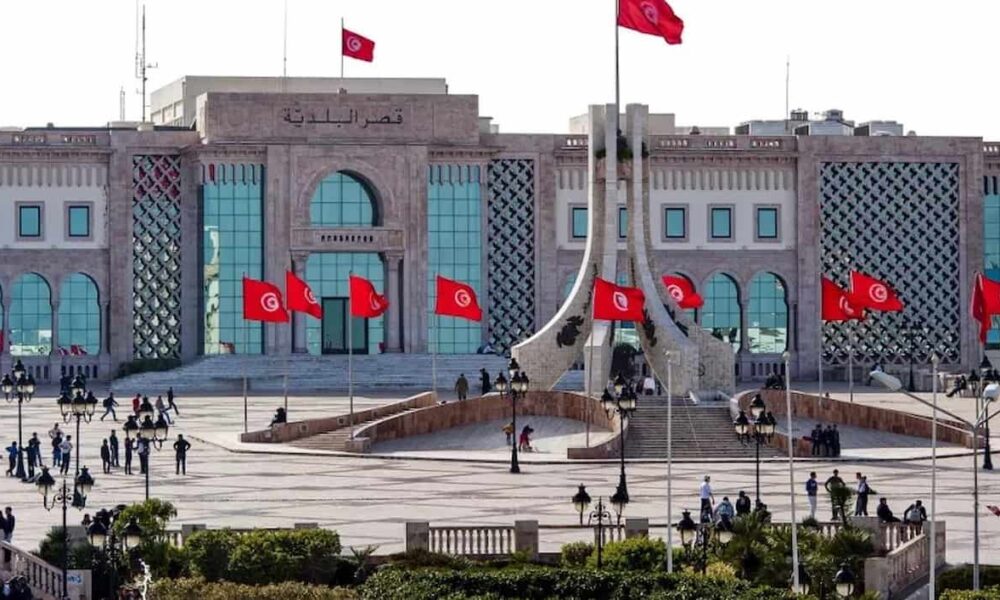
The challenges facing municipal action, the development prospects for local governance, and the strengthening of the Arab cities’ capacity to respond to current and future transformations were among the main themes discussed by Samah Daldoul, the person responsible for managing the Tunis municipality, during her speech at the 20th General Congress of the Organization of Arab Cities.
The event took place on September 6 and 7 in Salalah, in the Sultanate of Oman, under the theme: “More Innovative and Sustainable Cities.”
According to a press release published this Friday by the City of Tunis, Samah Daldoul stressed that this congress constituted a strategic platform for exchanging visions and experiences as well as coordinating efforts, with a view to building more sustainable and resilient Arab cities, capable of adapting to transformations and meeting the aspirations of future generations.
She insisted that institutional stability represents an essential pillar to guarantee the effectiveness and continuity of local action and to meet the structural challenges it faces.
In this context, she presented the recent Tunisian experience in the provisional management of municipalities by the secretary-generals, in the absence of elected municipal councils. According to her, this experience demonstrated a significant level of competence and expertise in ensuring the continuity of municipal service. It remains, however, limited, in her view, in its ability to design and implement long-term strategic decisions.
She also stated that one of the main challenges of the current transitional phase lay in revising and modernizing the legal framework governing municipal action, notably the provisions of the Local Authorities Code, in order to adapt it to the new constitutional process and to developments in terms of development as well as to modern approaches to managing local affairs.
In this regard, she stressed the importance of establishing a flexible and evolving legal framework, capable of meeting the aspirations of young talent and consolidating the participatory and democratic approach, considered as one of the foundations of local action and municipal decision-making.
Samah Daldoul also spoke of another major challenge: the weakness of anticipation and forecasting capacities for identifying problems, as well as difficulties in accessing precise information at the right time.
She indicated that the absence of a unified national database, combined with the persistence of traditional methods of data collection and analysis, could limit municipalities’ ability to anticipate, to plan, and to fully benefit from administrative intelligence tools and modern digital solutions.
In this framework, she proposed the creation of an “Arab Unified Information Bank,” in cooperation with the Arab Institute for the Development of Cities. This would serve as a common reference for Arab cities and municipalities and would bring together, among other things, indicators of municipal performance, feasibility studies, strategic planning reports, as well as other data likely to support local decision-making based on knowledge.
Samah Daldoul also called for the development of common Arab frameworks and standards in the fields of urban planning and sustainable development, in order to facilitate the exchange of experiences and expertise and help Arab cities adopt convergent approaches to the challenges they share.
She stressed that the Organization of Arab Cities could play a central role in this dynamic, notably by contributing to the modernization and development of municipal institutions, strengthening cooperation and the exchange of experiences among Arab cities, as well as supporting their development projects.
She also mentioned the establishment of an interactive database and an early warning system, intended to identify municipal difficulties and allow proactive intervention to address them.
Finally, Samah Daldoul emphasized the importance of developing specialized training programs in strategic planning and digital transformation, in order to strengthen human and institutional capacities to accompany technological changes and to improve the efficiency of local administration.
She expressed the hope that the City of Tunis would continue its pioneering role in this path and become a model among Arab cities in terms of modern governance and decision-making based on knowledge and innovation, in order to strengthen its ability to build a more sustainable and more resilient urban future.