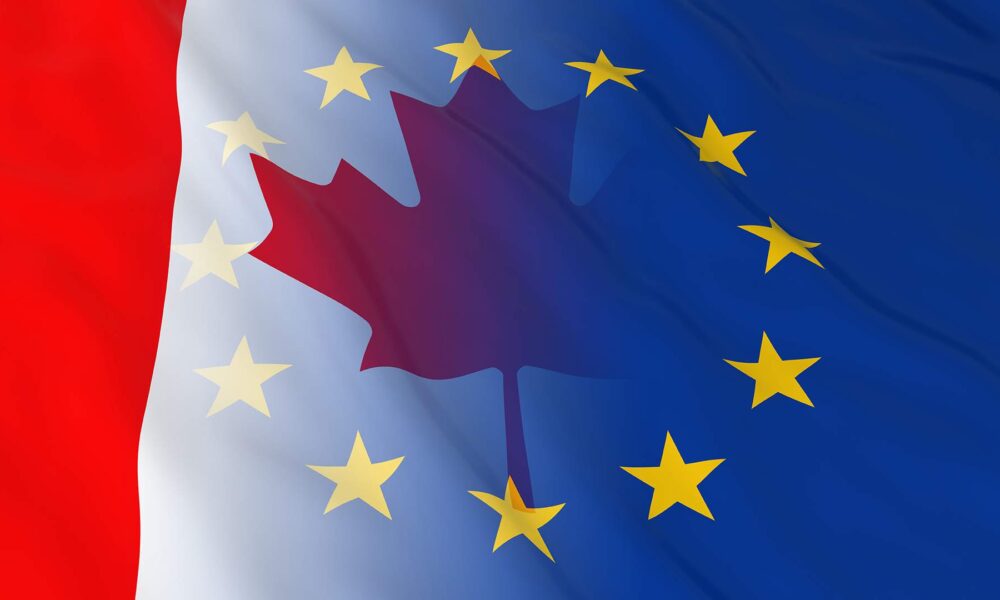
The European Union and Canada want to take an unprecedented step in their relationship. In his State of the Union address, delivered on September 16 before the European Parliament in Strasbourg, Ursula von der Leyen proposed to “open the door” to Canada so that it becomes the first “associated member” of the European Union.
The formulation is politically strong, but it must be read precisely: this is not Canada’s accession to the EU, nor the creation of a 28th member state. The status of “associated member” does not clearly exist in European treaties and would have to be defined legally, politically, and institutionally. Reuters notes that this unprecedented status would raise complex questions: rights, obligations, access to the single market, financial contributions, possible adoption of European standards, and the consent of the member states.
The signal, for its part, is already clear: Brussels and Ottawa seek to build a deeper alliance in a world that has become more unstable, dominated by three major pressures: the trade war initiated by Donald Trump, Chinese industrial competition, and the Russian threat to European security.
A concrete milestone: Montreal, late October
This sequence will not remain merely symbolic for long. A EU-Canada summit is planned for October 29-30, 2026 in Montreal, according to the official calendar of the Council of the European Union. It’s there that the two sides must begin to give concrete content to this new ambition.
The Canadian government says it intends to go beyond CETA (Comprehensive Economic and Trade Agreement), the economic and trade pact between Canada and the EU, to build a more ambitious alliance in strategic sectors: critical minerals, defense industrial, artificial intelligence, computing power, energy, space, financial services, payments and digital commerce.
The stakes thus go far beyond traditional trade. It is about building an economic security space between two partners who want to reduce their dependencies, secure their supply chains, and weigh more in the technological standards of tomorrow.
Why Canada is looking more toward Europe
The rapprochement with Brussels comes in a context of crisis with Washington.
Canada remains heavily dependent on the American market: in 2025, 71.7% of its merchandise exports were still destined for the United States, even though this share fell compared with 2024.
But this dependency has become politically riskier since the trade escalation with the Trump administration. Negotiations between Washington and Ottawa collapsed at the end of August, triggering American duties of 50% on about $20 billion of Canadian goods, according to Reuters. Canada announced countermeasures.
That is the true engine of the Canada-EU rapprochement: Ottawa is seeking alternatives, not to sever ties with the United States, but to no longer depend on a single center of economic and strategic gravity.
Mark Carney himself insisted on this logic: in a more dangerous and divided world, Canada wants to forge stronger relations with trusted partners to reinforce its strategic autonomy, resilience, and sovereignty.
The CETA as a base, but not the horizon
The European Union and Canada are not starting from zero. CETA, signed in 2016 and provisionally applied since 2017, has already strengthened trade.
In her speech, Ursula von der Leyen stated that goods trade between the EU and Canada had increased by 75% in less than a decade thanks to CETA.
The Canadian government also notes that the European Union is its second global commercial partner for goods and services, with about 178 billion Canadian dollars of trade in 2025. The EU is also the second source of foreign direct investment in Canada, after the United States, with an estimated stock of 217 billion Canadian dollars in 2025, while Canadian investment in the EU reached 315 billion.
But CETA also has its limits. It is still not fully ratified by all EU member states, which reminds that every deepening of the Canada-Europe relationship will have to overcome national political obstacles.
An unprecedented status, but still unclear
The notion of “associated member” is the central issue.
It is appealing because it allows imagining an intermediary status between a simple trade agreement and full membership. But it remains unclear. Canada could obtain enhanced access to certain European programs, to industrial projects, or to strategic collaborations, without entering EU institutions.
There are already avenues: research programs, academic mobility, recognition of qualifications, defense industry, cybersecurity, energy, AI, space or critical minerals. Reuters reports that discussions particularly cover Erasmus+, Horizon Europe, and the mutual recognition of professional qualifications.
But several questions remain open: would Canada have a right of consultation? Would it have to apply certain European standards? Could it access European funding? What would be the role of the member states? And above all, could this status set a precedent for other partners, such as the United Kingdom, Norway, Ukraine, or certain European neighborhood states?
This is why this dossier is both bold and delicate.
Defense: an already strengthened link
The defense is one of the most concrete pillars of this rapprochement.
The Canada is not only “close” to NATO: it is a founding member of the Atlantic Alliance since 1949. This precision is essential because it shows that the security link between Canada, the United States, and Europe is old, institutional, and military.
But the novelty lies in the rapprochement with the EU’s own tools. Ottawa has joined the European SAFE initiative, linked to security and the defense industry, becoming the first non-European country to participate in this scheme, according to the Canadian government.
This point is strategic. Europe wants to produce more military equipment, faster, with safer supply chains. Canada can contribute to this ramp-up, notably in the defense industry, critical components, advanced technologies, and Arctic-related capabilities.
Ukraine: a joint dossier
Ukraine is at the heart of the Canada-EU convergence.
The Canadian government says that Mark Carney and Ursula von der Leyen reaffirmed their commitment to strengthening transatlantic security and to supporting Ukraine against Russia’s war of aggression.
For Kyiv, this rapprochement could have several concrete effects: better sanctions coordination, funding of defense projects, securing supplies, industrial cooperation, and more coherent diplomatic pressure against Moscow.
However, it should be avoided to present this as an automatic guarantee for Ukraine. The Canada-EU partnership does not replace arms deliveries, missile defense systems, ammunition, or NATO decisions. It can, however, strengthen the Western ecosystem that supports Kyiv.
AI, cloud, cables and space: the other strategic battleground
The technological dimension is one of the most important.
In official exchanges, Canada and the EU cite artificial intelligence, computing power, space, cybersecurity, payments, financial services, and digital trade as priority areas of cooperation.
Behind these words lies a question of sovereignty. Advanced economies no longer want to depend solely on American cloud giants, Chinese platforms, Asian component chains, or standards imposed by other powers.
Thus discussions could cover data centers, cloud infrastructures, satellite networks, submarine cables, payment systems, cybersecurity, and AI standards. Reuters already reports that Canada and the EU are exploring projects in energy, AI, critical minerals, data centers, and energy transport.
This part of the partnership may be less visible than defense, but it could be just as foundational.
Energy and critical minerals: reducing dependence on China
China is the other backdrop to the Canada-EU rapprochement.
The European Union aims to reduce its dependencies in batteries, critical minerals, solar panels, electric vehicles, semiconductors, and green technologies. Canada, for its part, possesses significant natural resources and a need for commercial diversification.
The European Commission already presents Canada as a key and “like-minded” energy partner, a major producer of oil, natural gas, hydroelectricity, and renewable energies. The EU and Canada cooperate notably through the EU-Canada Green Alliance, CETA, the Strategic Partnership Agreement, and high-level energy dialogue.
The objective is not merely to buy more Canadian resources. It is to build safer value chains: extraction, refining, batteries, clean technologies, industrial equipment, and environmental standards.
For Brussels, this is a way to reduce dependence on Beijing. For Ottawa, it is a means to reduce dependence on the American market.
The Arctic: a common project, but not a European discovery
The Arctic must be presented precisely.
Canada is an Arctic power. But the European Union is not merely an external power “interested” in the region. Three EU member states have an Arctic dimension: Finland, Sweden, and Denmark, through Greenland and the Kingdom of Denmark. The EU also participates in Arctic issues through its policies, funding, standards, and ties with Greenland, Iceland, and Norway.
In her speech, Ursula von der Leyen proposed making the Arctic a “joint flagship project” with Canada.
The objective is strategic: climate, maritime routes, cables, resources, minerals, Russian presence, Chinese interests, maritime security, satellite observation, and energy infrastructure.
Canada-EU cooperation in the Arctic could thus become an important field of economic security and geopolitics.
Trump’s reaction reveals the dossier’s sensitivity
The Canada-European Union rapprochement immediately provoked the anger of Donald Trump.
Asked about Ursula von der Leyen’s proposal to make Canada the first “associated member” of the EU, the American president replied bluntly: “I find that ridiculous.” He then threatened Brussels with trade retaliation: “If they do this, if I deem it a hostile act, I will impose very heavy tariffs or I will cease all trade with Europe.”
This reaction gives an even more political dimension to the Canada-EU project. What Brussels and Ottawa present as a trust-based alliance between democracies is seen by Trump as a hostile gesture toward the United States. In other words, merely the fact that Canada seeks to diversify its alliances beyond Washington is enough to trigger a U.S. trade threat.
For the European Union and for Canada alike, this episode precisely confirms the reason for their rapprochement: in a world marked by Chinese pressure, the Russian threat, and Trump’s unpredictability, democratic partners seek to reduce their dependencies and build their own room for maneuver.
The Trump threat turns the Canada-EU rapprochement into a strategic symbol: this project is no longer just an economic and technological alliance; it becomes a test of autonomy in the face of an America that has itself become unpredictable.
Constraints: European law, Canadian sovereignty, and political precedent
The project is ambitious, but it faces several constraints.
The first is legal. The status of “associated member” will have to be invented. It will be necessary to specify what Canada gains, what it accepts, what it funds, and in which areas it aligns with European rules.
The second constraint is political. Some member states could hesitate to create a special status for Canada while candidate countries, including Ukraine, await European integration after heavy reforms. Reuters notes that this status could raise questions if perceived as preferential treatment.
The third constraint is Canadian. Mark Carney speaks of a “unique alliance,” not membership. Ottawa will have to avoid presenting this rapprochement to Canadians as a loss of sovereignty or submission to Brussels’ rules.
The fourth constraint is commercial. Standards, public procurement, agricultural standards, digital, data, and professional recognition are complex topics. CETA itself shows that EU-Canada agreements can take long to finalize.
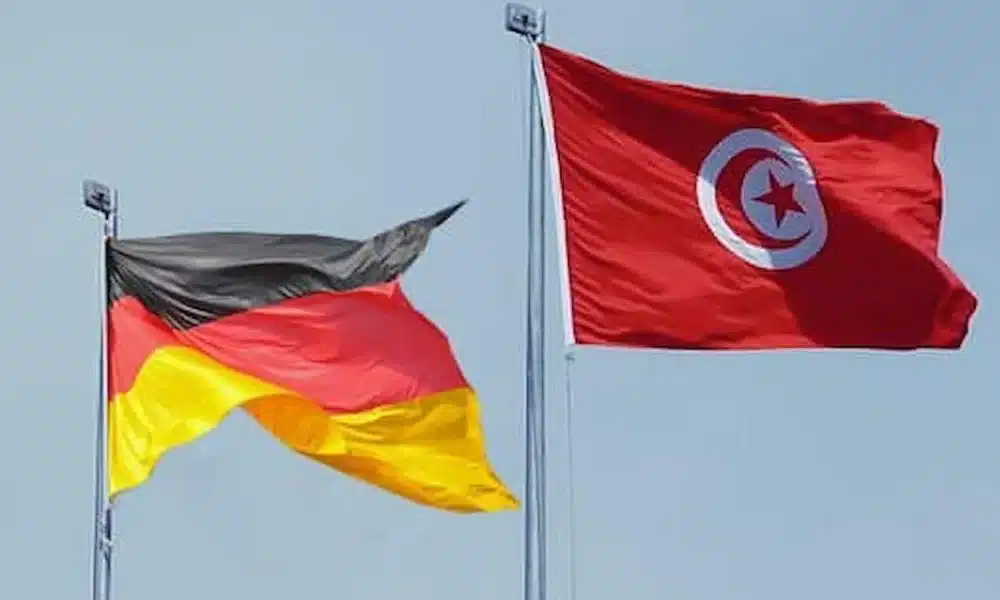
What this means for Tunisia
For Tunisia, the dossier is interesting less through direct comparison than through a strategic signal.
Canada is an advanced economy, a founding NATO member, a major EU trading partner, and an Arctic power. Its situation is therefore not comparable to that of countries in Europe’s southern neighborhood.
But the precedent is important: the European Union shows that it can imagine bespoke statuses with non-members when strategic interests are at stake.
For the EU’s southern neighbors, including Tunisia, this raises a question: will future partnerships with Brussels remain solely commercial and migratory, or could they also become industrial, energy, digital, security, and technological?
Tunisia could be affected by this evolution in several domains: clean energy, green hydrogen, electrical interconnections, cybersecurity, training, digital services, industrial standards, professional mobility, and value chains close to Europe.
But the Canadian example also shows that access to advanced mechanisms will depend on strict conditions: regulatory stability, political trust, industrial capacity, compliance with standards, data protection, infrastructure security, and alignment with certain European objectives.
The message for Tunisia is thus clear: the EU is entering a phase of more selective, more strategic, and more demanding partnerships.
Conclusion: a testing alliance for a new Europe
The Canada-EU rapprochement marks a significant evolution in European policy.
Brussels no longer wants merely to sign trade agreements. It seeks to build security-economic alliances with partners capable of contributing to its defense, its technological autonomy, its supply of critical minerals, its energy resilience, and its leverage against Russia.
Canada becomes the first test of this new model.
The Montreal summit, scheduled for October 29-30, will reveal whether the “associated member” formula remains a political signal or begins to take a concrete form.
In the face of Trump, Canada wants to reduce its dependence on the American market. In the face of China, the EU seeks safer supply chains. In the face of Russia, both partners want to strengthen transatlantic security and support Ukraine.
This is not Canada’s accession to the European Union.
It is an attempt to build a new kind of alliance: more strategic than a trade agreement, less integrated than an accession, yet potentially decisive in the sectors that will drive tomorrow’s power.