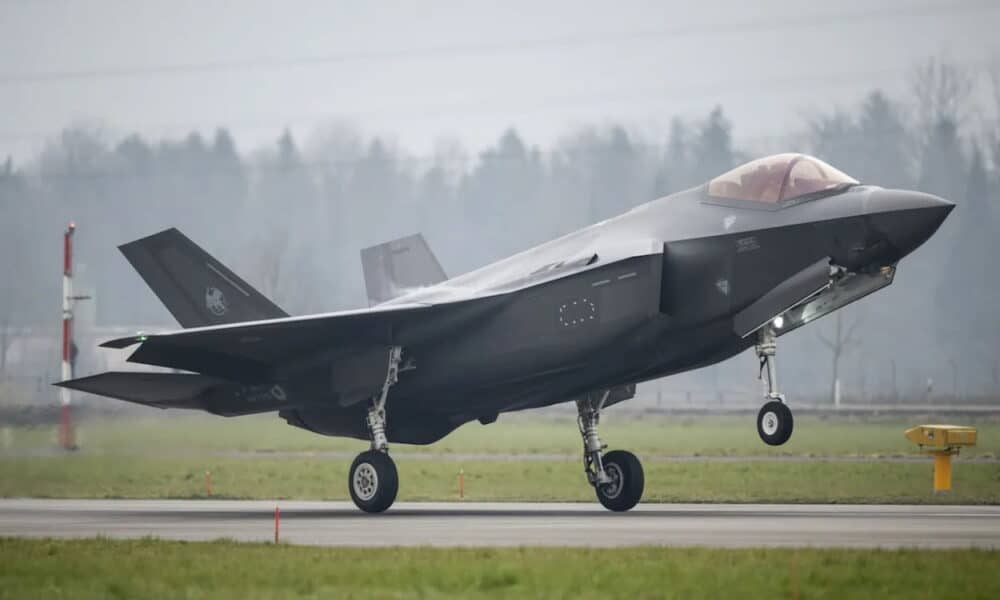
Saudi Arabia still hopes to be militarily supported by American F-35 fighter jets to face its wide conflict with the Houthi rebels in Yemen, who threaten to take control of the Red Sea.
This is what Donald Trump announced last November during MBS’s visit to Washington, but it has not yet materialized.
On Thursday, September 17, the U.S. government has given its green light and plans to sell no fewer than 48 F-35 fighter jets to Riyadh.
This sale, worth more than $24 billion, now must be approved by Congress, worrying American intelligence services, who fear that these aircraft could fall into the hands of China and thereby allow Beijing to acquire cutting-edge technology that today is possessed by only about fifteen United States allied countries.
U.S.: fears of Chinese espionage
The U.S. intelligence services are far from convinced even though the State Department defends a contract that “will improve Saudi Arabia’s ability to deter current and future threats.”
Internal reports – consulted by the New York Times and formerly by The Times – note several concerns, both about the access that Chinese military personnel have to Saudi bases, and about Saudi Arabia’s widespread use of Chinese technologies in its telecommunications infrastructure and its defense facilities, which could make the United States vulnerable to espionage operations.
Some lawmakers have indeed spoken publicly against this sale, such as Democratic Representative Raja Krishnamoorthi, also a member of the House Intelligence Committee.
“The Trump administration should not move forward with its proposal to sell F-35 fighters to Saudi Arabia while our own intelligence services warn that this could place the crown jewels of American military technology within reach of the Chinese Communist Party,” he stated.
Israel also opposes the sale!
Alongside concerns about China, these deliveries – which are expected to span several years – are viewed unfavorably by Israelis, who fear losing their “military advantage” over neighboring Arab countries, while Israel is currently the only Middle Eastern nation to possess these aircraft.
To recall, Donald Trump had already tried to sell F-35s to the United Arab Emirates in 2020 during his first term, in an agreement in which the Emirates were to normalize their relations with Israel. Indeed, the contract was quickly canceled after Joe Biden took office, amid suspicions related to China, as the Emirates were strengthening their military, security and technological ties with Beijing.
Behind the scenes, the sale seems well on track to go through. Lawmakers theoretically have 30 days to oppose it, but Congress goes on recess before the midterms – this is already the case for the House of Representatives and will soon be the case for the Senate as well – which means that an objection raised now would, in practice, have very little chance of being adopted.