The olive production of the Chaal agricultural and industrial complex, in the Sfax governorate, should not exceed 1,000 tonnes this season, its director, Mohamed Hédi Mabrouk, told the correspondent of Tunisia Numérique. He attributes this decline to successive years of drought and the retreat of precipitation, which affect rainfed crops.
Drought weighs on rainfed crops
Mohamed Hédi Mabrouk explained that the succession of dry years and the lack of precipitation have directly affected the rainfed olive groves, which is reflected in the early estimates of the current harvest.
For comparison, the complex’s production reached 17,560 tonnes of olives during the previous season, or about 4,200 tonnes of olive oil. The majority of these volumes was marketed.
The margines used to enrich the soils
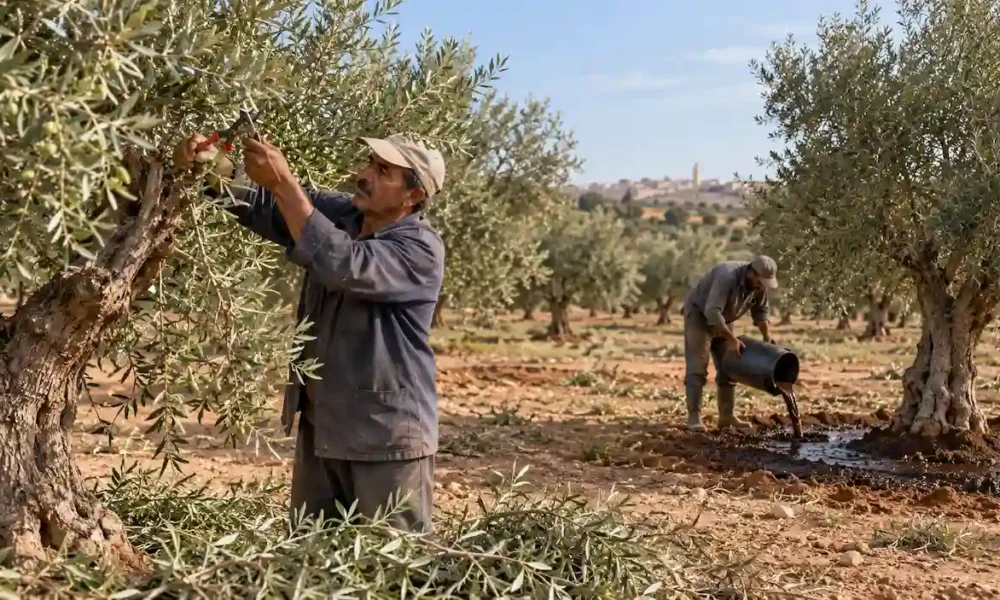
The director also reported the collection and use of margines, residues from olive mills, as a natural organic fertilizer. A significant portion of agricultural lands has been treated with this material to help maintain soil moisture and nourish old olive trees, in a context of water shortage.
The program also foresees pruning of about 150,000 olive trees.
Gradually renewed plantations
The complex’s development program foresees the progressive introduction of new plantings to replace olive trees that have been withering for several years under the effect of difficult climatic conditions. This approach aims to ensure the sustainability of the Chaal replacement olive grove.