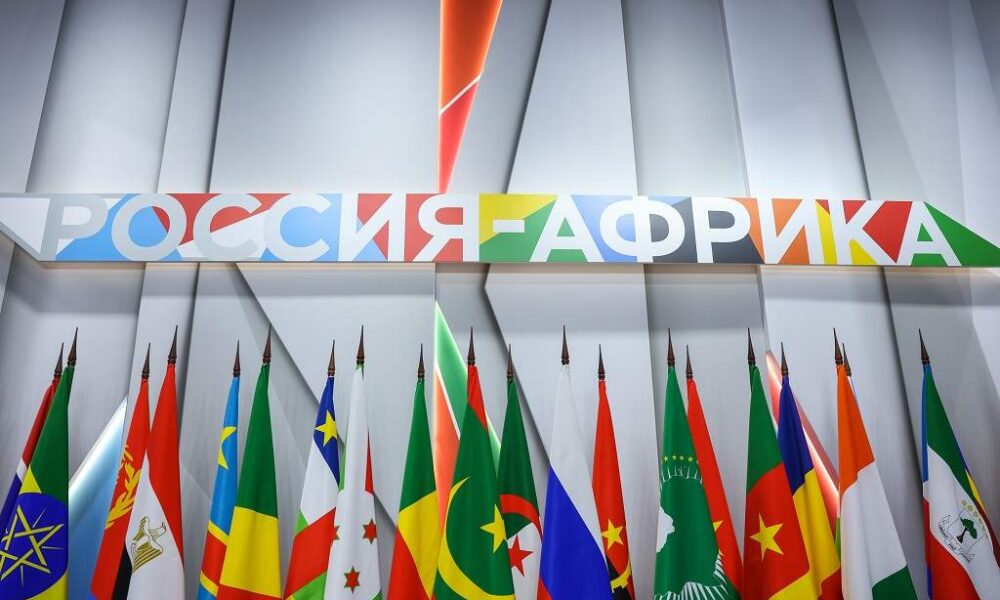
In Moscow, Vladimir Putin promises Africa greater trade, security, technology, and influence in a “multipolar” world.
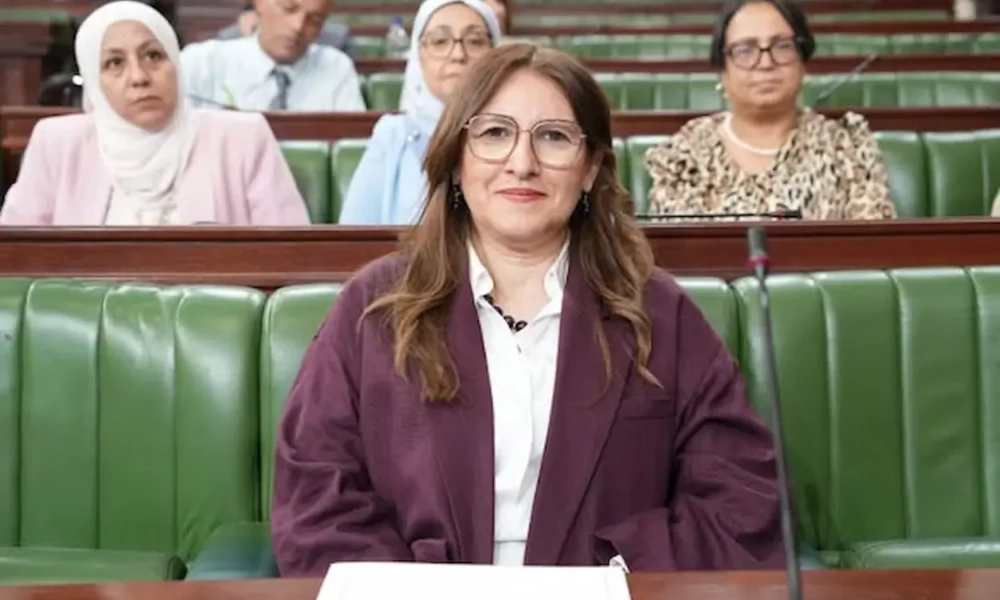
The third Russia–Africa summit, held on October 28–29, 2026, brought together delegations from 48 African countries, including 22 represented at head-of-state level, according to the organizing authorities. The Tunisian prime minister, Sarra Zaafrani Zenzri, took part in the event.
But behind the political declarations, an economic question remains: which commitments have actually translated into exchanges, investments, and jobs?
The available volumes place Russo-African relations at a scale far below those with China and the European Union.
For Tunisia, the observation is even more tangible: during the first nine months of 2026, Tunisian exports to Russia amounted to 32.4 million dinars, versus 1,552.3 million dinars of imports. A gap that calls for a precise economic reading, beyond summit photographs.
The Essentials
Russia–Africa trade: about 27 to 27.8 billion USD in 2025, according to estimates, versus a target of 40 billion announced in 2019.
China–Africa: 348.05 billion USD of goods exchanges in 2025, according to Chinese customs.
EU–Africa: nearly 355 billion EUR of goods trade in 2024; more than 110 billion euros of services and more than 250 billion euros of European FDI stock in Africa in the same year. The years and currencies are not identical.
Tunisia–Russia: over nine months in 2026, a bilateral deficit calculated at 1,519.9 million dinars; Tunisian exports cover only about 2.1% of corresponding imports.
Security: Africa Corps has succeeded part of Wagner’s activities; recruiting African nationals for the war in Ukraine poses a major diplomatic and humanitarian challenge.
Trade Figures: Russia Far from China and the European Union
The Kremlin highlights more than 27 billion USD of trade with the continent in 2025; TAP reports an estimate of around 27.8 billion USD. This level marks an increase from the roughly 17 billion USD mentioned at the Sochi summit in 2019. But it remains below the 40 billion USD target set in 2019. For comparison, 27.8 billion USD represents only 69.5% of that objective, i.e., a gap of 12.2 billion USD (TN calculation).
China recorded 348.05 billion USD in goods exchanges with Africa in 2025: 225.03 billion USD of Chinese exports to the continent and 123.02 billion USD of imports from Africa. The African trade deficit with China thus stands at 102.01 billion USD. China’s heft is therefore incomparable to Russia’s, but this gap should also prompt questions about imbalances in Sino-African relations.
The European Union, collectively, is a major trading and investment partner. Official EU Council data indicate almost 355 billion EUR in goods exchanges in 2024, i.e., 189.5 billion EUR of European imports from Africa and 165.2 billion EUR of exports to Africa. Services exceed 110 billion EUR, and the stock of European direct investment in Africa reaches over 250 billion EUR in 2024. These figures are in euros and pertain to 2024: they cannot be added or directly compared, in gross terms, to the dollar values published for 2025.
| Partner | Known goods exchanges | Reading |
| Russia – Africa | ~27 to 27.8 Bn USD (2025) | Trade mainly driven by Russian exports; 40 Bn USD target not reached |
| China – Africa | 348.05 Bn USD (2025) | Much larger market; African deficit of 102.01 Bn USD |
| EU – Africa | ~355 Bn EUR (2024) | Goods trade, plus over 110 Bn EUR of services; year and currency differ |
Another reference point places the relative dependency: African countries account for only about 3.9% of Russia’s external trade, according to Russian statistics relayed at the summit. The continent is politically important for Moscow, but it is not its primary economic outlet.
Hundreds of Agreements Signed, How Many Projects Actually Delivered?
The Sochi summit in 2019 yielded 92 agreements and memoranda. The Saint Petersburg summit in 2023 produced 161 agreements as well as a plan containing 181 measures. The Moscow summit of 2026 adopted a new 2027–2029 action plan, according to the Senegalese APS agency. These figures measure the volume of documents signed or announced, not the number of plants built, funds actually disbursed, or jobs created.
Russia presents concrete cooperation areas: cereals, fertilizers, energy, mining, higher education, and civil nuclear. Putin cited more than 18 million tonnes of Russian cereals delivered to Africa in 2025 and 13 million tonnes in the first nine months of 2026. He also highlighted nearly 40,000 African students in Russian universities and cooperation agreements in the military with 45 countries, according to the Associated Press. These flows and mechanisms constitute real activity, distinct from commitments not yet realized.
Nuclear projects illustrate the gap between contract and infrastructure. Rosatom is notably working on the El-Dabaa plant in Egypt, but the plant is not yet completed; other projects announced in Africa remain at the preparatory stage. The construction of a reactor, its connection, financing, and future costs cannot be inferred from the mere signing of an intergovernmental agreement.
How to verify a summit promise?
1. Commitment: communiqué, framework agreement, or announced amount, with financing not necessarily secured.
2. Financing: funders, disbursements, guarantees and repayment conditions.
3. Realization: project started, delivery, production and jobs actually observed.
4. Local impact: share bought from African companies, transfer of skills, tax revenues and debt created.
Wagner, Africa Corps, and Security: the Other Dimension of Partnerships
The Russian presence extends beyond trade. After the Wagner Group’s activities in the Central African Republic and the Sahel, Africa Corps, a state-controlled structure, has expanded in several countries, notably Mali, Burkina Faso, and Niger. These missions are presented by the authorities as military support or an alternative to Western partners.
Security results remain contested. Chatham House notes that extremist violence in the Sahel did not disappear with these partnerships and that deaths from violent extremism rose from an average of 927 per year in 2016–2019 to 10,470 in 2022–2025. This trend covers an entire region and multiple contexts; it does not allow attributing all deaths mechanically to Russia. It does show, however, that foreign military presence, whatever it is, does not in itself guarantee stabilization.
Carnegie Endowment analyses document another dimension: in some countries, security relations are tied to access to mines, gold, or natural resources. For African states, the balance must thus include not only training and equipment of the military, but also contract transparency, protection of civilians, and the destination of revenues from resources.
Recruitment of Africans to Fight in Ukraine: a Human Cost Often Missing from Summits
The war in Ukraine has raised a sensitive question: the recruitment of African nationals into the Russian army. According to data from Ukrainian authorities relayed by The Insider, about 5,400 citizens from 43 African countries were among foreigners who signed a contract with Russian forces as of October 1, 2026. These data come from one of the conflict’s parties and do not constitute a jointly verified census by an international body.
A previous statement by the Ukrainian Foreign Ministry, published in August, reported 2,982 nationals from 37 African countries recruited, including 486 deaths reported to that date. Do not apply this last death count to the newer October figure as if the two numbers describe the same sample. Several investigations report promises of civilian jobs or high salaries used in recruitment efforts; Moscow denies accusations of illegal recruitment.
On October 29, Reuters reported a document from the Ugandan embassy in Moscow indicating that 27 Ugandan soldiers recruited into the Russian army had been killed or were presumed dead, including 11 confirmed deaths and 16 people whose bodies had not been recovered. In Ghana, the foreign minister had announced in February that 55 Ghanaians had died in the conflict. These national tallies should not be added together without cross-checking: they may belong to different periods and categories.
The issue thus transcends competition between great powers: it concerns the protection of African nationals, recruitment fraud, access to consular information, and state accountability. The ethical question also touches trade partners: what assurances do they demand when cooperation benefits an economy involved in a war against a sovereign state? The applicable law and the nature of transactions must be examined on a case-by-case basis, without making every commercial relationship automatic complicity.
Tunisia–Russia: a Deficit of 1.52 Billion Dinars in Nine Months
Tunisia participated in the summit with a delegation led by Sarra Zaafrani Zenzri, accompanied by Foreign Minister Mohamed Ali Nafti. Before the participants, the head of government stressed peace, conflict prevention, and the need for cooperation conducive to African development. The two countries are commemorating in 2026 the 70-year anniversary of their diplomatic relations, established in 1956.
Commercially, the figures reported to TAP by CEPEX in Moscow are revealing. From January to September 2026, Tunisian imports from Russia fell to 1,552.3 million dinars, from 3,375.1 million during the same period in 2025, a decline of about 54%. Tunisian exports to Russia rose by 14%, to 32.4 million dinars.
The bilateral deficit over these nine months thus reaches 1,519.9 million dinars (1,552.3 − 32.4; TN calculation), and the coverage rate of imports by exports is about 2.1%. In other words, for 100 dinars of products imported from Russia, Tunisia exported only about 2.1 dinars to that market in this period. These are nine-month data and are not directly comparable to the annual deficits for 2024 and 2025.
The trade breakdown confirms the asymmetry. Tunisian imports mainly include petroleum products, cereals, and certain oils. On the export side, agro-food accounts for 70% of Tunisian sales to Russia.
The 2025 data cited by TAP highlight dates (31.88% of Tunisian exports to Russia), olive oil (13.62%), canned fish (13.31%), followed by plastic and textile products.
27 Million Dollars of Tunisian Exports Possible: a Market, Not an Order
CEPEX estimates about 27 million USD in Tunisian export potential still untapped in the Russian market. Olive oil represents roughly 4.7 million USD of this potential. Other niches are identified: steering wheels (1 million), shoe uppers (900,000 USD), medical devices (779,000 USD), and pasta (270,000 USD).
These figures are not secured sales: they represent theoretical opportunities that must be converted into contracts. For Tunisian companies, decisions will depend on solvable demand, logistical costs, banking channels, regulatory compliance, potential sanctions, and insurance. The commercial challenge is as much about selling as getting paid and delivered under safe conditions.
Neither an Anti-Western Bloc nor a Miracle Partner: What Criteria to Choose?
African countries have diverse interests and may seek partnerships simultaneously with Moscow, Beijing, Brussels, Washington, Ankara, or Gulf states. China offers a major market and infrastructure, but the scale of Africa’s trade deficit highlights the risks of an asymmetric relationship. The European Union provides significant investment flows and a market for exports, but the role of raw materials and market access standards remain debated. Russia has real capacities in cereals, fertilizers, nuclear, and some industrial sectors, while its financial and commercial base is much more limited.
The relevant comparison is not to award a political label of “best partner.” It is to monitor funded contracts, completed projects, local purchases, market access, transferred technologies, debt created, and the security of populations. For Tunisia, the most directly measurable return would be a sustained rise in its exports and productive projects actually realized, not an additional declaration at the close of a summit.
TN Reading
The summit measures ambition; trade and delivered projects measure reality. Moscow has strengthened its diplomatic and military presence, but its exchanges with Africa remain far below those of China and the EU. Agreements signed since 2019 do not replace a public inventory of realized investments.
For Tunisia, the central figure is not the number of meetings in Moscow: it is the bilateral trade deficit of 1,519.9 million dinars in nine months. The objective must be to convert CEPEX opportunities into exports, while securing payment, logistics, and compliance.
The recruitment of Africans on the Ukrainian front finally reminds us that an international relationship is not judged solely by profitability: protecting people, security, and respect for the law are part of the record.