The 2026-2027 olive campaign begins in Tunisia with very contrasting prospects across regions. Several governorates report olive harvests that are markedly below those of the previous season, while others are forecasting substantial volumes. Regional data collected in eight governorates provide an initial assessment, not yet constituting a full national tally.
From Sidi Bouzid to Ariana, the estimates communicated by the regional commissions for agricultural development (CRDA), notably to the TAP agency, concern the fruit harvest expected during the 2026-2027 season. It is essential not to confuse these quantities of olives with the volume of oil obtained after pressing. The two indicators do not measure the same thing.
Three figures illustrating regional gaps
350 000 tonnes of olives expected in Sidi Bouzid, compared to about 500 000 tonnes in the previous campaign.
275 000 tonnes forecast for Kairouan, representing a substantial harvest and an announced increase by regional services.
–37.7 % in Tataouine: 3 300 tonnes expected, versus 5 300 tonnes in the previous season (TN calculation).
Harvest forecasts in eight governorates
The table below presents a selection of regional data available as of October 31, 2026, arranged in descending order by projected volume. The figures relate only to tonnes of olives harvested, not to tonnes of oil produced. They are not definitive and do not cover the 24 governorates.
| Governorate | Forecast Olives (tonnes) |
| Sidi Bouzid | 350 000 |
| Kairouan | 275 000 |
| Mahdia | 110 613 |
| Gabès | 50 000 |
| Bizerte | 16 000 |
| La Manouba | 14 000 |
| Tataouine | 3 300 |
| L’Ariana | 2 400 |
Sources: forecasts from regional agricultural services, relayed by TAP, Tunisia Numérique and Tunisian economic media between September 30 and October 30, 2026. Partial table: regions not listed do not correspond to zero production.
Sidi Bouzid and Gabès: noticeable declines
In Sidi Bouzid, agricultural services had announced at the end of September a harvest of around 350 000 tonnes of olives for 2026-2027, versus 500 000 tonnes in the previous campaign. The difference is 150 000 tonnes, representing an estimated contraction of 30 % (TN calculation).
In Gabès, the harvest is estimated at 50 000 tonnes, versus 73 000 tonnes last season, a decline of about 31.5 % (TN calculation). The regional output expected would come from 49 000 tonnes from the irrigated sector and 1 000 tonnes from the rainfed sector, according to agricultural services. This contrast illustrates the weight of irrigated plantations in this region.
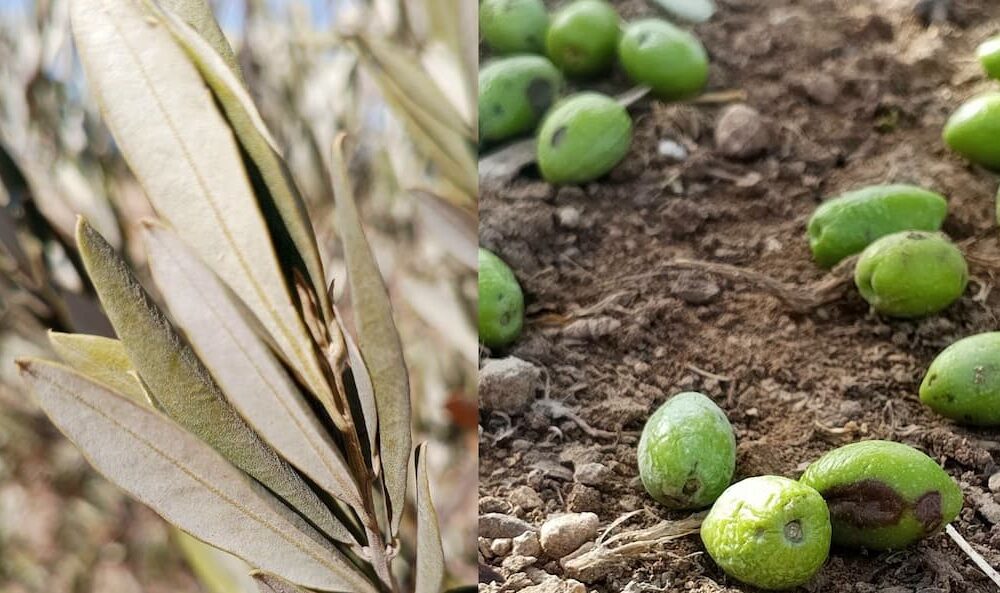
In Tataouine, estimates drop from 5 300 to 3 300 tonnes of olives, i.e., 2 000 tonnes less and a fall of 37.7 % (TN calculation). The CRDA services attribute this decrease to thermal stress that affected olive trees. The governorate has about 2 million trees, distributed equally between rainfed and irrigated crops, according to regional information released in October.
Kairouan, Mahdia and La Manouba: different situations
In Kairouan, the harvest is estimated at 275 000 tonnes of olives, capable of yielding about 57 000 tonnes of oil. The Bouhajla delegation should represent alone 92 000 tonnes of olives. The data presented at the end of October describe production increasing compared to the previous campaign, in contrast to declines observed in several other regions.
In Mahdia, forecasts reach 110 613 tonnes of olives, or about 22 122 tonnes of oil. The previous campaign had provided nearly 140 000 tonnes of olives, according to regional data. The governorate also faces phytosanitary concerns related to the reported appearance of olive tuberculosis in some areas of Melloulèche.
In La Manouba, the harvest is expected to be 14 000 tonnes of olives, a decline presented as around 30 % by regional services, after a harvest exceeding 20 750 tonnes in 2025-2026. The official launch of picking and processing is set for 2 November 2026.
Bizerte and Ariana: smaller volumes, but processing activity to organize
In Bizerte, the season is expected to begin on 1 November. Forecasts amount to 16 000 tonnes of olives, corresponding to about 3 200 tonnes of oil. The governorate has 25 oil mills, including 16 modern and 9 traditional. The reference price for pressing has been announced at 200 millimes per kilogram: this is a local reference for milling services, not the selling price of olive oil.
In L’Ariana, the harvest is estimated at 2 400 tonnes of olives, i.e., about 480 tonnes of oil. The campaign started on 29 October and is expected to run until the end of February 2027. Olive-growing areas cover about 2 610 hectares, according to regional services.
Do not confuse olives harvested and oil produced
Bizerte : 16 000 tonnes of olives for about 3 200 tonnes of oil.
Mahdia : 110 613 tonnes of olives for about 22 122 tonnes of oil.
Ariana : 2 400 tonnes of olives for about 480 tonnes of oil.
The oil yields indicated here are regional forecasts and not a guaranteed national conversion rate.
In Sfax and Zaghouan, the calendar is moving forward too
The harvesting campaign in Sfax is set to begin on 4 November 2026 and extend to 31 March 2027, according to TAP. In Zaghouan, the start was fixed for 29 October. These two governorates do not appear in the comparative table due to a lack of regionally comparable production data that are sufficiently consistent in the publications consulted as of October 31. This in no way prejudges their weight in the sector.
150 million dinars for purchases by the National Olive Oil Office
Facing financing, marketing and price challenges, a restricted ministerial council held on 23 October 2026 adopted several measures to support the 2026-2027 campaign. The Prime Minister’s Office announced the mobilization of 150 million dinars, through public and private banks, for the benefit of the National Olive Oil Office (ONH) for the purchase of local olive oil.
The scheme also provides 20 million dinars of subsidized credits aimed at small farmers, through the Tunisian Solidarity Bank (BTS). If necessary, the ONH could support the storage of a volume up to 60 000 tonnes of olive oil for three months, with a bonus mechanism whose total envelope would be capped at 20 million dinars.
National measures for the olive sector
150 MD: funding announced for ONH purchases.
20 MD: preferential credits for small farmers, via BTS.
Up to 60 000 tonnes: possibility of oil storage for three months, as needed.
100 MD: financing line planned for 2027-2030 in the 2027 finance bill, distinct from measures already announced.
The 2027 draft finance law indeed contemplates a separate line of 100 million dinars for 2027-2030, intended for seasonal and investment credits via the National Agricultural Bank (BNA). This amount remains, at this stage, part of the legislative proposal and should not be presented as funds already definitively approved.
The price of oil will depend on several factors
A drop in harvest forecasts in some governorates alone does not, by itself, justify a definite national increase in the price of olive oil. Prices also depend on production in other Tunisian regions, on stocks, the international market, the costs of harvesting and pressing, demand from exporters, and public support measures.
The ministerial council also planned to strengthen the marketing of bottled and organic oil as well as export subsidies in order to improve the sector’s added value. To properly measure the 2026-2027 campaign, upcoming assessments will need to distinguish the tonnes of olives harvested, the tonnes of oil actually produced, the volumes exported, and the selling prices: four indicators that are not interchangeable.